


 Shkruar nga Pamfleti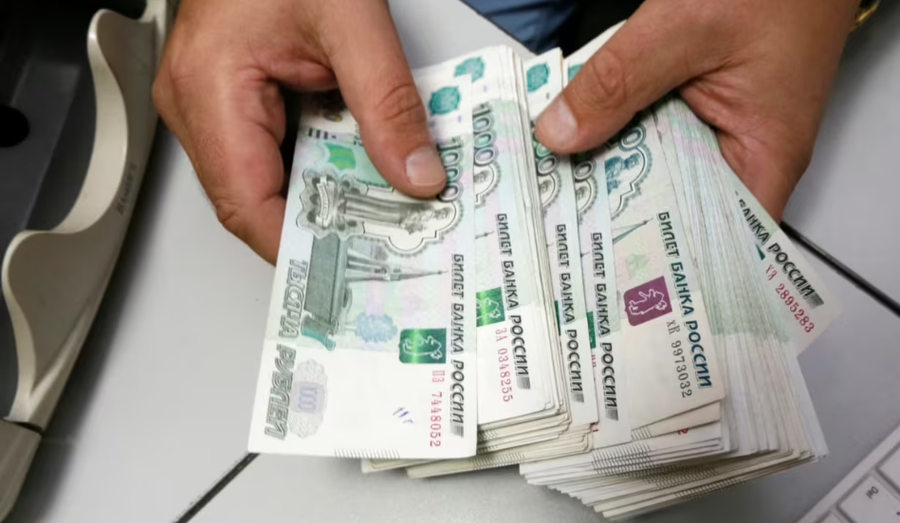
The value of the Russian ruble has fallen to its lowest level since the first weeks of the war in Ukraine, as Moscow continues to increase military spending and suffers the economic fallout from Western sanctions.
To protect the country's currency, the Central Bank of Russia on Tuesday raised interest rates by 3.5 percent, a decision that took the interest rate in Russia to 12 percent. British expert Timothy Ash tells VOA that the devaluation of the ruble and other challenges of the Russian economy are a consequence of the war in Ukraine and Western sanctions, which are finally paying off.
Russia's central bank decided to raise interest rates by 3.5 percent, a move aimed at fighting inflation and strengthening the ruble after it fell to its lowest level since the start of the war in Ukraine on Monday. The value of the Russian currency has fallen by approximately 30 percent since the beginning of the year. On Monday, one US dollar was exchanged for over 101 Russian rubles. After the decision to increase interest rates, the ruble recorded a slight improvement against the dollar in the currency exchange rate.
Economist Timothy Ash says the war in Ukraine and Western sanctions are beginning to affect the Russian economy, including its currency, the ruble.
"The ceiling price of 60 dollars per barrel, set by Western countries for Russian oil is finally starting to have consequences. Russia has lost about $50 billion a year from natural gas exports to Europe. In the export sector, there has been a very large decrease, while for imports, Russia is now paying more due to sanctions", he told the Voice of America.
President Vladimir Putin's economic adviser, Maksim Oreshkin, told the state-run Tass news agency on Monday that the ruble's weakening was the result of "bad monetary policies", adding that the central bank has "all the necessary tools" to stabilize the situation and that he expects a quick normalization of the currency.
But British economist Timothy Ash points out that there is no easy solution to the ruble depreciation and inflation issues.
"Increasing interest rates means less economic growth. This is a choice between economic growth and rising inflation. There are no easy solutions for Russian economic policy officials. They are in a difficult situation. The situation will worsen as the war continues. They will have to choose between spending on the military and spending on social services. If more is spent on the military, then less is left for social services. In the end, Russian consumers will suffer from this," he says.
Russian citizens are already worried about economic instability and drastic fluctuations of the ruble.
"The instability of the national currency will have a negative impact on people's lives. It is very likely that this will affect ordinary citizens, because its devaluation will be followed by an increase in the prices of almost everything. We will wait and see what will happen", says veterinarian Dina Solovyova.
"Prices will increase, which means that the standard of living will decrease. The standard of living has already fallen, but this decline will continue. There are more and more poor people, that's for sure," says Vladimir Bessosedniy, who worked as a teacher before retirement.
The central bank says that demand has outstripped the country's ability to expand economic output, driving up inflation and affecting "the dynamics of the ruble exchange rate from increased import demands".
Duke rritur kostot e huamarrjes, banka qendrore ruse po përpiqet të luftojë rritjen e çmimeve sepse Rusia importon më shumë dhe eksporton më pak, veçanërisht naftë dhe gaz natyror, ndërsa shpenzimet e mbrojtjes vazhdojnë të rriten dhe sanksionet po dëmtojnë ekonominë e vendit. Zakonisht niveli më i madh i importit të mallrave krahasuar me eksportet e tyre ndikon negativisht në valutën e një vendi.
“Asnjë vend nuk dëshiron të ketë monedhë të dobët. Valuta e dobët tregon dobësi. Kjo tregon se ekonomia nuk është në gjendje të mirë, se ka probleme. Zhvlerësimi i monedhës së një vendi frenon rritjen ekonomike dhe shkakton rritjen e inflacionit”, thotë ekonomisti Timothy Ash.
Sipas Bankës Qendrore të Rusisë, inflacioni arriti në 7.6 për qind gjatë tre muajve të fundit.
In February 2022, immediately after Western countries imposed sanctions on Russia due to the attack on Ukraine, the ruble fell sharply, to the level of 130 to 1 against the dollar, but the Russian central bank raised the key interest rate by up to 20 percent in days subsequent and established capital controls that stabilized the value of the ruble./VOA





Lini një Përgjigje