


 Shkruar nga Pamfleti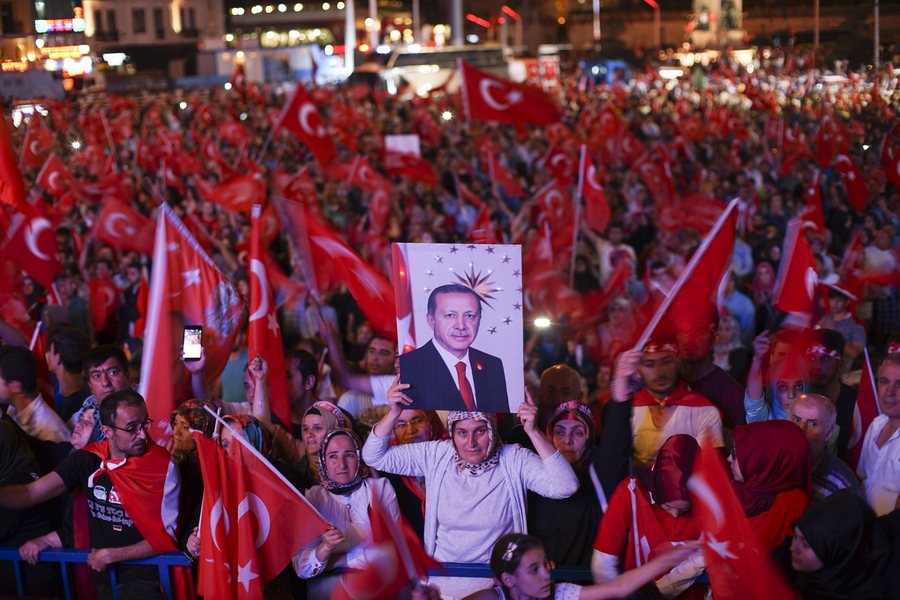
Erdogan understands the importance of being a mayor, having served as mayor of Istanbul from 1994 to 1998. And his term as mayor served as a springboard for his later role as prime minister.
Turkey's local elections have always had important implications, not only for its domestic political landscape, but also for relations with international partners, including the European Union. With 2024 local elections next month, the stakes are high and the results could shape future dynamics between Turkey and the EU.
Scheduled for March 31, President Recep Tayyip Erdogan has launched a fierce political battle aimed at regaining control of major cities from the opposition. This election race is a major test for both Erdogan's ruling People's Alliance and the opposition, which faced defeat in the 2023 presidential race.
The recent Turkish local elections in 2019 were highly significant and closely watched due to their implications on Turkey's political landscape. The results were initially controversial. While Erdogan's AKP won in many provinces, the opposition claimed victory in several key cities, with the main opposition party, the CHP (Republican People's Party), winning in five of the country's six largest cities.
In particular, Ankara and Istanbul, the capital and economic center of Turkey, were of particular importance, as both cities had been governed by mayors from the AKP and the Welfare Party, the Islamist forerunner of Erdogan's party, since 1994.
Initial results showed that Ekrem İmamoğlu, the candidate of the Social Democratic Party CHP, won the mayoral race in Istanbul.
However, the AKP contested the results, claiming irregularities and calling for a re-vote in the mayoral elections. In the re-election, İmamoğlu won again, this time by a larger margin, strengthening his position as mayor of Istanbul.
The 2019 elections marked a significant shift in Turkish politics, fueling the opposition. The results in major cities, including Istanbul and Ankara, signaled a setback for President Erdogan and the AKP, indicating a changing political landscape in Turkey.
"By voting for parties that support the embrace of European values, the country's citizens have sent a clear signal to the government," Frans Timmermans, then vice president of the European Commission, said after the election, calling on Erdogan to respect the results.
First we take Istanbul
Istanbul Metropolitan Municipality is the election's biggest prize, with Erdogan vowing to "take back Istanbul". Before 2019, İmamoğlu was the mayor of an Istanbul municipality far from the city center and was a relatively unknown figure.
However, since the recapture of Istanbul by the religious right after 25 years of control, he has emerged as a rising star in Turkish politics.
Erdogan understands the importance of being a mayor, having served as mayor of Istanbul from 1994 to 1998. And his term as mayor served as a springboard for his later role as prime minister. But he is not the only example; Boris Johnson, Jacques Chirac and Willy Brandt have all been mayors of major cities and/or capitals in their countries before serving as heads of government.
And, compared to the era when Erdoğan was mayor, cities and their mayors now take on greater diplomatic importance, surpassing their roles in the 1990s.
Mayors function as key players on the global stage, fostering direct relationships with counterparts from other cities and nations to address common issues. Throughout their tenure, both İmamoğlu and Mansur Yavaş, the mayor of Ankara, hosted various mayors, ambassadors, and even ministers from European countries. /Adapted "Pamphlet" from "Euobserver"



Lini një Përgjigje