


 Shkruar nga Pamfleti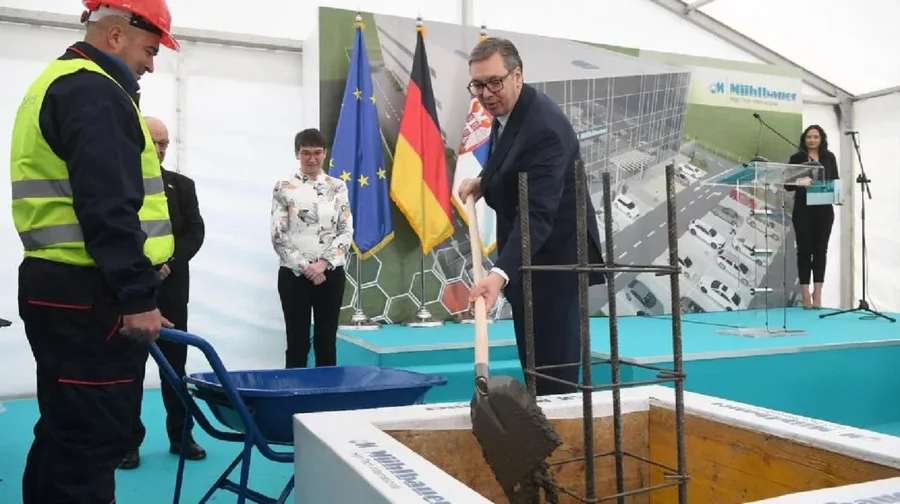
Last year, 4.5 billion euros of foreign direct investments entered Serbia. So far, this is a record annual inflow to Serbia, after 4.4 billion euros the year before.
The President of Serbia, Aleksandar Vucic, has announced that January has also started well with an entry of 118 million euros in the first two weeks, one day after the foundation stone for the new factory of the German company Milbauer was laid in Stara Pazova.
In the presentation of this year's Transition Report, EBRD experts estimated that public investments in infrastructure and foreign direct investments will be the drivers of growth of 3.5 percent this year.
State representatives do not miss the opportunity to highlight their merits in attracting investments, but experts think that a large part of this can be attributed, paradoxically, to the deterioration of the geopolitical situation.
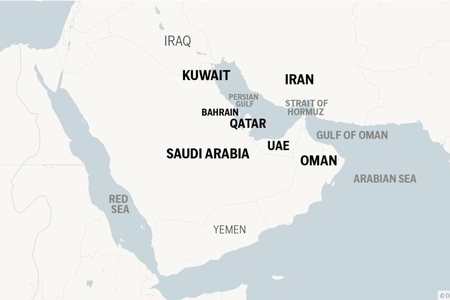
After a series of crises, Yemen's Houthis' blockade of the Red Sea and Suez Canal has led to further disruptions in supply chains as ships carrying goods and raw materials are sent across Africa, increasing delivery times and costs. of transport.
The last four years, since the pandemic, through disruptions in supply chains with China, especially chips, and through the war in Ukraine, have forced company owners to think about bringing production closer to Europe, so-called. approach While it's still more efficient to make in China, it's no longer cheaper, once all the shipping delays are factored in.
Milan Marinkovic, partner in the consulting company WM equity partners, believes that there are three main factors that determine the entry of FDI (foreign direct investment) in Serbia.
"One is local, what a good investment destination we are. We are not bad, but we do not have anything special, neither in terms of workers, nor is the state the most orderly. But there are two key geopolitical factors that affect foreign investment,' he told Danas.
The first is the aggravation of the geopolitical situation between East and West. It is over with Russia, but it remains to be seen how relations with China will develop. Polarization, classification into blocks is happening and this increases the risk of doing business.
"Serbia belongs to Europe and no matter how the cards are distributed, we will be in the western zone of influence and for this reason we are interested in moving the factories", says Marinković.
The second factor is also external and according to him, it is a consequence of the economic policy in the countries of the European Union.
"Fiscal expenses in the countries of Western Europe are increasing drastically and to finance this they are tightening the tax policy. This is especially true for Germany. The tax burden for both citizens and businesses is increasing. When the economy is booming, it can be endured, but when there is a recession, companies get an incentive to take production elsewhere", he assesses.
"Companies decide to move production, because they have an incentive, not only what we give as subsidies, but a tax incentive, because here they pay 15 percent profit tax", explains Marinković.
According to the data of the People's Bank of Serbia, in the first nine months of last year, 3.2 billion euros of foreign investments entered Serbia. Two billion came from Europe, of which 1.6 billion came from the EU. So far, the largest European investments, 630 million euros, have come from the Netherlands, although this is not the true origin of the companies that have invested, as the Netherlands is known as a low-tax country where companies are only formally registered.
Austria is second with 215 million euros, followed by Romania with 151 million euros and Germany with 144 million euros. Investments of 217 million euros and 148 million euros came from companies outside the EU from Great Britain.
However, China was by far the largest individual investor in Serbia last year (up to the end of September) with 818 million euros.


Lini një Përgjigje