


 Shkruar nga Arturo Varvelli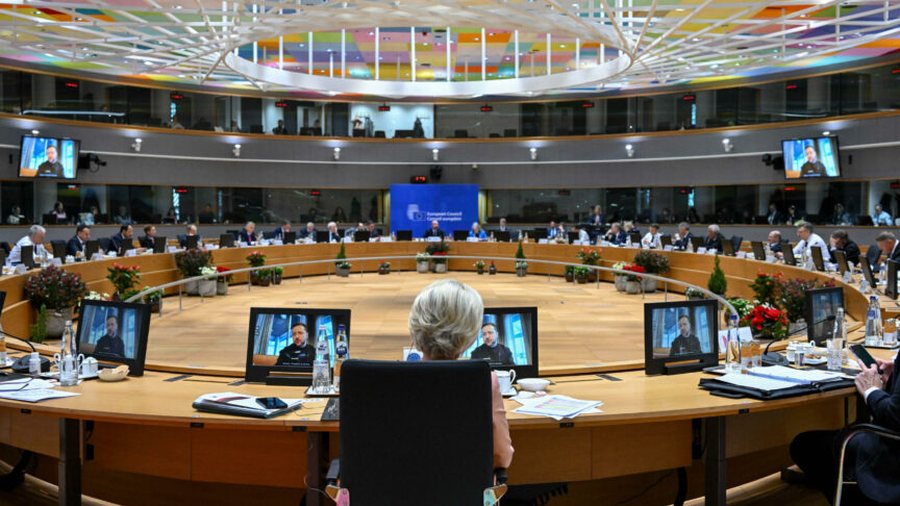
The leaders of the 5 largest European countries are all expected to remain in office for the next 2-3 years, giving them the time and security to address this challenge.
European leaders unanimously approved a 50 billion euro aid and recovery package for Ukraine on Thursday, succeeding in persuading Hungarian Prime Minister Viktor Orban to lift his previous veto of the funds.
This event follows the historic decision of the European Council in December to start membership negotiations with Ukraine and Moldova, despite Orbán's abstention to "go to the bar for a coffee". The Council's decisions become even more important because of the Biden administration's efforts to secure more US funding for Kiev.
Not to mention Donald Trump's possible return to the White House early next year. As part of their geopolitical revival since February 2022, European leaders (26 of them anyway) seem to have realized the strategic importance of expanding the union eastward.
In addition to being necessary, the extraordinary summit of the European Council, alongside the uncertainties fueled by Trump, showed that the EU is facing a bigger challenge in relation to the enlargement project: the need for more internal integration.
As the former Italian Prime Minister Mario Draghi said last November, "either Europe will act united and have an even deeper union, capable of having a common foreign and defense policy, as well as all economic policies, or it will only survive as a common market".
This means that if it wants to survive in a world of "heavyweights", that is, a world that requires quick decision-making, the European Union needs operational mechanisms that are more politically effective. And one of the main obstacles to a deeper union seems to be European public opinion.
The political narratives of different countries are still very self-referential and mainly related to national interests. There does not appear to be a large European spirit 'from below' that could help maintain a strong defensive position in the Ukrainian context, by deploying military, economic and political resources, and at the same time develop a new effort for integration. Europe's political elites - and thus the push "from above" - currently seem to lack the ambition to lead public opinion into a new phase.
But this may change. As a recent ECFR survey has revealed, younger generations appear to be more motivated than older ones by common interests such as climate change. And it is likely that after a phase of polarization due to the European Parliament election campaigns this spring, the integration process could find fertile ground to start again on a new basis.
The leaders of the 5 largest European countries are all expected to remain in office for the next 2-3 years, giving them the time and security to address this challenge. The French and German systems of government secure the positions of Emmanuel Macron and Olaf Scholz.
Even Giorgia Meloni seems to have no domestic rivals, and so far is depriving Italy of its chronic instability. Meanwhile, in Spain, Pedro Sánchez has just regained a new mandate, while Donald Tusk seems to be leading Poland again towards more classical Europeanism.
But the compromise that will follow the European Parliament elections may not produce a strong leadership at the EU level. And the axis between France and Germany doesn't seem to be working like it used to. In this gap, new figures and models can appear, where Meloni and Tusk can play an important role.
On some issues, Meloni has taken anti-European positions, such as the decision not to ratify the reform of the European Stability Mechanism. But her game is different from that of Eurosceptics like Orban. Meloni appears to be re-positioning her Brotherhood of Italy party as a force working for a different Europe, with more space for nationalists. But as a constructive and not destructive force.
In this situation, a solution could be to try to reach agreement about the level of integration in the EU, between the main European actors and then the smaller ones.
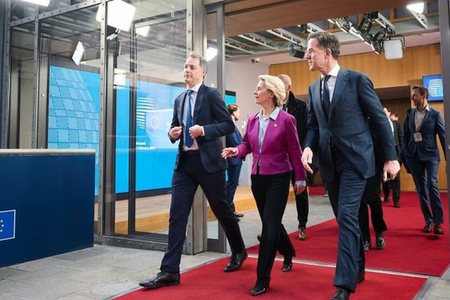
Italy, France and Germany account for 65 percent of the domestic market, and still have great pulling power. In fact, it was the trio, along with European Commission President Ursula von der Leyen, who led the negotiations with Orbán during Thursday's meeting, before widening discussions with other leaders.
Variable mechanisms of tripartite or quadrilateral integration (for example with Spain or Poland) could be the beginning of a Europe with concentric centers. And this
it would be something closer to Meloni's idea of Europe, and that of other nationalists or populists who may come out strengthened by the next European elections.
By the end of this year, the European Council will have appointed a new president. Draghi himself could be a good candidate to lead on this new path and for
provide the strong leadership that requires a major change. He is not a politician.
but a Europeanist technocrat, and despite this has successfully managed many difficult political periods both in the EU and in Italy.
This means he understands the domestic pressures facing European leaders, as he has provided the impetus and experience to find new ways to achieve greater EU integration. Supporting the appointment of Draghi to this position would be a good opportunity for Meloni to prove that he knows how to work as a team from a national perspective as well.
He would likely be an excellent candidate for other governments as well. A concentric Europe with Draghi at the helm could reconcile the old idea of European integration with new pressures from conservative forces and the EU's urgent need to build a united front against external danger. / Adapted "Pamphlet" from "European Council on Foreign Relations"


Lini një Përgjigje