


 Shkruar nga Federiko Rampini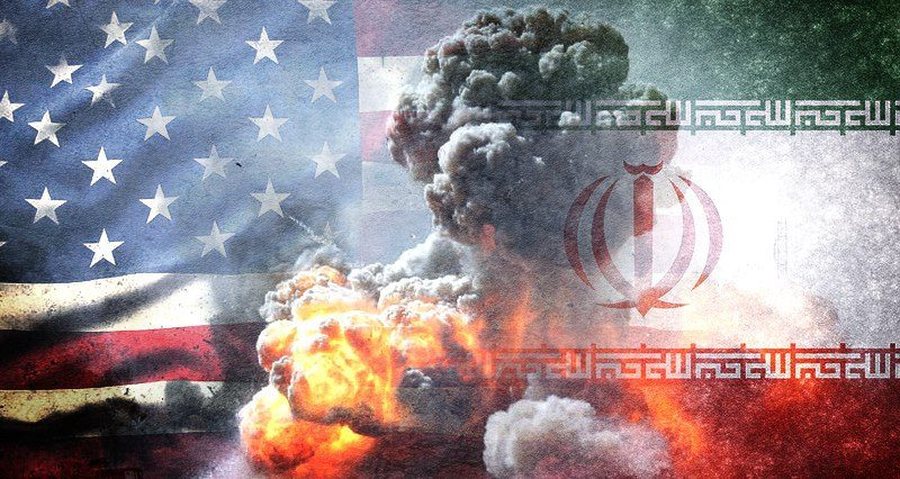
Throwing the stone and hiding the hand is a specialty in which the ayatollahs excel. In more elegant terms, it is what American analysts call "plausible deniability".
What does Iran really want? The Middle East and the whole world are trying to understand - holding their breath - if last night's American attacks are just the beginning of a revenge after the killings of American soldiers by pro-Iranian militias; whether the regime of the ayatollahs will react or whether this spiral could lead to a real direct conflict between America and Iran.
One of the reasons for the uncertainty is the ambiguity of the long-term plans that the Shia theocracy of Tehran has prepared. The conflict between Iranian fundamentalism and the "Great American Satan" (an expression coined by Ayatollah Khomeini in 1979) has lasted since the fall of the Shah of Persia and the Islamic revolution 45 years ago. Since then, our ability to interpret the mind of the clergy who rule the Iranian people with an iron fist and sow terror in neighboring countries has not improved much.
The irreconcilable antagonism towards America, seen as a morally degenerate civilization, the declared objective of the destruction of the State of Israel, must be taken literally because they figure in the official doctrine of the Islamic Republic.
But there is a third strategic objective that should not be underestimated, given the religious nature of the regime: the ultimate triumph of the Shiites over the Sunnis, that is, the conquest of the two holy places of Islam, Mecca and Medina. Therefore, Saudi Arabia is the third designated victim in the Shia theocracy's imperial plan. It is one of the reasons why no one can take their eyes off that draft agreement between Saudi Arabia and Israel, which would mark a possibly irreparable setback to Iranian plans. Delivering a death blow against Israel and persuading America to abandon the Middle East are intermediate and functional objectives in view of the ultimate goal to which the messianic vision of the ayatollahs places the highest value. Defeating Israel, America and Arabia may seem like an overly ambitious, unrealistic project... except for those who think they have God on their side?
Let's go back to the Arab Spring...
Taking a step back in time and broadening the historical perspective can help us. Therefore I propose a reading of one of the most detailed essays on Saudi Arabia by Karen Elliott House. That book was written and published by this journalist in the middle of the Arab Spring, which marked one of the lowest points of Western misunderstanding of that world.
We deluded ourselves that we were facing an overwhelming advance of democracy. A regime like the Saudi monarchy was at the peak of unpopularity among us, as it did not bend to the "winds of history". The Arab Spring is over as we know it; The West's errors of judgment (of which Barack Obama was one of the negative protagonists) led to the commission of atrocities such as the war in Libya. Meanwhile, Iran moved its hostages and strengthened. The Saudi monarchy looked at him with fear.
"Many Saudi leaders saw clear signs - House wrote twelve years ago - that Iran's objective was to conquer Mecca and Medina, to declare a Shiite state in oil and gas-rich eastern Arabia. For the Al Saud monarchy, the loss of a key energy asset and the religious legitimacy associated with the custodianship of the holy sites would mark the disastrous end of the dynasty."
The revenge of ancient Persia on Arabia
In a very long-term historical vision, this scenario would be the great revenge of the Persian civilization against the Arab civilization. The Persians had to abandon the religion of Zoroastrianism and convert to Islam - like many other peoples of the world - after an Arab military invasion; but having a much older and more prestigious civilization behind them, they have always continued to regard the Arabs as "inferior peoples".
Iran is the rare case in the Middle East of a people who, despite converting to Islam, never wanted to adopt the Arabic language and kept their own. Intertwined with the religious wars between Sunnis and Shiites is this "clash of civilizations" with ethnic, tribal, symbolic and cultural ramifications that have their roots in the most ancient history. I resume reading House, where he quotes Prince Turki al Faisal, one of the most astute Saudi statesmen: former head of the secret service, then ambassador to London and Washington. "There are those who think - he told Faisal - that Iran wants a Shiite arc, wants to conquer Mecca and Medina, wants to create the Persian empire. I don't know, but I don't see a positive scenario. We, Bahrain, the Emirates, Lebanon, Afghanistan must be very careful."
Even then, more than a decade ago and partly benefiting from the Arab Spring, Iran had become the dominant power in Iraq, Syria, Lebanon and Gaza. His growing influence encouraged Shiites in the Persian Gulf, from the Emirates to Arabia, to agitate against Sunni rulers. In Yemen, the Houthi terrorist militia was attacking the heart of Arabia and would have shown its deadly danger in 2019 with a series of strikes on Riyadh's oil infrastructure.
Khamenei and the Axis of Resistance
This long-term scenario is also useful for assessing recent Iranian moves. Throwing the stone and hiding the hand is a specialty in which the ayatollahs excel. In more elegant terms, it is what American analysts call "plausible deniability." The attacks against Israel by Hamas and Hezbollah, those against America launched by the Houthis and other pro-Iranian militias, were all carried out in such a way that it could be "reasonably denied that there was an instigator". Tehran's top authorities, including Supreme Leader Ayatollah Ali Khamenei, continue to say they do not want direct war against either Israel or America. But a few weeks after the October 7 massacre, Khamenei convened a major summit of the leaders of all the militias that make up the Axis of Resistance, in which he publicly praised the Hamas attack as an "epic victory."
Khamenei knows that one of Biden's weaknesses is his legacy of accommodative policies toward Iran. Biden took over the attempted Iran nuclear deal from Barack Obama. The two Democratic presidents dreamed of bringing home a historic success, the reconciliation with Persia after the Great War of 1979 and the American hostage-taking that had marked the inglorious end of the presidency of Jimmy Carter, another Democrat. Even on the eve of the Hamas massacre, Biden had begun transferring a $6 billion deposit to Iran to restart dialogue. Khamenei thinks that this president's hands are tied: by the electoral campaign, by America's internal divisions, by the political capital he had invested in the fusion with Iran.
Optimistic hypothesis: Tehran's regime on the defensive
In Washington, a divergent narrative instead depicts the ayatollahs' regime as too weak to allow escalation. Many US analysts point out that Iran has a fragmented economy, internal turmoil and an increasingly impatient population. And therefore could not support a war with the United States (or with Israel). It will therefore be open to a de-escalation that keeps the conflict in its most limited dimensions: Gaza and Yemen's heartland in the Red Sea.
Since 1979, the West has periodically seen the regime of the ayatollahs on the verge of collapse and overestimates the weight of internal revolts. Moreover, when authoritarian regimes feel fragile and lose consensus, they often use foreign policy and military adventures to launch threats against their own populations: showing what they are capable of doing from the outside, so that they clearly do not accept internal challenges. / Adapted "Pamphlet" from " Corriere Della Sera "






Lini një Përgjigje