


 Shkruar nga Pamfleti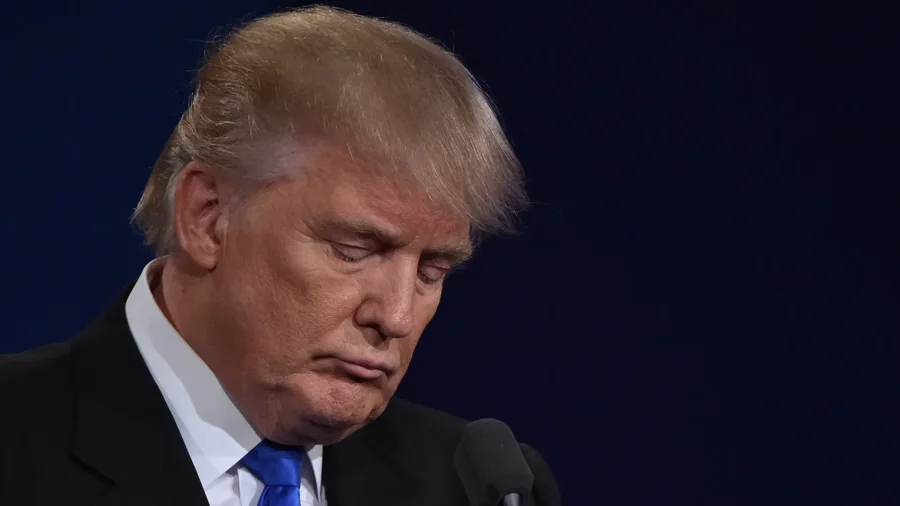
A disgruntled American public has become increasingly irritated by Trump's performance, according to recent polls.
Donald Trump began his second presidency in the Capitol rotunda in January, riding the political crest of his 2024 election victory with the promise of bringing Americans a new "golden age."
But 100 days later, after a flurry of moves to dismantle the federal government and rebuild the global economy through sweeping tariffs, Trump has reverted to being the unpopular and polarizing president he was for much of his first term. In the last 100 days, he has the lowest approval rating of any president in the past seven decades, according to one poll.
A disgruntled American public has rapidly become increasingly irritated by Trump's performance, according to recent polls, amid skepticism of his trade policies, aggressive spending cuts and even some concerns that his crackdown on immigration is going too far.
According to the RealClearPolitics average of polls, Trump had an approval rating of 50.5 percent at the end of January, with a disapproval rating of 44.3 percent. Now the situation has completely changed, and he has a disapproval rating of 52.4 percent and an approval rating of 45.3 percent, according to the same average.
While some decline in support is natural for most presidents in the first year of a term in the White House, Trump's honeymoon period has ended abruptly as he has rapidly burned through presidential political capital.
For example, Americans did not relax with Joe Biden until August 2021 - eight months into his term - after rejecting his handling of the military withdrawal from Afghanistan, the resurgence of Covid-19 and the emergence of inflation.
Analysts and political strategists say Trump's numbers now are particularly worrisome in terms of his handling of the economy, where he had the upper hand during the 2024 campaign.
Trump will mark his 100th day in office with a high-profile speech in Michigan, a state he retook from Democrats last year, on Tuesday night - and then a commencement speech in the deeply conservative state of Alabama on Thursday.
He has dismissed his poor polls as a product of “Trump derangement syndrome” and said the pollsters behind polls conducted for ABC/Washington Post, The New York Times and Fox — which showed Trump’s disapproval ratings outpacing his approval by more than 10 percentage points — “should be investigated for ELECTION FRAUD.”
Trump retains strong support from the Republican base and will not face voters again, as the US Constitution limits presidents to two terms. Despite this, Trump has said there are "methods" he could use to run again.
But some Republicans worry that members of Congress will have to deal with voter anger as early as next November in the midterm elections, when the party that controls the White House traditionally loses seats.
"When we see him losing as an independent, as we have done, or as women or in other places, that's less worrisome for the president, but it's more worrisome for Republican members of the House of Representatives ," said Susan Del Percio, a Republican strategist.
"If he's able to show the promises made and kept, then [the numbers will go up], but if we're talking about going into the Republican primary next year with these kinds of numbers, we've been here before... and we should know what to expect ," added Ron Bonjean, another Republican strategist.
Americans' judgment of Trump's trade policies has been particularly harsh, with polls showing voters believe he is spending too much time on tariffs and not enough on lowering the cost of living, as markets have fallen from their January highs and promised tax cuts have failed to pass Congress.
“People see [the rates] as random. They see a stock market that goes up and down. Their 401(k)s — some days they have money to retire, some days they don’t, ” Del Percio said.
Kondik said: “His numbers are actually worse for the economy than they are overall, which is a new development and, frankly, it’s quite surprising and quite bad for the president. ”
Del Percio added that there were signs that Americans believed Trump might be going too far on immigration, where he previously had his broadest support.
"President Trump promised to deport people who were here committing crimes illegally. Everyone supports that. But... when you start denying people the right to due process, that's when you start having these problems ," he said.
However, many Republican operatives were not concerned by the declining poll numbers.
" In a general sense, I'm not that worried. I mean, he promised to be disruptive, and disruption is hard. I don't think the party is panicking ," said John Feehery, a Republican strategist.
Adam Geller, a Republican pollster, dismissed the "background noise" surrounding some of the latest numbers and said the polls had consistently misrepresented the public mood when it came to Trump. Private polls he conducted had painted the president in a better light, he said.
"Are the public polls that we see a reason to worry about? No, because the public polls have proven time and again that they are either unwilling or unable to do proper polling when it comes to President Trump ," he added./Adapted from "The Pamphlet" by "Financial Times"




Lini një Përgjigje