


 Shkruar nga Pamfleti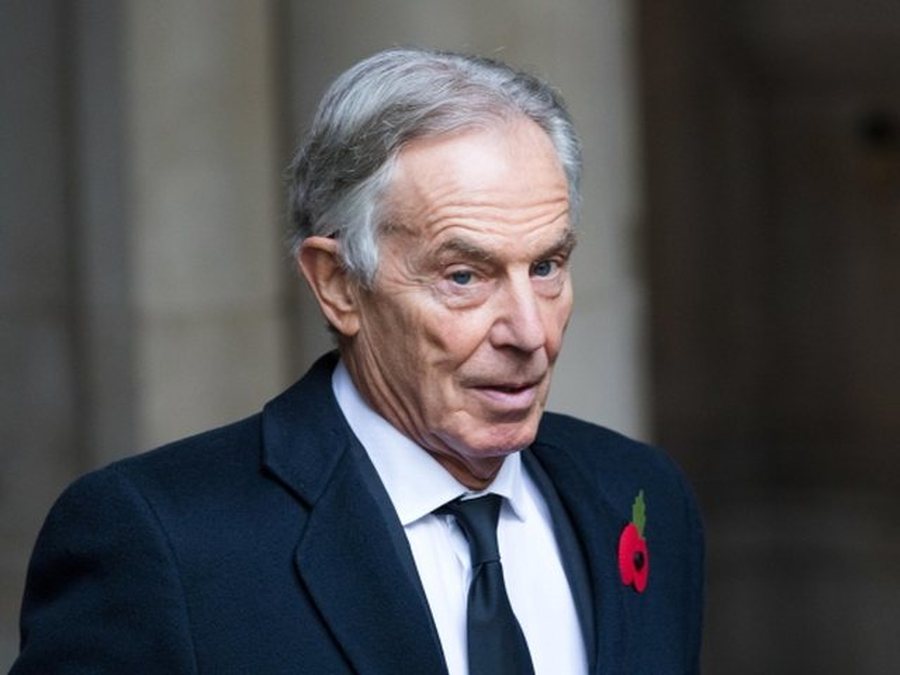
Sir Tony Blair, the former British prime minister, is seeking to play a senior role in leading post-war Gaza under a peace plan being developed by the Trump administration, according to people briefed on the proposal.
The Financial Times reveals that the former British Prime Minister's plan has received Trump's (but not yet Israel's) support.
Tony Blair is interested in playing a key role in the aftermath of the Gaza conflict. That much has been known for certain since August 27, when the former British prime minister attended a White House meeting hosted by Jared Kushner, Donald Trump's son-in-law, who served as his Middle East adviser during Trump's first term as president and has been a strong voice on the issue ever since. Steve Witkoff, the US president's special envoy who - like Kushner before him - is responsible for handling several sensitive files, including Ukraine and the Middle East, said on the sidelines of that meeting that what was being developed was "a very comprehensive plan."
But today, the Financial Times reveals and the BBC confirms that Blair has been asked, with the approval of the White House, to personally chair the Gaza International Transitional Authority (GITA), the proposed collegial body that would govern the Strip starting the following day - that is, from the moment hostilities cease and Hamas forces are forced to withdraw.
According to an informed reconstruction published by the Times of Israel, the plan that Blair has been trying to finalize in recent weeks through a busy agenda of meetings with interlocutors from various countries and consultations with all parties involved - a plan that has reportedly received the support of Trump, but not yet that of the government led by Benjamin Netanyahu - envisages the Gita as a group of about ten people: a senior official proposed by the United Nations, representatives from the most important Muslim countries, several international figures with extensive managerial and financial experience, and, to ensure some participation in Abbas's Palestinian National Authority, at least one authoritative Palestinian representative, ideally one with a technocratic rather than political profile.
Blair's plan would not involve forced or "voluntary" transfers of the Gaza Strip's population to other regions, unlike the more unscrupulous post-war projects modeled after Trump's envisioned "Gaza Riviera." However, several staff members of the Tony Blair Institute for Global Change, the nonprofit organization founded by the former British prime minister that provides consultancy to governments around the world, also apparently collaborated in developing the project.
Blair, who in 2007 was appointed special envoy by the so-called Middle East Quartet (composed of the UN, the United States, the European Union and Russia), has many contacts and long-standing ties in that part of the world, but he still faces some distrust from the Arab world because he was one of the most zealous promoters of the 2003 intervention in Iraq. This is also why his appointment as de facto "governor" of the Gaza Strip after the end of the conflict would be quite sensational.
Neither the White House nor the Tony Blair Institute for Global Change have commented on the British media revelations about Blair's possible role in the Gita. However, the Financial Times points out that his real chances of success will be more accurately assessed only next Monday, the day Trump meets Netanyahu in Washington. And, if the Israeli prime minister were to express his complete opposition to the "Blair plan", we could (perhaps) understand how determined Trump is to put real pressure on his ally.






Lini një Përgjigje