


 Shkruar nga Pamfleti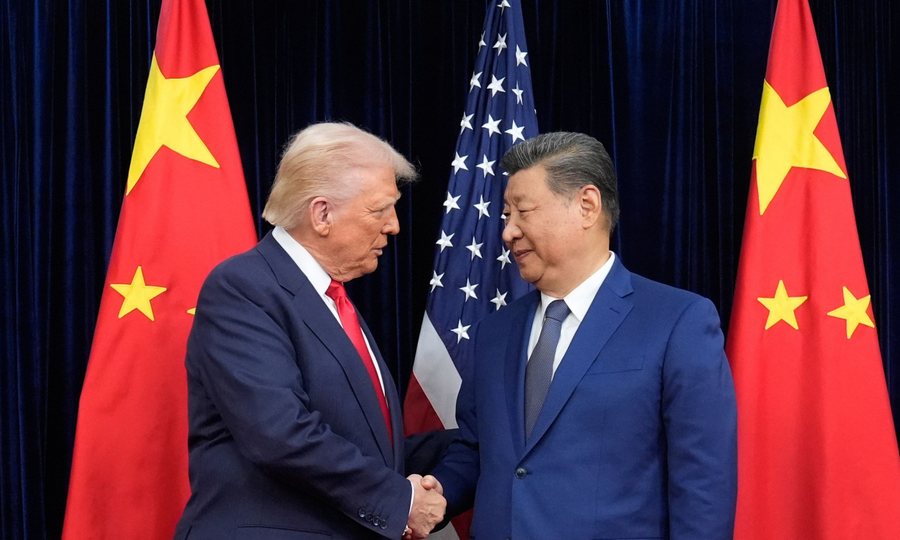
Seven reasons why Xi Jinping has the upper hand (for now) in the race for Hormuz
The Suez Crisis was the moment when Great Britain showed the world that it was no longer a superpower: the failure of the planned quick war with France to regain control of the Canal from Gamal Abdel Nasser's Egypt sealed the fall of the great European empires.
Then something else happened: the dollar finally surpassed sterling as the reserve currency for central banks around the world. Without the support of a healthy public balance sheet, weakened by decades of trade deficits with the rest of the world, and now without overwhelming military power and therefore unable to control vital sea lanes, Britain saw its currency go from 80% of world reserves in 1948 to less than 3% some thirty years later.
The decline of powers
The world stopped paying (and being paid) for essential raw materials in a currency controlled by London. The United Kingdom could no longer benefit from low interest rates on its debt, and was consequently forced to limit military spending and, with it, the extent of its power.
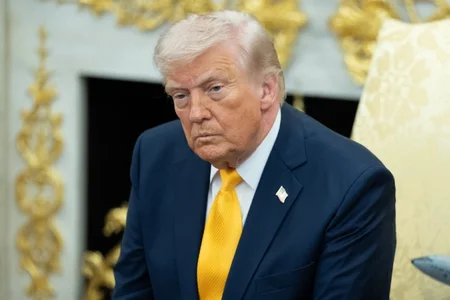
Today, the United States under Donald Trump is not like Anthony Eden's Britain in 1956. It enjoys a technological superiority that London had lost more than half a century ago; it controls, through securities issued on its territory, about 70% of international financial markets and continues to have the most powerful army in the world.
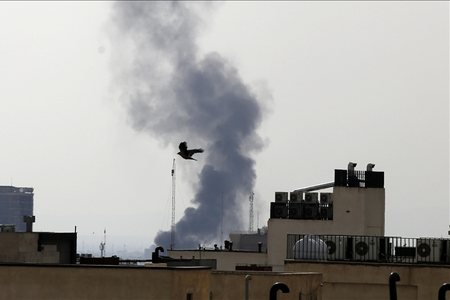
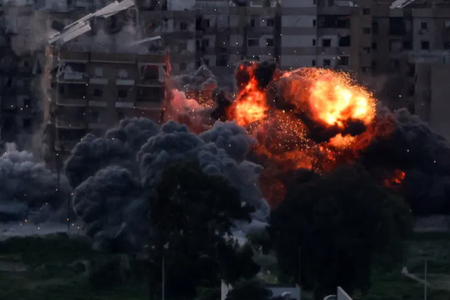
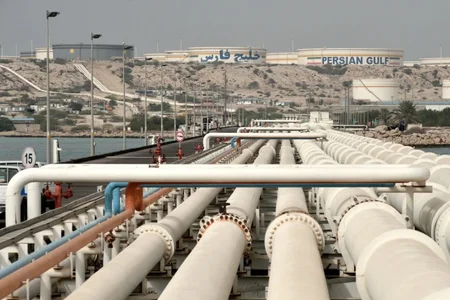
But is there a lesson for America from the Suez crisis? Is the blockade of Hormuz accelerating China's rise as a geopolitical superpower? Could it undermine the dollar's dominance as a currency for paying for raw materials? It's impossible to say without knowing how the war will end. But increasingly, that's what's at stake. Because, as it stands, China is in a position to grow stronger. For seven reasons.
“An old Chinese proverb says: if your enemy is making a mistake, don’t interrupt him,” said Beijing-based economist Keyu Jin today at the Hong Kong University of Science and Technology, commenting on Trump’s war on Iran at the Teha Forum in Cernobbio. She is likely mistaken about the origin of the saying, which seems to be attributed to Napoleon. But the meaning is clear, and Jin, the daughter of a very high-ranking official in the People’s Republic, is well aware of it.
In this crisis, China is keeping a low profile, or at least pretending to. It is trying to show that it has no role and is not acting to profit from the war. It declares that it is only concerned with international stability and seeks to insulate itself from the effects of the Gulf conflict.
Meanwhile, it continues to buy oil from Iran and, in all likelihood, is helping Tehran wage war, just as it is helping Russia in Ukraine. Many reports indicate that Beijing is making its BeiDou3 satellite system and other reconnaissance tools available to the Revolutionary Guard to identify targets and strike with precision.
Seven reasons
Moreover, Beijing is selling Iran supersonic missiles, important for continuing to impose a blockade on the Strait of Hormuz. Xi Jinping sees this war as a factor that destabilizes China's export markets; however, he cannot help but notice that this is a golden opportunity to strengthen his country's status.
Here are seven reasons:
1. Since the beginning of the conflict, China has been trying to build its international credibility as the only predictable superpower. Beijing condemns Iran’s “violation of sovereignty” and the US’s “hegemonic” behavior, calling for a ceasefire. But at the same time, it controls domestic reactions and maintains a balance in the discourse.
2. There is a commercial logic: by blocking Hormuz, China's renewable energy and electric car industries offer billions of people the prospect of less dependence on oil and gas. Many countries are accelerating the transition to these technologies. China, a global leader in this field, benefits directly.
3. China controls about 80% of the global production and processing of tungsten, a material essential to the modern military industry. Export restrictions give Beijing significant strategic leverage.
4. Due to the war, the US is shifting military capabilities from Asia to the Gulf. This weakens the American presence in the Asia-Pacific and creates greater room for action for China.
5. China has a high capacity to withstand energy shocks. Its oil reserves can cover about six months of consumption and it has alternative sources of supply from Russia and Iran.
6. The combination of these factors gives China a unique role: it can pressure Iran to reach an agreement and guarantee the reopening of the Strait of Hormuz. Gulf countries can look to Beijing for solutions.
7. The strategic objective is to expand the use of the yuan in international trade, especially for raw materials. China aims to reduce the dominance of the dollar by imposing the use of its currency in international contracts.
Ultimately, it is not certain how this situation will end. Everything depends on the US’s ability to manage the conflict without further escalation. But if further strategic mistakes are made, this crisis could mark a turning point in the global order, a moment similar to what the Suez crisis represented for Britain. / Adapted from “Corriere Della Sera”



Lini një Përgjigje