


 Shkruar nga Pamfleti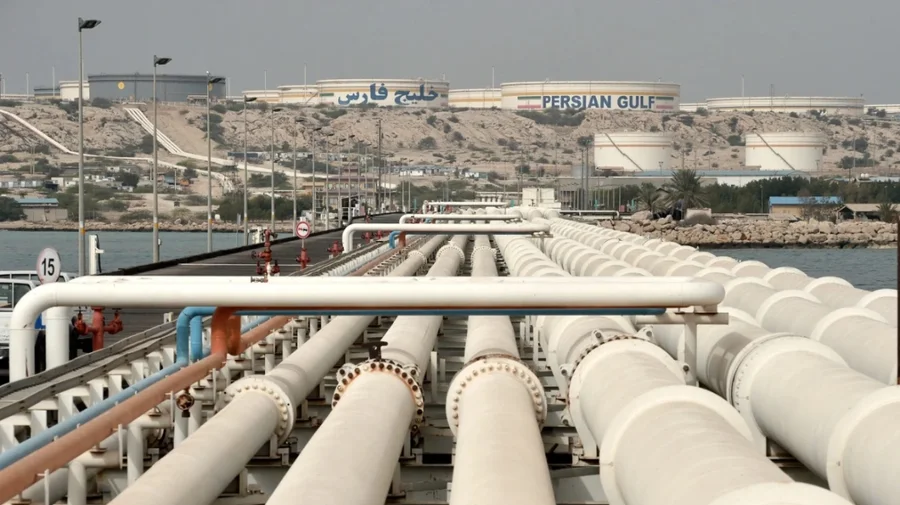
Iran's export system is designed to withstand both military strikes and economic sanctions. A large portion of the revenue is channeled to the Islamic Revolutionary Guard Corps (IRGC), while China plays a key role in maintaining the financial flow. Iran's financial reserves are spread across Asian markets, out of range of Israeli attacks.
For more than five decades, the oil-producing countries of the Persian Gulf have been portrayed as stable, low-cost suppliers of energy. However, the region's third conflict, now in its fifth week, has changed that perception. The blockade of the Strait of Hormuz has severely restricted global oil supplies, while Gulf countries have cut production and seen export revenues fall.
In this context, Iran is following a different trajectory. Despite the US and Israeli bombings that began on February 28, Iranian tankers continue to operate and daily revenues from oil sales have almost doubled compared to the period before the attacks. While the country faces pressure on the ground, in the energy sector it appears to be benefiting.
According to a source cited by The Economist, Iranian exports currently range from 2.4 million to 2.8 million barrels per day, of which 1.5 million to 1.8 million are crude oil. This level is comparable to or higher than last year's average, but at significantly higher prices.
Iran's export system is designed to withstand both military strikes and economic sanctions. A large portion of the revenue is channeled to the Islamic Revolutionary Guard Corps (IRGC), while China plays a key role in maintaining the financial flow. Iran's financial reserves are spread across Asian markets, out of range of Israeli attacks.
The export network is based on three pillars: sales, transportation, and a parallel financial system. Although officially exports are handled through the state-owned company NIOC, in practice various state and semi-state structures manage sales. About 20 major businessmen control the networks that turn oil into money, often in close cooperation with the Revolutionary Guard.
According to data from Vortexa, Iran's elite forces control about 25% of crude oil production and have increased their influence during the war, especially in the transportation sector. A network of companies linked to the military complex coordinates maritime logistics, often through structures subject to US sanctions.
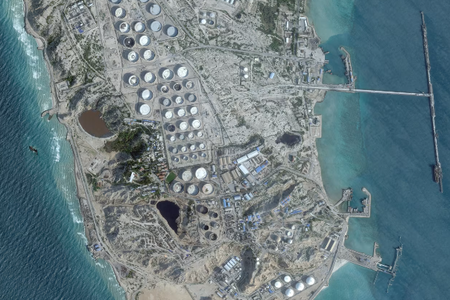
Iran has also increased security measures for tankers, which carry cargo worth up to $200 million. The main terminal on Kharg Island, where about 90% of exports depart, has put emergency procedures in place, while other terminals such as Jask, Lavan and Siri can partially replace capacity if needed.
As tankers approach the Strait of Hormuz, they are given security codes and are often escorted by Revolutionary Guard vehicles. Maritime sources report that some ships pay high fees for safe passage.
Despite limited sanctions relief from the US on around 150 million barrels of Iranian oil, origin concealment practices continue. These include document manipulation and offshore transfers, particularly near Malaysia and Singapore.
China remains the main buyer, absorbing over 90% of Iranian exports. The oil is processed mainly in small refineries in Shandong province. Before the war, purchases were made at a discount of $18–24 per barrel to the Brent price, while now this difference has decreased to $7–12. Prices have increased significantly, with contracts reaching up to $104 per barrel.
The financial system supporting these transactions operates through accounts spread across small Chinese and Hong Kong banks, in the name of shell companies. The funds pass through networks of intermediaries in several countries, enabling Iran to make imports and move capital across international markets.
This network operates as a parallel banking system, linked to the Iranian Ministry of Defense and the Revolutionary Guard. Its distributed structure makes it resistant to sanctions, although it increases the risk of financial losses.
According to estimates cited by The Economist, Iran's energy system continues to function and can hardly be stopped without widespread attacks on energy infrastructure, a development that could bring further escalation in the region.


Lini një Përgjigje