


 Shkruar nga Pamfleti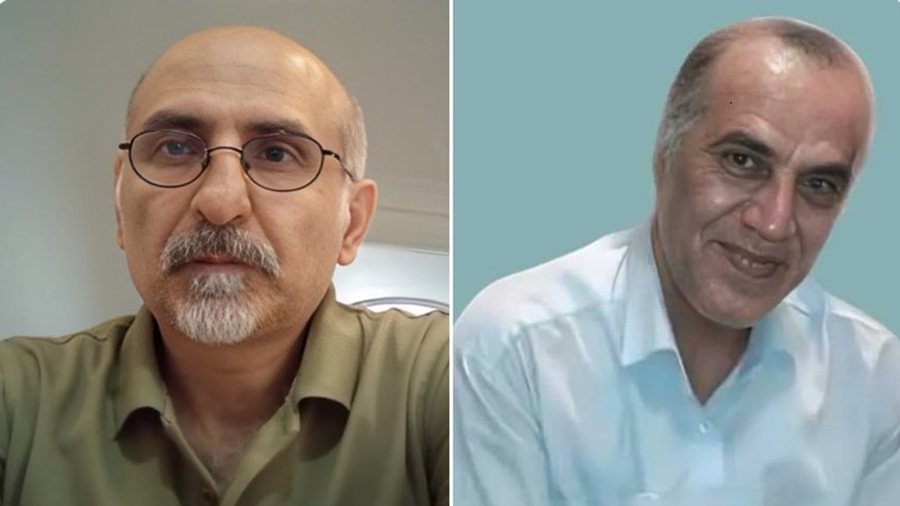
Iran has executed two political prisoners, members of the People's Mujahedeen Organization (PMOI), at Qezel Hessari Prison. The execution of Akbar Daneshvarkar and Mohammad Taghavi took place this morning.
Mohammad Taghavi, 59, had a long history of imprisonment and persecution dating back to the 1980s–1990s. He was arrested in 2020 for links to the PMOI, spent three years in prison, and was arrested again in March 2024. Akbar Daneshvarkar, 58, a civil engineer, was arrested in January 2024.
According to the National Council of Resistance of Iran, the two prisoners were held in Ward 209 of Evin Prison, where they faced torture. In December 2024, Branch 26 of Tehran's Revolutionary Court sentenced them to death for "armed rebellion," a decision that was later confirmed by the Supreme Court.
Maryam Rajavi, the president-elect of the NCRI, said the executions reflected the Iranian authorities’ efforts to quell domestic discontent. She stressed that such actions would not stop dissent but could increase the mobilization of opposition groups. Rajavi called on the United Nations and its member states to take concrete measures, arguing that verbal responses alone have not been enough to stop the executions.
“ Maryam Rajavi, President-elect of the National Council of Resistance, calls for urgent international action At dawn on Monday, March 30, 2026, the clerical regime’s executioners committed a barbaric act by hanging two members of the People’s Mojahedin Organization of Iran, Akbar (Shahrukh) Daneshvarkar and Mohammad Taghavi, in Qezel Hessari Prison.
The slain member of the People's Mujahedeen Organization, Mohammad Taghavi, 59, was a political prisoner with a long prison history, with a history of persecution dating back to the 1980s and 1990s. He had previously been arrested in 2020 on charges of links to the PMOI and had spent three years in prison before being released. He was arrested again in March 2024. Akbar Daneshvarkar, 58, a civil engineer, was arrested in January 2024.
Both prisoners were brutally tortured in the notorious Ward 209 of Evin Prison. In December 2024, Branch 26 of Tehran's "Revolutionary Court," headed by the notorious Judge Iman Afshari, sentenced both to death on charges of "rebellion" (armed rebellion) for membership in the People's Mojahedin Organization of Iran. This sentence was later upheld by the regime's Supreme Court.
Ms. Maryam Rajavi, President-elect of the National Council of Resistance of Iran, stated that the desperate regime, fearing a popular uprising that would topple it, is desperately trying to delay the outbreak of popular anger by committing this great crime, but this will only strengthen the determination of Iran's rebellious youth and the fighters of the National Liberation Army to overthrow the regime.
Ms. Rajavi pays tribute to the two martyrs who stood firm under torture, pressure and threats, and honors their sacrifice for their people and cause until the end.
Ms. Rajavi added that the clerical regime is trying to exploit the external war to hide its deep and intractable internal crises, but it cannot escape its inevitable overthrow by the Iranian people and their organized resistance.
Ms. Rajavi called on the United Nations and all member states to strongly condemn this heinous crime, emphasizing that verbal condemnation is no longer sufficient. The time has come for concrete and effective action. The inaction of the international community has only emboldened this bloodthirsty regime to carry out further executions and crimes. A significant number of members of the People’s Mojahedin and political prisoners are currently awaiting execution. Urgent measures must be taken to save their lives ,” the Secretariat of the National Council of Resistance of Iran (NCRI) in Paris said in a statement.




Lini një Përgjigje