


 Shkruar nga Pamfleti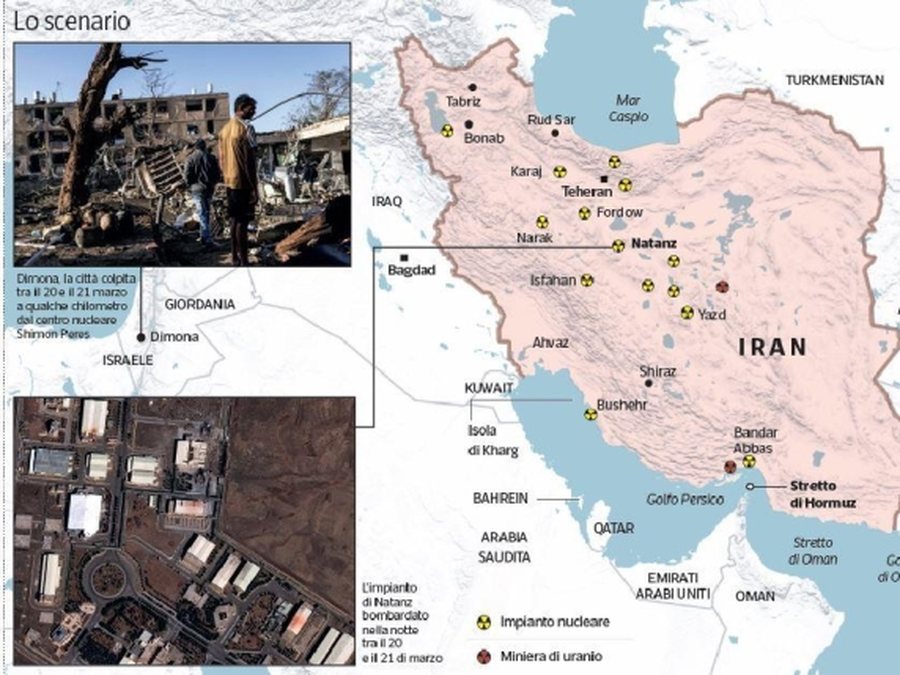
From Nasser's suspicions to Saddam's missiles and Iranian threats, the Negev facility continues to be seen as a symbol of Israeli strategic power.
The Iranian regime is responding to the strikes on Natanz by targeting the facility in the Negev, which has previously survived Egyptian airstrikes and Iraqi Scud missiles.
From Nasser's first suspicions in 1967, to Saddam Hussein's Scud missiles in 1991, to the Iranian missiles of recent hours, the Dimona nuclear center has always been a symbol of Israel's power and, therefore, an important target for its enemies. A special target that, like any symbol, carries an ambiguous meaning that changes according to time and circumstances.
The Israelis have always followed a policy of denial, or at least strict non-comment. Even today, if you ask any government spokesman, even though it is widely known that the country has possessed between 100 and 200 atomic bombs for more than two decades, including powerful thermonuclear warheads mounted on the latest generation of ballistic missiles, the answer remains that Israel does not intend to be the first country with a nuclear arsenal in the Middle East. There have been cases when Israeli journalists and scholars have been forced to censor their books and ban publications that openly addressed the issue.
However, the "open secret" of the nuclear weapon in Dimona began to be revealed with the high-altitude reconnaissance flights of Egyptian fighter jets in May 1967. The 6-Day War was inevitable and President Gamal Abdel Nasser sought to verify intelligence information according to which, near the small town of Dimona in the Negev, the Israelis were building their atomic weapons.
Ben Gurion Plan
The project was initiated in the late 1950s by the state's charismatic founder, David Ben Gurion. The guiding idea was the one that permeated many Israeli politicians and military leaders after the Holocaust: "never again." The state, created just three years after the Shoah, would never again allow the extermination of the Jews.
From this principle also stemmed the idea of Israel’s “exclusion,” according to which the country could bypass international law, the Geneva Conventions, and even the objections of its American ally. In this view, Israel not only had the right to possess nuclear weapons, but also to destroy the nuclear capabilities of its opponents. This was concretized with the bombing of the Iraqi reactor at Osirak in 1981, the one at Deir ez-Zor in Syria in 2007, and the attacks in recent years on facilities in Iran. The United States was against the Israeli nuclear program, while Shimon Peres played a key role in securing French cooperation.
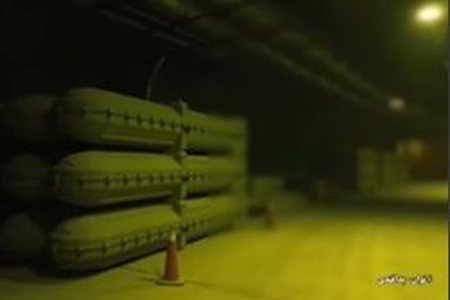
The facility at Dimona was built in large underground bunkers. In 1967, according to sources, only two or three rudimentary nuclear devices were in preparation, but they were heavily defended. An Israeli Mirage plane that mistakenly entered the area's airspace was shot down without warning. The area was surrounded by minefields and barbed wire, making it impossible to approach from the ground.
During the 1973 Yom Kippur War, a surprise Egyptian-Syrian attack caught Israel off guard. For a moment, the state's survival was in doubt, to the point that then-Prime Minister Golda Meir ordered the opening of nuclear silos. This action prompted the Pentagon to send in tanks, missiles, and ammunition to avoid escalating into an unconventional conflict.
Forbidden photos
In 1986, nuclear technician Mordechai Vanunu brought international attention back to Dimona, publishing some sixty photographs secretly taken inside the facility and documenting a program that established Israel as the world's sixth nuclear power.
This development may have also influenced Saddam Hussein's decision during the 1991 Gulf War, when he fired about 40 Scud missiles at Israel, some of which were suspected of targeting Dimona. The exact number and locations of the strikes remain a secret. However, Iraqi propaganda used this to claim that "Zionist nuclear weapons" had been challenged.
The same rhetoric is coming from Tehran today. The Iranian argument reflects a position that has been prevalent in the Arab world for decades: why is Israel allowed to have nuclear weapons, while others are not?
Even today, Israeli censorship remains very strong. Only data on civilian damage in Dimona and Arad is public, while nothing is revealed about the secret bunkers. It is not even clear whether the nuclear weapons are still in the old silos.
In this context, Tehran can continue to talk about "victory" over the atomic center: the symbol has been hit, not necessarily the military infrastructure. Similarly, previous statements about the final elimination of the Iranian nuclear threat have been called into question again by recent developments, the outcome of which remains uncertain. /Adapted from Corriere /




Lini një Përgjigje