


 Shkruar nga Milena Gabanelli & Giuseppe Sarcina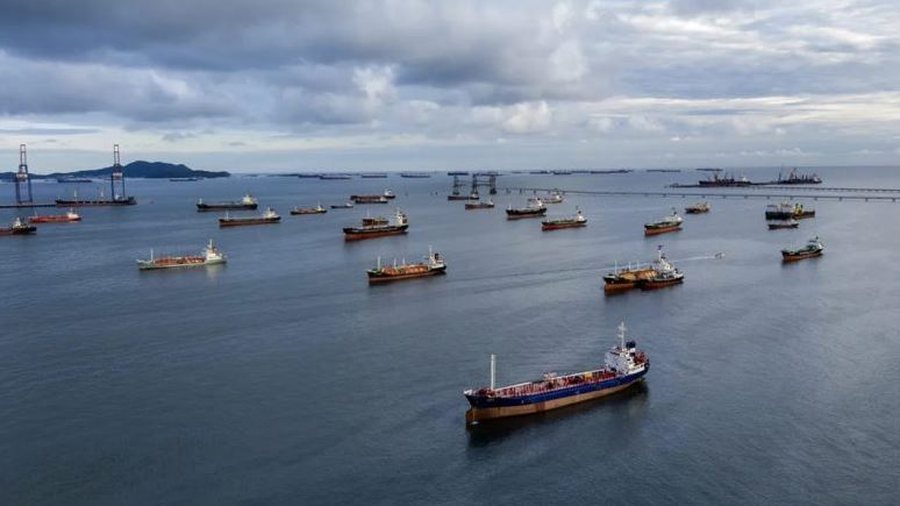
Wars and geopolitics are roiling the seas of half the world. A security like freedom of navigation, which seemed to have already been incorporated into the common sense of almost all nations of the planet, including those ruled by despotic regimes, is now being questioned. It all started with the war instigated by Trump and Netanyahu against Iran. The Revolutionary Guard responded to the bombing by blocking the Strait of Hormuz, one of the seven golden gates that keep the global economy alive.
The rules set out in the United Nations Convention on the Law of the Sea (UNCLOS), which entered into force in 1994, are clear: the tax is only payable at man-made artificial points, such as Suez and Panama. The Bosphorus Strait is an exception.
Hormuz
It is the epicenter of the crisis in the Middle East. It connects the Persian Gulf with the Indian Ocean. Its minimum width is 34 kilometers and it separates the coasts of Iran from those of Oman. Before the war, it was the perfect example of how the common interest in business and trade triumphed over political rivalries between Tehran and the Gulf monarchies.
About 20 million barrels of oil passed through here per day, or 20 percent of the world's needs. But also jet fuel, chemical fertilizers, semiconductors, aluminum, and basic chemicals essential to the pharmaceutical industry.
The exporting countries are Saudi Arabia, the United Arab Emirates, Kuwait, Bahrain, Iran, Iraq and Qatar, while the main customers are the Asian countries China, India, Japan and South Korea. The real difficulties affect Europe. The countries of the European Union import oil mainly from Saudi Arabia.
But the most urgent problem is that of natural gas, which covers 22 percent of electricity production for civil use (lighting, heating) and 38 percent for industrial uses.
Since February 28, the Iranians began mining international waters in the Strait, and since April 24, anyone who wants to pass through must pay the Iranians an illegal tax: up to $2 million for large oil tankers and cargo ships, in Chinese yuan or cryptocurrency.
Bab El-Mandeb
It separates Yemen from Djibouti and Eritrea. From here a long corridor winds its way from the Mediterranean, crosses the Suez Canal, enters the Red Sea, and exits into the Indian Ocean. It passes
12 percent of global trade, with at least 19 thousand ships per year.
Before the war, 6.2 million barrels a day passed through here, currently 13 million, as Saudi Arabia has begun to divert a large part of its production. Goods from China, Indochina and South Korea destined for Europe also pass through Bab el-Mandeb; as well as European exports to Asia.
Huthit, rebelët e Jemenit aleatë të Iranit, nga viti 2023 deri në vitin 2025 kanë kryer sulme
të përsëritura kundër anijeve tregtare, duke i detyruar pronarët e anijeve të kalojnë përreth kontinentit afrikan. Ky devijim ka një kosto shtesë prej 7-9 miliardë dollarë në vit për ekonominë globale.
Huthit po mendojnë të ndjekin modelin e Hormuzit dhe të vendosin një taksë prej 5 milionë dollarësh për çdo anije që kalon nga Bab El-Mandeb, duke i dhënë një kuptim të ri dhe tallës emrit që në arabisht do të thotë “Porta e Lotëve”.
Kanali i Suezit
Tensionet në Bab El-Mandeb reflektohen mbi stabilitetin e Kanalit të Suezit. Kalimi artificial është i gjatë 193 kilometra dhe lidh Detin Mesdhe me Detin e Kuq. Ai u ndërtua nga një kompani franceze dhe u inaugurua në vitin 1869.
Në vitin 1888 u deklarua zonë neutrale me Konventën e Konstantinopojës dhe u vendos nën protektoratin e Britanisë së Madhe. Kanali ka qenë për një kohë të gjatë në qendër të disa konflikteve. Në vitin 1956 u shtetëzua nga shteti egjiptian.
Përmes kësaj pike kalon 12 për qind e tregtisë globale. Kush lundron në Kanal duhet t’i paguajë taksën Autoritetit të Kanalit të Suezit që varet direkt nga qeveria egjiptiane. Kostoja varet nga tonazhi: nga 300 mijë deri në 1 milionë dollarë për një anije tregtare.
Në vitin 2023, fitimet ishin 10.3 miliardë dollarë. Vitin pasues për shkak të sulmeve të Huthive, ato ranë në 4 miliardë dollarë. Gati aq ishin edhe në vitin 2025.
Bosfori
Ngushtica e Bosforit kalon mes përmes Stambollit, në Turqi, me një gjerësi prej vetëm 700 metrash. Bosfori është i gjatë 30 kilometra, të cilave u shtohen edhe 61 kilometrat e tjerë të Ngushticës së Dardaneleve. Korridori natyror që lidh Detin e Zi me Detin Marmara e më pas me Mesdheun, është një kalim detar me rëndësi të madhe strategjike jo vetëm për tregtinë por edhe për ekuilibrat gjeopolitikë, veçanërisht pas sulmit të ushtrisë së Putinit kundër Ukrainës.
Kalon këtu edhe tregtia botërore e grurit, elbit, misrit, që vjen nga Rusia dhe Ukraina dhe që ka si destinacion sidomos Afrikën e Veriut dhe Lindjen e Mesme. Në vitin 2022 u rrezikua bllokada totale. Turqia dhe OKB ia dolën të ndërmjetësonin një marrëveshje me rusët dhe ukrainasit dhe trafiku rifilloi, por jo me kapacitet të plotë.
Konventa e Montreux-së e vitit 1936 i njeh qeverisë turke të drejtën për të vjelë një taksë kalimi. Për shembull, një anije 10 mijë tonë paguan 17 mijë dollarë. Vetëm në vitin 2024, nga kalimi i mbi 51 mijë anijeve tregtare, Turqia arkëtoi 227.4 milionë dollarë.
Gjibraltari
Ndan Spanjen nga Maroku, me një distancë minimale prej 13 kilometrash dhe lidh Detin Mesdhe me Oqeanin Atlantik. Sovraniteti mbi brigjet është i ndarë mes Britanisë, Spanjës dhe Marokut, por kalimi është plotësisht i lirë, siç e parashikon konventa për lirinë e lundrimit të deteve.
The strait is a key passage for trade between European, African and Middle Eastern countries with the United States, Latin America and, to some extent, Asia. Over 100,000 ships pass through it each year, an average of one every five minutes.
Oil tankers make up about 30 percent of the shipping. The strait is monitored by British, Spanish and NATO military authorities. Since 2022, Moscow has intensified military activity in the Mediterranean, attracting the attention of the Atlantic Alliance. In 2025, 43 Russian warships passed through it.
Malacca
It is a strait that is little talked about, but it has a key function for the Asian economy. It is located between Indonesia, Malaysia and Singapore. It is 800 kilometers long, with a minimum width of 2.7 kilometers. To the east, the South China Sea opens, to the west it leads to the Indian Ocean, the Middle East and, through Bab El-Mandeb and Suez, to Europe.
Pirate attacks are common here. In 2025 alone, 108 ships were attacked. The risk has prompted insurance companies to increase fees by about $10,000 to $30,000 for each passage through the Strait. Every year, 100,000 ships from Asia head to Western markets and vice versa, or 40 percent of global maritime traffic, pass through the Strait of Malacca.
The passage is free, but on April 22, Indonesian Finance Minister Yudhi Sadewa, inspired by Iranian moves, floated the idea of imposing a tax on tankers, provoking a fierce reaction from Beijing. The Indonesian government immediately backed away from the idea.
Panama Canal
Inaugurated in 1914, the Canal was built directly by the US federal government and cost the lives of 5,000 workers. It connects the Atlantic and Pacific Oceans with a double system of locks to allow the passage of the largest and deepest-draining ships.
Since 1999, it has been controlled by the state of Panama, which allows goods produced on the American east coast to be directed to Asia without going around the world. In 2024, it recorded 11,240 commercial transits loaded with liquefied gas, oil, gasoline, vehicles and an endless array of industrial goods.
Here, as in Suez, the tax depends on the tonnage: it ranges from $475,000 to $1,125,000. In 2024, the Authority collected $4.84 billion from the complex, transferring a portion to the Panamanian state treasury.
In 2025, Donald Trump threatened to retake the Canal, accusing Panamanian authorities of giving too much space to Ck Hutchison, the Chinese company that operated the Balboa and Cristobal ports, located at the ends of the canal.
In January of this year, under American pressure, the Panamanian Supreme Court declared the license granted to the Chinese unconstitutional. The management of the two ports has been temporarily entrusted to the Italian-Swiss company MSC and the Danish company Maersk, with the involvement of the American fund BlackRock./ Adapted from "Pamphlet" by " Corriere della Sera"






Lini një Përgjigje