


 Shkruar nga Pamfleti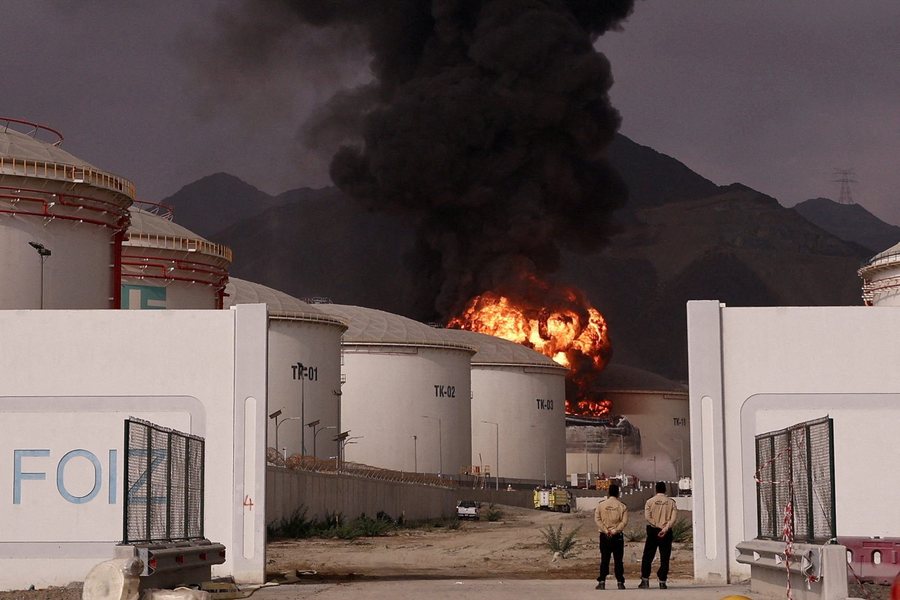
Attacks in Bahrain, Saudi Arabia, Oman and Azerbaijan signal Tehran's strategy to hit energy markets
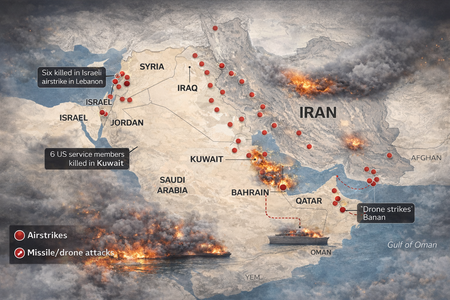
Iran's recent attacks on energy infrastructure in the Middle East and Caucasus region are increasingly being seen as part of a broader strategy to exert pressure on its adversaries and on global energy markets.
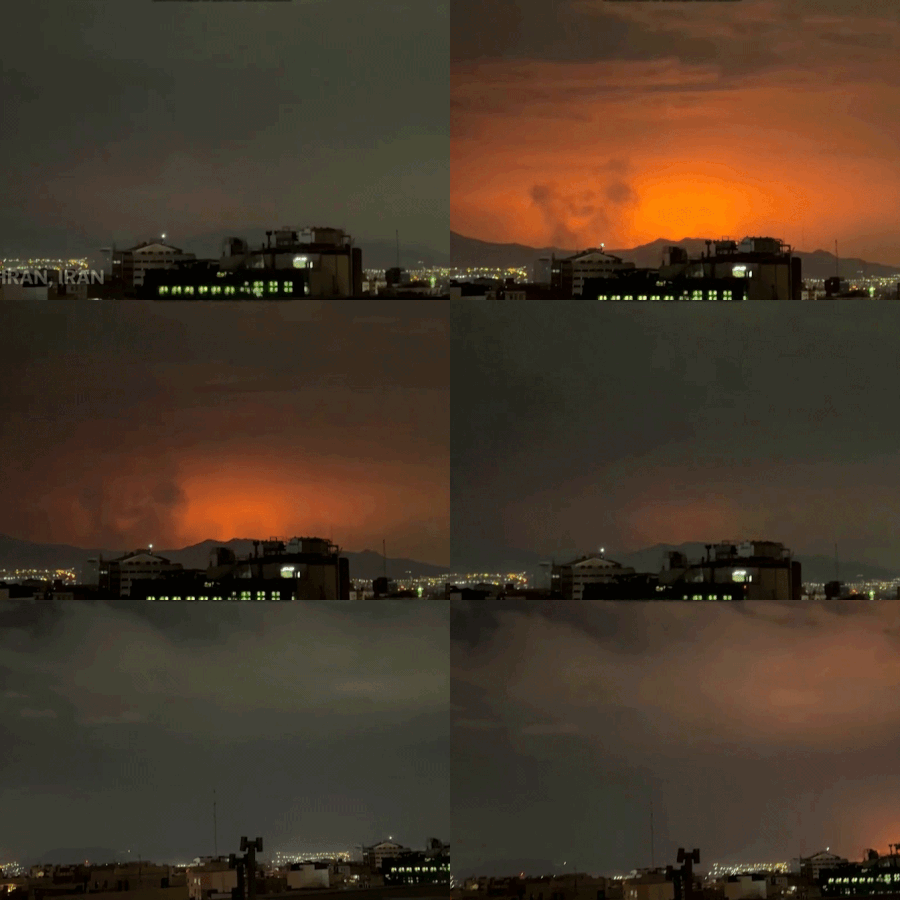
The strikes on oil installations in Bahrain, Saudi Arabia and Oman, as well as the warning attack on the Nakhchivan airport in Azerbaijan, show that the conflict is no longer limited to the clash between Iran and Israel, but is also affecting the energy production and transportation network in the region.
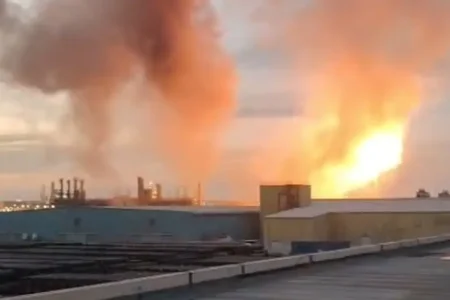
BREAKING: Fires are burning at Bahrain's Petroleum Company refinery following an Iranian ballistic missile attack. pic.twitter.com/fJky8pPbQT
— Faytuks News (@Faytuks) March 5, 2026
According to security experts, the expansion of tensions towards the Caucasus and Azerbaijan could be a signal that Tehran has the ability to strike other energy infrastructure in the region. Azerbaijan is one of the main energy producers in the area, with large oil and gas fields in the Caspian Sea.
Among the major energy projects are the Azeri-Chirag-Deepwater Gunashli (ACG) oil field and the Shah Deniz gas field, while the Sangachal terminal, south of Baku, serves as the main hub for energy processing and export.
‼️‼️??????????????? A drone belonging to lran targeted the Aramco oil facility in Saudi Arabia's Ras Tanura city.
— Visioner (@visionergeo) March 2, 2026
A large-scale fire broke out at the facility, it was reported.
See the latest updates with us: @visionergeo pic.twitter.com/FvjGlbEab4
Oil and gas are transported to Europe through strategic energy corridors such as the South Caucasus Pipeline (SCP) and the Baku–Tbilisi–Ceyhan (BTC) pipeline, which are part of the so-called Southern Gas Corridor.
Experts estimate that through an asymmetric war with drones and precision missiles, Iran is sending a clear message: if its regime risks falling, then no energy producer in the region will be safe.
The impact of the conflict is also being felt in energy markets. The closure or restriction of traffic in the Strait of Hormuz, one of the most important routes for global oil transport, has caused some producing countries, including Iraq, to have difficulty exporting their output.
According to analysts, the strategy of hitting energy infrastructure could serve as pressure on the United States and its allies, as a major energy crisis would significantly increase oil prices and could cause consequences for the global economy.
At the same time, Gulf countries face another potential risk: attacks on desalination plants, which provide most of the region's drinking water. In many Gulf countries, 60–70% of drinking water is produced by such plants, located mainly on the coast.
As we discussed with clients yesterday, regional energy infrastructure is now a priority target for Iran.
— Martin Kelly (@_MartinKelly_) March 3, 2026
This morning, oil storage tanks in Fujairah, UAE, were targeted, resulting in a fire at the JSW terminal (video), whilst Salalah was attacked with 3x UAVs & Duqm was struck... pic.twitter.com/a77VKmgujh
Unlike oil installations that mainly affect international markets, an attack on these plants would have direct consequences for the population, as cities in the region could face water shortages within days.
In this context, analysts consider the escalation of attacks on energy infrastructure as a means of strategic pressure on Tehran's part, turning the crisis into a geopolitical battle where energy and its transportation become the main objectives of the conflict.
Recent developments suggest that the Caucasus and the Middle East are entering the same tension zone, while attacks on energy infrastructure could jeopardize the stability of global oil and gas supplies.



Lini një Përgjigje