


 Shkruar nga Pamfleti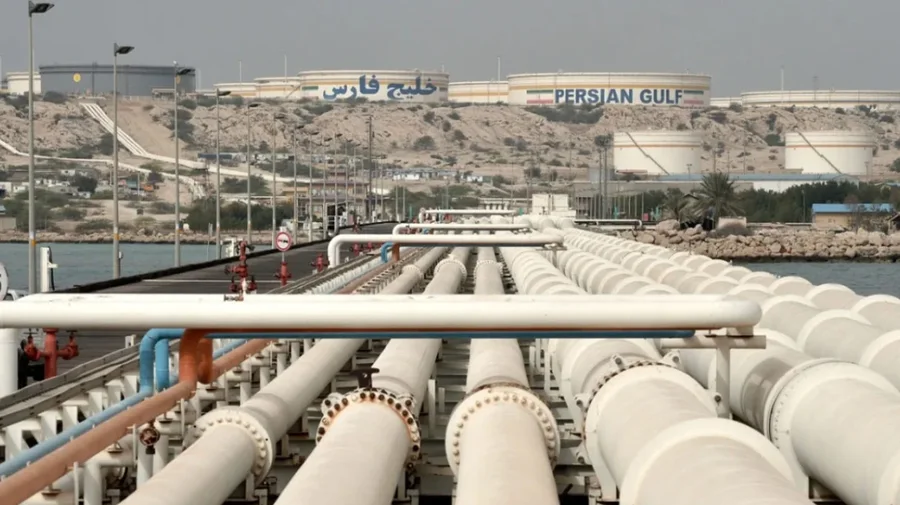
Iran is urgently seeking new ways to store its oil, trying to avoid a serious disruption to production, as a US naval blockade of its ports has blocked exports and negotiations to end the war remain at a standstill.
With reserves piling up domestically, Tehran is reviving old and abandoned storage facilities known as “junk storage,” using makeshift vehicles and even considering shipping crude oil by rail to China. These moves are intended to avert an infrastructure crisis and reduce pressure from Washington over its control of the Strait of Hormuz.
The standoff between the US and Iran has become a test of endurance: whether to surrender first to the Iranian oil industry or to global energy consumers. Any barrels that cannot be exported must be stored, in storage, on ships, in temporary structures or remain underground.
Chatham House analyst Sanam Vakil warns, speaking to the Wall Street Journal, that Iran is trying to avoid the possibility of a complete production shutdown, which would exacerbate revenue losses. “Such a development would increase pressure and could accelerate negotiations,” she emphasizes.
Talks between the two sides broke down last week, while Iran has proposed, through regional mediators, to stop attacks in the Strait of Hormuz in exchange for a complete end to the war and the lifting of the blockade on its ports, leaving the issue of its nuclear program for later.
Donald Trump has discussed this proposal with his national security team, while White House spokeswoman Caroline Leavitt stressed that Washington's "red lines" remain unchanged.
Iran's daily oil exports have fallen by a quarter
The crisis worsened when Iran restricted shipping in Hormuz at the start of the war, while the US imposed a full blockade on Iranian ports on April 13. According to the analytical company Kpler, Iran's oil exports fell sharply from about 2.1 million barrels per day in early April to just 567,000 barrels after the blockade was imposed.
Iranian production is expected to fall further, perhaps to below half of current levels by mid-May, if the blockade continues.
At the same time, the crisis has led to increases in international energy prices, with Brent crude oil exceeding $108 per barrel, adding to the pressure on consumers and businesses around the world.
Iran's oil reserves have now increased by 4.6 million barrels, reaching around 49 million, while total storage capacity is estimated at up to 95 million barrels, although a significant portion is not usable.
To cope with the situation, Tehran is also using sea tankers as floating depots and is bringing old depots back into use in energy centers such as Ahvaz and Asaluyeh, despite depreciation problems.
Transporting oil by train to China is considered an alternative, but at a high cost, as it does not compete economically with maritime transport.
Analysts warn that if Iran is forced to suddenly halt production, there is a risk of permanent damage to some older oil fields, especially those with low pressure, which make up about half of the country's reserves.





Lini një Përgjigje