


 Shkruar nga Pamfleti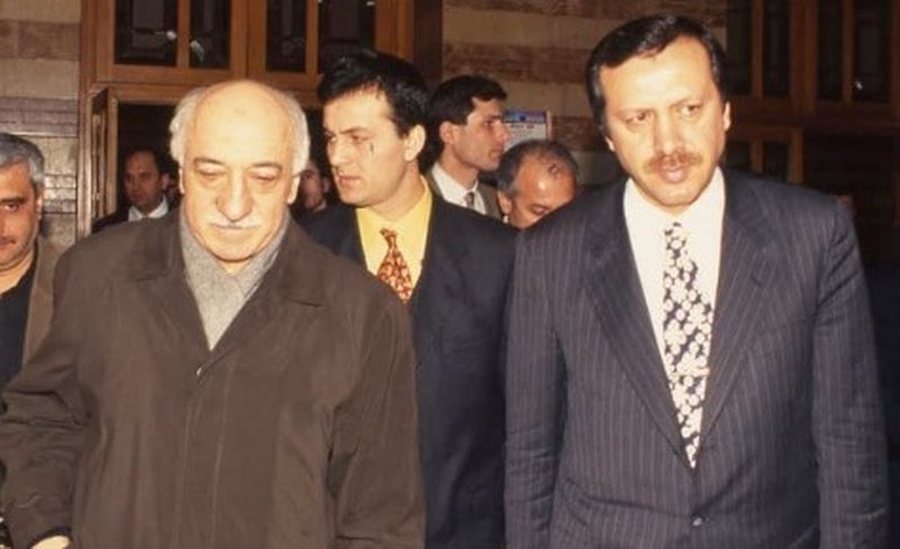
Fethullah Gülen was the founder of the Hizmet movement, which is often known as the "Gülen movement". He died at his home in Pennsylvania, USA, where he had lived in exile since 1999.
Gülen considered it his mission that religion once again play a leading role in the Turkish state. According to his statements, he also wanted to promote interfaith dialogue with a cosmopolitan interpretation of the Islamic religion.
During his career, he built an international network of schools and civil society organizations that work according to his ideas and views. But how could Gülen build this system?
Preacher, anti-communist fighter, friend of politicians
Gülen was born in 1941 in the eastern Turkish city of Erzurum. He was the son of an imam. He attended extracurricular courses on the Islamic religion and began working as a preacher at the age of 18. In 1962 he was one of the founders of the "Association for the Fight against Communism" and during the Cold War he was clearly against communism. In Turkey there were several such associations, which followed a pro-American attitude and a nationalist ideology.
In 1966 he began to build in Izmir the core of his future empire. There he founded the "House of Light", the prototype of his movement in the coming years. Since then he has been active as a founder of schools and associations. His movement started in Izmir and spread around the world. According to various estimates, his movement has over 2,000 schools in about 160 countries, which are legally independent of each other. In many Central Asian countries, the schools of the Gülen movement are considered among the best schools. The elites send their children there. Gülen's followers are educated and are active in business, science, police, security authorities, judiciary and have a lot of influence in the media or in the state.
With his political influence, he managed to get the people he educated into important institutions and get high positions. In the 90s he built good relations with various politicians - including Erdogan. However, he bought a plane ticket to the US: because according to an internal Turkish Police report, he was the head of an organization that was infiltrating the Turkish police. He was accused of wanting to "replace Turkey's constitutional system with a theocratic state." On March 21, 1999, he flew to the United States, citing health problems. And he never returned to Turkey.
Allies with Erdogan
With the coming to power of the AKP – which also had an Islamic-conservative agenda – Gülen became so strong that he was able to influence politics more than any other foreign actor. For years Erdogan and Gulen were allies: Erdogan benefited from Gulen's institutionalized social influence - Gulen benefited from Erdogan's political power and charisma.
After the success in the 2010 constitutional referendum, Erdogan publicly thanked Gülen. In 2012, he invited Gülen on television to return to Turkey.
From friend to foe
But starting from 2012, between Erdogan and Gülen there were numerous divisions for unknown reasons, which soon led to an institutionalized war between the two camps. On December 17, 2013, several AKP politicians were arrested on corruption charges attributed to Gülen-linked officials. A few days later, on December 25, investigations began against Erdogan's son, Bilal Erdogan. From this moment on, Erdogan's AKP called Gülen's movement a "parallel state structure" that was illegally very strong in the state.
One evening in July 2016, the crisis came to a head: Gülen was accused of attempting a coup on July 15, 2016 – a charge his movement consistently denies. The government says his supporters in the armed forces planned a coup. Since 2016, Ankara has asked the US several times to extradite Gülen - but without success. He was accused of leading "a terrorist organization". The Turkish government now calls the Gulen movement "FETÖ", in Turkish "Fethullahist Terrorist Organization".
Gülen leaves behind an active and strong worldwide movement, which does not bear his name but is based on his ideas. Whoever takes the wheel will have a lot to do. According to observers, an internal power struggle is currently underway between Gulen's two top supporters from his inner circle. The prevailing opinion is that Gülen will be very difficult to replace and that the power struggle could tear the movement apart./DW


Lini një Përgjigje