


 Shkruar nga Ronit Marzan
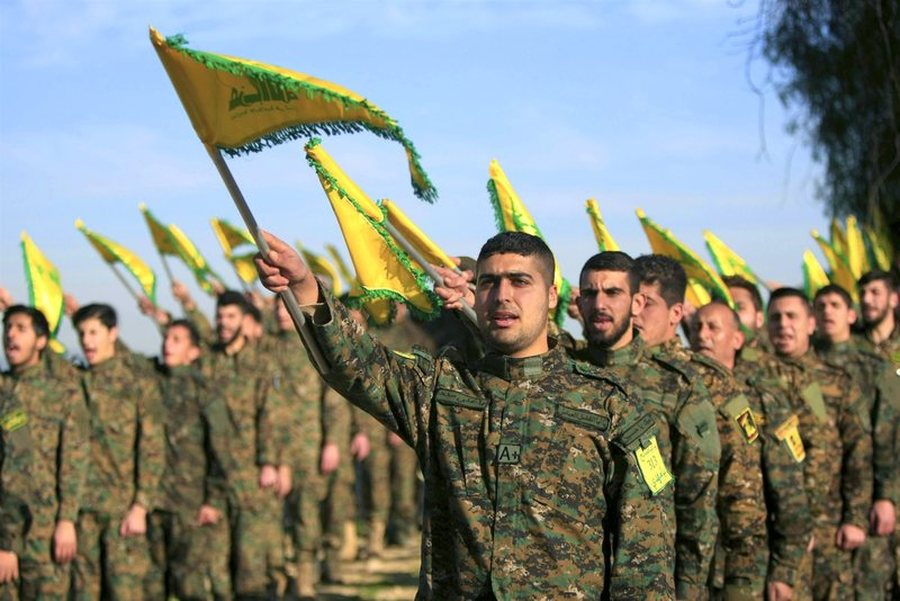
Beyond missiles and drones, the region is witnessing a battle of narratives between the "national honor" that stems from independence and the "foreign umbrella" of security.
Iran's military campaign against Israel and the Gulf states is not simply a matter of missiles and drones. Tehran is leading a push for an independent "Persian Islam," aiming to differentiate itself from dependence on the West.
The central question is whether the Islamic space can remain self-sufficient without Western assistance. This fight goes beyond military tactics. While analysts count missile interceptions and assess damage to energy infrastructure, a vast awareness campaign is taking place beneath the surface.
Its symbolism and prestige carry a strategic value as important as the weapons. At its core lies the geopolitical confrontation between non-Arab Islamic powers (Iran and Turkey) and the Arab Gulf states.
When Iran launches missiles at targets in the Gulf states, the intent is not just military. The goal is to expose their fragility. When states with staggering defense budgets — like Qatar, Saudi Arabia, and the United Arab Emirates — remain dependent on American radar and interception systems, it undermines their narrative as sovereign states.
Their vulnerability is not only related to the effectiveness of American Patriot missiles, but also touches the nerve of independence in terms of security. The limitations of military power present these regimes as incapable of self-defense and completely dependent on external alliances.
Iran aims to dictate a counter-narrative: “independent Iranian power” versus “Arab dependence on foreign umbrellas.” According to this logic, Iran stands alone as an imperial power challenging Israel and the United States, while the Gulf states hide behind Washington’s support.
Tehran is fighting for so-called "Persian honor," aiming to enter future negotiations from a heroic position, undermining the political and security status of its Arab rivals in the eyes of the Muslim world.
In this context, the statements made this week by Turkish opposition leader and former Prime Minister Ahmet Davutoglu are significant. "Those who remain silent about the attacks on Iran, following the logic of 'long live the snake that doesn't touch me', should understand that everyone's turn will come," he warned.
These remarks are not simply a domestic political attack on President Recep Tayyip Erdoğan. Davutoglu has drawn a geopolitical map that divides the region into two entities: non-Arab powers, Iran and Turkey, with “strategic depth” – imperial histories, independent defense industries and sovereignty unconditioned by the West; and Arab states, which he says have surrendered their freedom in exchange for a foreign protective umbrella.
Davutoglu sees Erdoğan caught in a trap between his obligations to NATO and his ambition to lead the Muslim world. His message is that trying to buy a temporary peace by abandoning Iran is a dangerous illusion. Because once Tehran is defeated, the West will deal with the other sovereign stronghold, Ankara.
In this tension between Islamic sovereignty and Arab dependence, the case of Qatar stands out. While Davutoglu calls for resistance against the “Western serpent,” Qatar chooses a delicate balancing act: the controlled weakening of the West, without allowing it to completely collapse.
For Qatar, the US is a safety net that guarantees military protection and regional immunity. Its interest is that the West remains strong enough to protect it, but weak enough not to limit its ideological and diplomatic freedom.
Davutoglu's statements, interwoven with Iran's military moves, show that the regional war is not based solely on nuclear weapons or terrorism. It is a battle over the definition of Muslim sovereignty in the 21st century.
The Arab states that lean on the West are not simply rivals of Iran and Turkey, but a symptom of the historical weakness that the Turkey-Iran axis aims to eradicate. Ultimately, the Islamic Middle East is divided between two worldviews.
One sees alliance with the West as an existential necessity; while the other seeks to replace dependence with an aggressive nationalism that sanctifies the power of the Muslim state over individual freedom.
The great paradox of Iran and Turkey is that while promoting "national honor" as an alternative to Arab dependence, they invest gigantic resources in the oppression of their citizens, turning sovereignty into a prison without freedom.
The bitter truth is that, while they curse the West as a “snake,” the West remains the preferred refuge of millions of immigrants fleeing their “sovereign” countries. Many Iranians, oppressed by the Ayatollahs’ regime, still turn to the West and its values.
For them, the West is not the aggressor, but the only address of salvation. The winner of this campaign will not be determined by the power of arms, but by the ability of the peoples of the region to embrace the narrative of Muslim independence, when they see that national sovereignty - as in Turkey and Iran - is transformed into an internal prison and loses all appeal.
Note: Ronit Marzan, professor of history and author of the book “Father, Son, and the Spirit of Revolution: Youth in the Arab Spring.”/ Adapted from “Pamphlet From “ Haaretz”





Lini një Përgjigje