


 Shkruar nga Pamfleti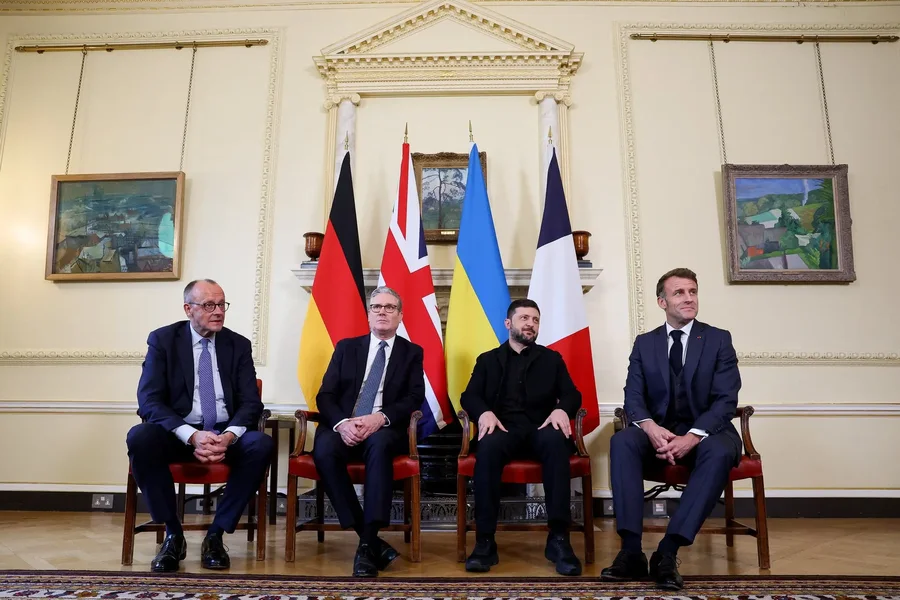
Left out of peace negotiations, European countries are working to assert their leadership and support Ukraine with an ambitious financing plan. But can they agree?
For months, European countries have struggled to agree on a bold proposal to fund Ukraine and its war effort.
Now, as the United States rushes forward to end the war started by Russia nearly four years ago, European leaders are working feverishly to finalize that funding plan. They hope it will help ensure they have a seat at the table as negotiations intensify and Ukraine is in as strong a position as possible to reach a deal.
It is also the European Union's chance, diplomats and analysts have said, to forcefully reject President Trump's portrayal of the 27-nation bloc as weak and indecisive.
On Thursday, that resolve will be put to the test when European leaders meet to decide whether they can agree on a plan to use Russia's own assets, frozen in Europe, to back a loan that would help Ukraine finance the war and its government for the next two years.
But with just days left, obstacles to a deal remain, with Belgium in particular expressing persistent doubts. Given this, what should have been a show of strength could turn into a show of division and weakness at a crucial diplomatic moment.
"Is Europe ready to do what it takes? It's a very important moment for Europe to stand up and be counted," said Jacob Funk Kirkegaard, a senior fellow at Bruegel, an economic research organization in Brussels.
The significance of Thursday’s meeting could not be clearer. It will come during a diplomatic flurry that began on Sunday when Ukrainian President Volodymyr Zelensky met with President Trump’s negotiators in Berlin. The goal of that meeting and the subsequent negotiations was to come up with a peace proposal that bridges the gap between Mr. Trump’s latest plan and a counterproposal from Ukraine that would take back some of what Kiev and its European allies considered gifts to President Vladimir V. Putin of Russia.
After months of struggling to gain a foothold in the negotiations, European leaders appeared to have found a foothold in this week’s meetings, the broadest negotiations to end the fighting since Russia invaded Ukraine. Senior officials from some of Ukraine’s close European allies, including Finland, France and Germany, as well as from the leadership of the European Union, spent hours on Sunday and Monday discussing plans to end the war, rebuild the economy and secure against another invasion.
Finding funding for Ukraine could be crucial not only to bolstering Kiev but also to ensuring Europe’s continued influence in a diplomatic struggle that the continent’s leaders see as central to their future security. It would serve, analysts say, as a kind of tipping point to bolster Europe’s geopolitical importance in a tense era of an aggressive Russia and a transactional United States.
“This is a way to reaffirm their importance,” said Brad W. Setser, a senior fellow at the Council on Foreign Relations.
"The idea that the future of Europe is being decided by Russia and the United States, you know, is shameless."
At the end of Monday's busy meetings, Ursula von der Leyen, president of the European Union's executive branch, highlighted the funding plan as a priority on the path to peace.
"Ukraine's needs are extraordinary and urgent," she said in a statement, calling Thursday's discussions a "decisive" moment.
If Europe can agree to it, the loan in question would use about 210 billion euros, about $245 billion, in Russian government assets frozen in Europe to back 90 billion euros in zero-interest loans to Ukraine over the next two years.
This would meet two-thirds of Kiev's estimated financing needs, with the potential for more money later. Ukraine would only have to repay the loan if Russia paid war reparations.
But while the loan plan has many positive sides, providing Kiev with the resources to continue the war and allowing Europeans to support Ukraine without resorting to their overstretched budgets, the idea also comes with major risks.
Both the government of Belgium, where most of the assets are held, and some outside financial experts have warned that the plan could scare away foreign investors, making them nervous about keeping their savings in Europe.
Continued reluctance was evident last week: although member states agreed on Friday to indefinitely freeze Russia's assets held in the bloc, a first step towards granting a loan to Ukraine using these funds, Belgium, Bulgaria, Italy and Malta did so reluctantly.
Të katër vendet lëshuan një deklaratë duke i kërkuar bllokut të vazhdojë të eksplorojë opsione alternative që paraqesin më pak rreziqe.
Të hënën në mëngjes, Kaja Kallas, diplomatja më e lartë e Bashkimit Evropian, u tha gazetarëve jashtë një takimi të ministrave të jashtëm të BE-së në Bruksel: “Nuk jemi ende atje dhe është gjithnjë e më e vështirë.”
Nëse plani dështon, Evropa do të mbetet duke u përpjekur të gjejë shpejt një mundësi rezervë. Ndërsa ekziston një alternativë që do të përdorte buxhetin e Bashkimit Evropian për të mbështetur një kredi, kjo do të kërkonte mbështetje unanime, të cilën nuk e ka.
Kestutis Budrys, ministri i Jashtëm lituanez, të hënën e quajti planin e kredisë "jo më të madhin dhe më të mirin, por opsionin e vetëm".
Ndërsa negociatat përshpejtohen, Rusia po bën lëvizjet e veta për të prishur propozimin. Banka Qendrore Ruse tha të premten se kishte ngritur një padi në Moskë kundër depozitarit belg që mban rreth 185 miliardë euro nga asete shtetërore ruse të bllokuara.
Duke pasur parasysh kërcënimin e vazhdimit të veprimeve ligjore, Belgjika po u kërkon vendeve të tjera evropiane të ndajnë rrezikun. Ajo ka këmbëngulur që në plan të përdoren edhe fonde nga vende të tjera: Shuma më të vogla mbahen në Britani dhe Francë, ndër të tjera.
“Nëse shkoni së bashku, atëherë jeni nën një ombrellë të madhe dhe nuk jeni i vetmi që është i ekspozuar ndaj të gjitha rreziqeve”, tha Kryeministri i Belgjikës, Bart De Wever, për Sky News pasi u takua me Keir Starmer, kryeministrin e Britanisë, në Londër të premten.
Ai takim në Londër duket se nuk solli ndonjë përparim. Në një deklaratë, zyra e z. Starmer tha vetëm se të dy udhëheqësit kishin “rënë dakord të vazhdonin të punonin ngushtë së bashku” për këtë çështje.
Pozicioni i administratës Trump ndikon gjithashtu në negociata. Uashingtoni herë pas here ka sinjalizuar interes në përdorimin e aseteve të ngrira si pjesë e një marrëveshjeje paqeje: Në një plan me 28 pika që u publikua muajin e kaluar, Shtëpia e Bardhë sugjeroi zhbllokimin e aseteve ruse dhe përdorimin e një pjese të parave për një program të përbashkët investimi ruso-amerikan.
Evropianët e kundërshtuan këtë dhe po nxitojnë të tregojnë se mund t’i përdorin fondet për të ndihmuar vetë Ukrainën. Paratë u përmendën përsëri në deklaratat pas takimeve në Berlin të hënën, megjithëse nuk ishte e qartë se çfarë u diskutua saktësisht.
“Ekziston një qëllim politik këtu: të sigurohemi që këto rezerva të përdoren në mënyrë produktive”, tha Mujtaba Rahman, drejtor menaxhues për Evropën në Eurasia Group, një firmë kërkimore. Ai shtoi se në Paris, në Berlin dhe në Bruksel, ata po e përdorin këtë kërcënim për të ushtruar presion mbi Belgjikën.
The question is whether it will work. Ambassadors from European Union countries reviewed the text of the asset freeze plan until almost midnight on Monday, and Belgium was still pressing for more assurances that the plan would not be left exposed, according to three diplomats familiar with the talks. They spoke on condition of anonymity to discuss a matter that has not yet been decided.
These discussions are expected to continue until the very end. And António Costa, who will chair the leaders' meeting on Thursday as president of the European Council, has said that talks will continue until an agreement is reached to finance Ukraine.
If the bloc fails to come up with a financing plan, Mr. Rahman said, it would be a “complete political and moral failure” that would “place Ukraine in an extremely vulnerable position.” /Adapted from the New York Times/




Kesaj i thone ljau, mjau, mjau. Kollaj te futesh ne dyshekun e kollovareve. Tani paguaj pasojat.