


 Shkruar nga Pamfleti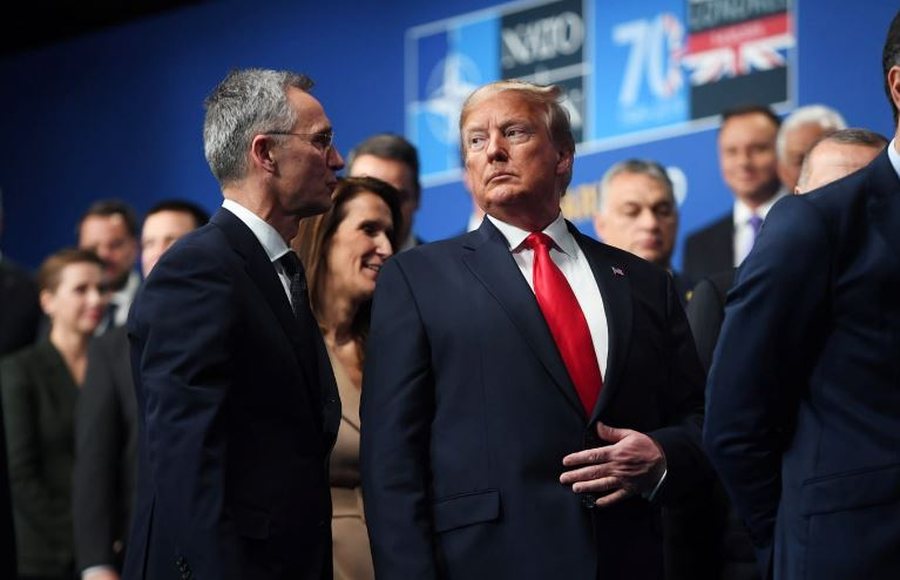
Some member states are spending more, but have not yet exceeded the 2 percent limit. Others have flattened. But the pressure to increase defense spending has not gone unnoticed.
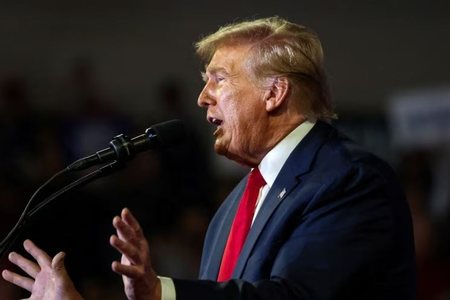
Former US President Donald Trump said over the weekend that he would encourage Russia to attack NATO allies who, he says, spend too little on defense.
His remarks shocked leaders on both sides of the Atlantic and cast doubt on how the 31-member alliance works.
All NATO member countries make payments to cover the operating costs of the organization, which was founded after World War II to help Western Europe against the Soviet Union with help from Canada and the United States. But they don't pay membership fees to stay in the alliance, so there's no delinquency to speak of.
The countries, however, commit to spending at least 2 percent of their gross domestic product (GDP) on defense each year, with the aim of ensuring the alliance's military readiness and deterring any possible attack. The commitment is a guideline, not a requirement, that has existed for nearly two decades.
Last year, 11 countries met or exceeded this target, according to NATO statistics. The rest spent smaller portions of their GDP on defense. (Iceland, the only member state without armed forces, is omitted from the data set.)
Most of the countries that spent beyond 2 percent either share a border with Russia or are located near the front lines of the war in Ukraine. Trump's insinuation that they are not paying their share is false.
Poland, which shares part of its northern border with the Russian enclave of Kaliningrad and a long stretch of its southeastern border with Ukraine, spent a larger share of its GDP on defense last year than any other country another member, at 3.9 percent.
The United States ranked second, with 3.49 percent. But in raw numbers, the US defense budget of $860 billion is more than twice that of all other NATO allies combined.
Other member states spending more than 2 percent of their GDP include Estonia, Lithuania, Romania and NATO's newest member, Finland, which joined the alliance last year. (It's worth noting that most big spenders have national laws or policies that require 2 percent defense spending in line with NATO goals.)
Countries further away from Russia were more likely to spend below the 2 percent guideline. Some including Germany, Italy and Canada spent significantly below this target, despite having large economies and GDPs exceeding $1 trillion. Others, such as Luxembourg, may struggle to meet the threshold due to the limited size of their militaries and defense industries.
Most NATO allies are spending a larger share of their GDP on defense than in 2014. That year, Russia invaded and annexed the Crimean Peninsula, stoking tensions in Eastern Europe and pushing NATO to double its spending target of 2 percent.
At the time, only three allies were meeting this objective. The number rose to seven in 2022. After Russia invaded Ukraine in February of that year, defense spending increased in several countries.
Poland topped the list again, with its defense spending jumping from 2.4 percent of its GDP to 3.9 percent. In total, Poland spent more than $29 billion on defense last year, nearly $12 billion more than it spent in 2022 and three times what it spent a decade ago. France, Slovakia, Hungary and several others also increased defense spending after the Russian invasion.
Earlier this year, Turkey voted in favor of Sweden's membership after months of delay. Pending Hungary's ratification, Sweden is expected to join NATO this year as the 32nd member and has pledged to spend 2.1 percent of its GDP.
Some member states are spending more, but have not yet exceeded the 2 percent limit. Others have flattened. But the pressure to increase defense spending has not gone unnoticed.
Following Trump's comments, German Chancellor Olaf Scholz pledged on Monday to meet NATO's 2 percent target. "This is urgently needed. Because no matter how harsh this reality is, we do not live in times of peace," said Scholz. / Adapted "Pamphlet", taken from "Washington Post"



Lini një Përgjigje