


 Shkruar nga Pamfleti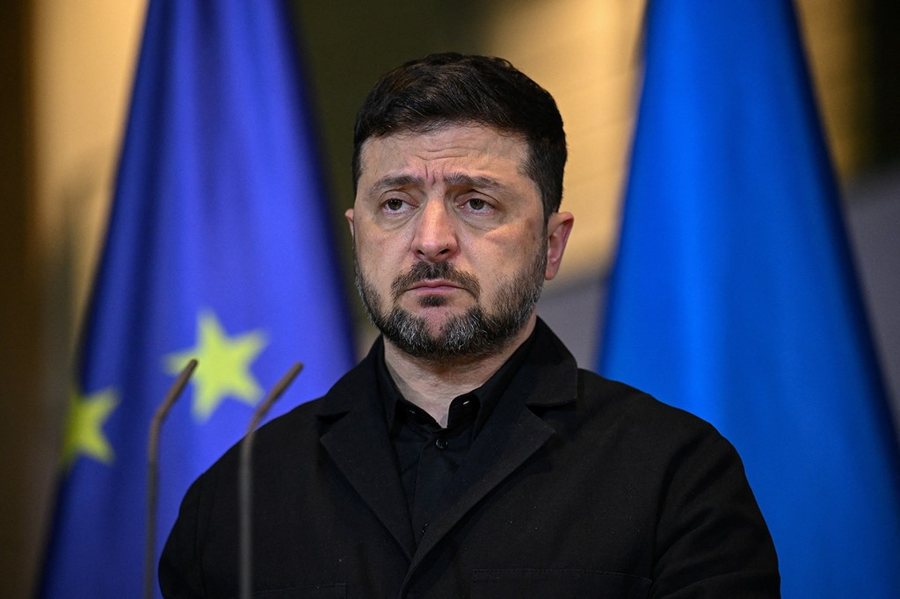
In Germany and France, opposition to the aid was particularly pronounced among supporters of far-right parties, while the centers were less skeptical...
When it comes to support for Ukraine, a divide has emerged between the European Union and its English-speaking allies. In France and Germany, the EU's two largest democracies, new polls show that more respondents want their governments to reduce financial aid to Kiev than to increase it or keep it the same.
Meanwhile, in the United States, Canada and the United Kingdom, respondents lean the other way and favor maintaining material support, according to the POLITICO Poll, which surveyed more than 10,000 people in the five countries earlier this month.
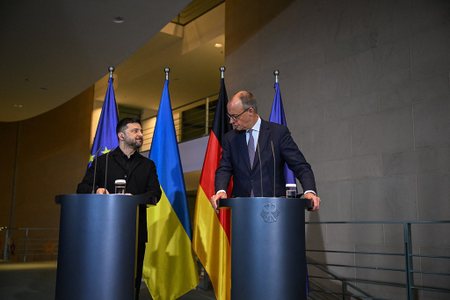
The findings come as European leaders prepare to meet in Brussels on Thursday for a high-stakes summit where providing financial support to Ukraine is expected to dominate the agenda. They also come as Washington seeks to broker a peace deal between Moscow and Kiev, with German leader Friedrich Merz taking the lead among European nations in negotiations in Kiev's favor.
In all five countries, the most cited reason for supporting continued aid to Ukraine was the belief that nations should not be allowed to occupy territory by force. The most cited argument against additional aid was concern about the cost and strain on the national economy.
“ Most of our research has shown that the public in Europe believes that the current era requires political compromise, and financial support for Ukraine is no exception. At a time when public finances are seen as a limited resource, people’s interests are increasingly internal,” said Seb Wride, head of polling at Public First, an independent polling company based in London that conducted the poll for POLITICO.
-Western division
Germans were the most reluctant to increase financial aid, with almost half of respondents (45 percent) in favor of cutting financial aid to Kiev, while only 20 percent wanted to increase it. In France, 37 percent wanted to give less and 24 percent preferred to give more.
In contrast to the growing opposition to Ukrainian aid from Europe, support remains surprisingly strong in North America. In the US, President Donald Trump has expressed skepticism about Kiev’s chances of defeating Moscow and has sent negotiators to negotiate with the Russians for peace. And yet, the US had the largest share of respondents (37 percent) in favor of increasing financial support, with Canada close behind at 35 percent.
Support for Ukraine was driven largely by those who supported Democratic candidate Kamala Harris in the 2024 US election. About 29 percent of Harris voters said that one of the top three reasons the US should support Ukraine was to protect democracy, compared to 17 percent of supporters of US President Donald Trump.
“The partisan divide in the US right now is quite extreme ,” Wride said.
In Germany and France, opposition to the aid was particularly pronounced among supporters of far-right parties, while the centers were less skeptical.
"The way Ukraine funding is being developed in Germany in particular, as a number of European governments face populist challenges, should be a particular warning sign for other leaders ," Wride said.
-Refugee fatigue
Support for military aid marked a similar split. Nearly 40 percent of respondents in the U.S., U.K., and Canada supported higher levels of military aid, with about 20 percent opposed.
In Germany, 26 percent supported increasing military aid to Ukraine, while 39 percent opposed it. In France, opinions were evenly split, with 31 percent favoring an increase and 30 percent favoring cuts.
Germany was also the only country where a majority of respondents said their government should accept fewer Ukrainians displaced by the war. In a country that has accepted more than a million Ukrainian refugees since Russia began its full-scale occupation in 2022, 50 percent of Germans said Berlin should accept fewer refugees.
Half of those surveyed also said Germany should reduce support for Ukrainians already settled in the country, a sign that public fatigue is extending beyond weapons and budgets to the broader social and political pressures of the conflict.
However, the softer support for Ukraine in France and Germany does not appear to reflect warmer feelings toward Moscow. Voters in all five countries supported sanctions against Russia, suggesting that even where the public wants to reduce aid, they remain broadly oriented toward punishing the aggressor and limiting Russia’s ability to finance the war.






T'majt e jotja or mik. Kam degjuar shgume histori te ndyra nga Ukrainasit per trajtimin e Gjermaneve gjate Luftes se II Boterore. Sot kuptova qarte pse USA u terhoq nga ky sherr. Deri ne 2006 Britamia ka lare kestin e fundit Amerikes per ndihmant monetare. Jane shume qe i detyroheshin e detyrohen Amerikes duke filluar nga Japonia. Dmth. USA e ka pas kethyer ne biznes dhenien e huave e sot qe po lahen huate, po hap luftra te tjere. E di qe shume kohe me pare qe USA i dha teknologjine e ndertimit te mjeteve Rusise. Ne kujtonim mjetet tona ushtarake ishin ruse e kineze por ne fakt ishin me origjine Amerikane nga Dodge Krysler e te tjere. Me pas Europa hyri ne Lufte me Rusine e u be para e madhe se per njerez biznesi nuk pyet kurre. Pra po ndersehen Europianet, sidomos Britania, Gjermania, Franca qe te shkaterrohen si shtete me teknologji te larte konkurrente per USA. Ne para e biznes nuk ka vella e mik. Trump i ra gozhdes ne koke qe e tha hapur politiken Amerikane. Quajeni si te doni por e thote troc si i themi ne. Me vjen inat pse ne Shqiptaret i zgjedhim miqte e gabuar ne kohen e vendin e gabuar.