


 Shkruar nga Christopher Phillips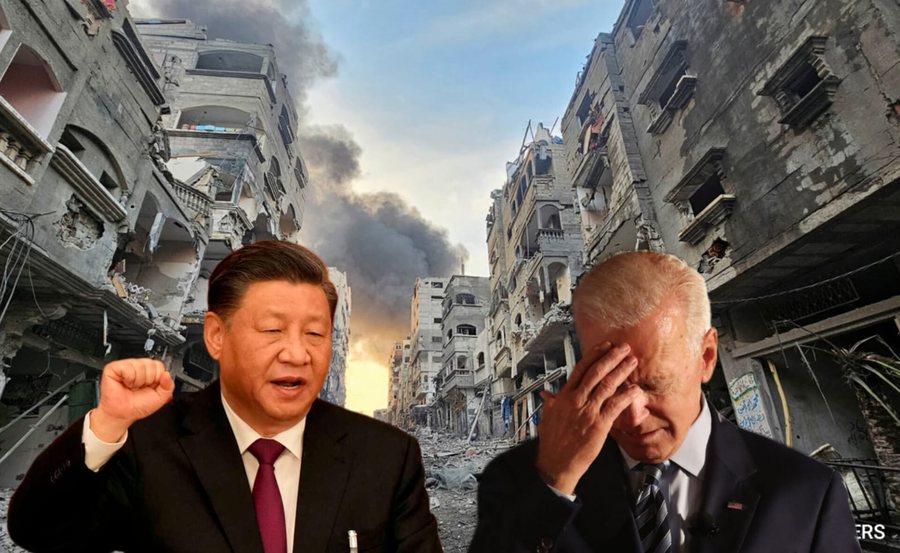
Washington's distractions in the Middle East and its loss of credibility are not only harmful to America, but extremely beneficial to its global rival, China.
Given the brutal violence of the war in Gaza, it seems out of place to talk about winners and losers. But on the current balance, there are few winners. Palestinians have suffered more than 26,000 people killed, 65,000 injured and untold damage to homes and infrastructure.
Although Hamas may continue to exist, despite Israel's vow to wipe it off the face of the earth, it will be the costliest victory that history has seen. But Israel is also suffering. Some may think that the war has taken its toll on the more than 1,200 people who were massacred on October 7. However, so far it has neither destroyed Hamas, nor secured the release of the remaining 132 hostages.
Meanwhile, Israel's global image has been severely damaged. The decision of the International Court of Justice, according to which Israel must prevent acts of genocide, following the South African lawsuit, was a severe blow. Although Israel retains the support of its Western allies, and Prime Minister Benjamin Netanyahu insists that the war will continue, the lawsuit in this court is hurting him quite a bit.
But among the biggest "losers" so far are the United States. Washington's distractions in the Middle East and its loss of credibility are not only harmful to America, but extremely beneficial to its global rival, China. When he became president in early 2021, Joe Biden promised to limit US involvement in the Middle East.
It was something he had sought since he was Barack Obama's vice president more than a decade ago. According to "The New Yorker", Biden was "one of the strongest skeptical voices about the use of American force" under the Obama administration. He was very reluctant to use it in the Middle East, urging caution at key moments in Libya, Syria, and even in the strike to kill Osama bin Laden.
While not advocating a full strategic withdrawal from the Middle East, Biden has long aligned himself with those calling for a more modest military engagement and a strategic focus elsewhere. And since becoming president, Biden has put this approach into practice. His strategic priorities have not been in the Middle East but Asia and China (starting with Obama and Donald Trump) and, after 2022, the fight against the Russian occupation of Ukraine. The withdrawal from Afghanistan and the ongoing discussion of withdrawal from Syria and Iraq underscored this strategic shift.
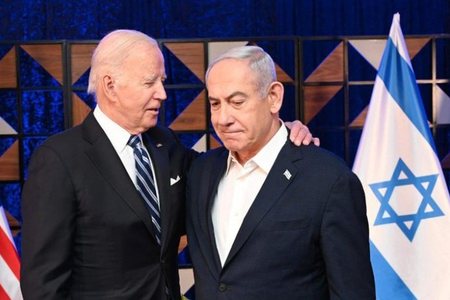
Since the October 7 attack, however, these long-term strategic priorities appear to have been subordinated to Israel's support. The US has sent aircraft carriers to the Eastern Mediterranean to deter Hezbollah, launched airstrikes and deployed special forces to Yemen in response to Houthi rebels' attacks on shipping in the Red Sea.
It has also targeted various groups linked to Iran in Iraq and Syria. After 3 US soldiers were killed by a drone strike in Jordan on Sunday, the prospect of more US military strikes in the region is growing. It seems unlikely that Biden will authorize a major shift in the Middle East.
We will certainly have nothing like the "War on Terror" announced by George W. Bush, of which Biden was so skeptical. But these flare-ups in the Middle East are at least a distraction from Biden's stated strategic goals elsewhere.
Ukrainian President Volodymyr Zelensky has already warned that the Gaza war is "shifting the focus" from his country's war with Russia. And it is obvious that since October the US has waned its interest in Kiev. Congress is reluctant to approve more arms funding for Ukraine.
Meanwhile, even Biden's attempt to unite Western countries against China is losing momentum. In May 2023, he successfully persuaded the G7 to withdraw its investments in China. But since the Gaza war broke out, Biden's efforts have been more focused on keeping Western allies in support of Israel than confronting Beijing.
In addition to being distracted by rivalries with China and Russia, the Gaza conflict is undermining US credibility in the Global South. The lawsuit against Israel at The Hague was supported by key representatives of the non-Western world, including the Arab League, the Organization of Islamic Cooperation, Turkey, Malaysia, Brazil, Pakistan, Colombia and Venezuela.
But despite the court warning Israel not to commit genocide, asserting that South Africa's accusations were well-founded and needed to be examined, Washington insisted it would not change its support for Israel. This prompted a range of analysts in the West and Global South to accuse the US of hypocrisy. This rules-based, US-led order was rejected because it appeared to be setting itself against a key US ally.
After the Biden administration spent much of 2022-2023 urging the Global South to condemn Russia for its attack on Ukraine, his endorsement of Israel behaving similarly in Gaza only reinforced the already-defeated defeat. considerable confidence in US global leadership.
And again this brings benefits to China. For years, Beijing has challenged Washington's global leadership. When the BRICS grouping was expanded at last year's Johannesburg conference, Xi Jinping declared that the new members would help give more voice to the non-Western world and weaken "US hegemony".
China's ongoing narrative toward the Global South has been that the US cannot be trusted, that it is selfish, and that China, as a member of the Global South itself, is a better ally. As Beijing has significantly expanded its influence in large parts of sub-Saharan Africa, East Asia and now the Middle East, it appears to have found an audience that has welcomed it with open arms.
China and Russia have been able to point to the apparent refusal of the US to rein in Netanyahu's war as further proof that Washington is ultimately a "colonial" power. So far China has had to do very little to profit from the conflict in Gaza.
While the US is very involved, China has appeared relatively restrained. Its leaders have made statements condemning Israeli aggression and calling for restraint, but they have mainly focused on discrediting the US in the countries of the Global South.
This costs little as a strategy and carries the potential for Beijing to increase its credibility due to US actions. Whether this will work in the long term remains to be seen, and may depend on how the war plays out. But for now, if anyone is "winning" from the Gaza war, it's China.
Note: Christopher Phillips, professor of international relations at Queen Mary University of London. Author of the book "Battlefield: Ten conflicts that explain the Middle East today"./ Adapted "Pamphlet" from "Arab News"





Lini një Përgjigje