


 Shkruar nga Pamfleti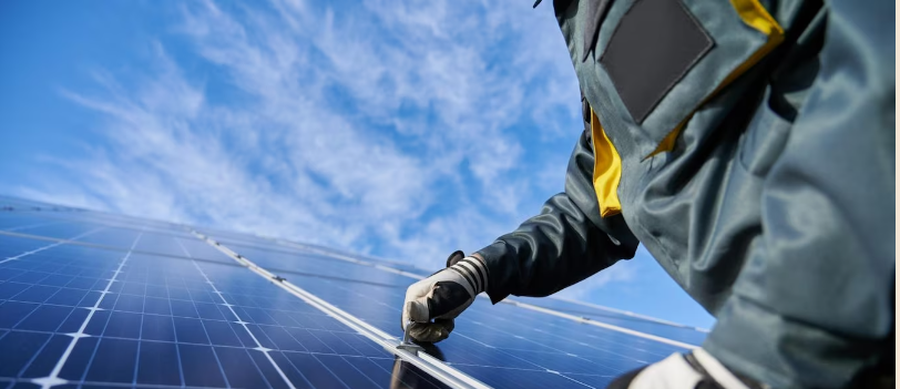
The European Union and Italy have set ambitious targets for the development of renewable energy sources, but the supply chains required for the main decarbonisation technologies are concentrated outside the European continent, mainly in China (on average for 65% of the total). And this represents both a risk of dependence on imported energy technologies and an opportunity to develop strategic supply chains locally.
Lost ground
Losing ground as China built global leadership in green technologies has created a number of competitive disadvantages. Investment costs in supply chains such as photovoltaic panels, batteries and heat pumps are higher in Italy and the EU than in China.
The investment cost of building photovoltaic panel production plants in Italy is between 2.2 and 5.6 times higher than in China. At the same time, capital costs for a new battery gigafactory are 47% higher (€100 million per gigawatt-hour in the EU vs. €68 million per gigawatt-hour in China), and the cost of producing batteries in the EU it is 33% higher than China.
Also in terms of operating expenses, China is more competitive. In the EU and Italy, the price of energy for industry is 45% higher than in China and the cost of CO2 emissions is 10 times higher than in China.
Time
As far as competition is concerned, it is also the time of realization that has an impact. It takes 20 to 40 months to build a panel factory in Europe, compared to 12-24 in China; 5 years to build a battery gigafactory. And again: the lack of integration in the upper stages of the supply chain has an impact.
"In the photovoltaic supply chain, both in the EU and in Italy, there is no vertical integration and there are no companies operating in the downstream segments (cells and modules) that are also active in the upstream segments (polysilicon, rod and wafer ) – explains a special study funded by ENEL.
As for batteries, the extraction of the main raw materials is highly concentrated in a few non-European countries (the EU imports 100% lithium and 81% cobalt), while the processing capacity is mainly located in China (thanks to massive foreign investment direct Chinese made in the last 15 years and directed to those countries where the critical raw materials are located).
In this context, the strict European mining/extraction regulation brings the total time required from field discovery to actual extraction to 15/17 years compared to 3 months in China”. A rather depressing scenario.
What should be done?
According to the study, the EU still has a significant, albeit fragmented, capacity in terms of research and development for photovoltaics. "If this capacity is translated into efficient and high-quality industrial products, this could be a lever for Europe," he notes. Again: there is a possibility to ban the export of 3 Chinese technologies for the production of photovoltaic modules.
Ky është një rrezik që BE-ja mund ta kapërcejë duke promovuar zhvillimin e një industrie vendase, e cila megjithatë kërkon kohë”. Ndër 11 propozimet për ndërhyrje, në nivel kombëtar, sugjerohet “zbatimi i një strategjie të qartë për të siguruar furnizimin me lëndë të para kritike, duke lehtësuar nënshkrimin e marrëveshjeve me vendet furnizuese me të cilat tashmë janë ruajtur marrëdhënie të mira diplomatike dhe ekonomike”.
It is proposed "the creation of dedicated green finance mechanisms to develop industrial chains that also provide funds with premium mechanisms based on criteria other than price"; and again: the introduction of incentives for the promotion of heat pumps. At the European level, it is recommended to "encourage the distribution to companies and citizens of the strategic value created by the development of a local supply chain, by defining financial mechanisms, such as the exemption from VAT for technologies produced in Europe"./Oligarchy





Lini një Përgjigje