


 Shkruar nga Pamfleti
If the Europeans do not abuse the veto, the three big powers use it to protect their "friends" or, in the case of Russia, to cover up their own crimes in Ukraine.
The world is currently between two major wars, in Ukraine and the Middle East. It is even facing several other conflicts: in Sudan, or even closer: in the China Sea.
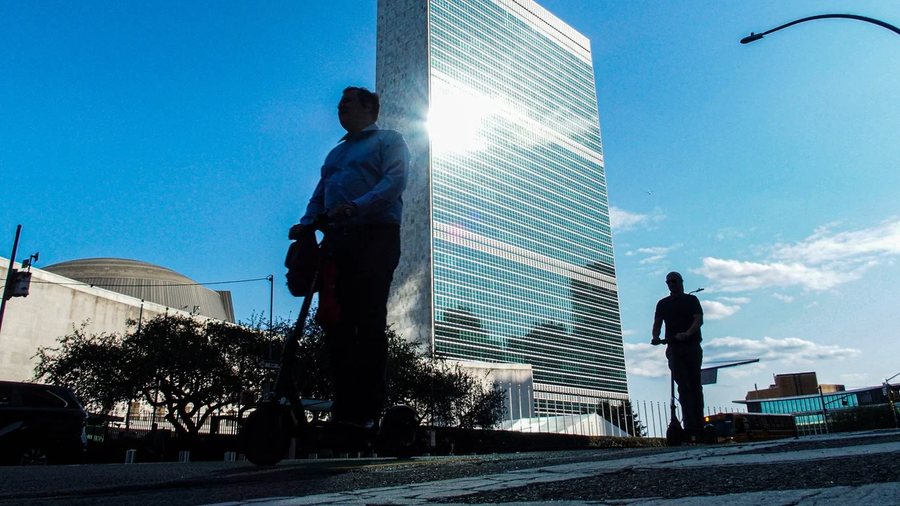
But it seems that the United Nations, whose main mission is to prevent conflict, feels more powerless than ever. At a time when peace and cease-fire talks are still not yielding results.
We all know the reason: the paralysis of the Security Council, the organization's supreme body, in which five countries: China, the United States, France, the United Kingdom and Russia have the veto power they gave themselves as life insurance in in 1945.
If the Europeans do not abuse the veto, the three big powers use it to protect their "friends" or, in the case of Russia, to cover up their own crimes in Ukraine. So forget the Security Council as long as the two wars that directly or indirectly concern them last.
- Corridor diplomacy
The General Assembly is another story. The World Democracy Forum offers citizens from all over the world the opportunity to reflect on democracy, to analyze its defects and limitations, but also to highlight new ideas to respond to the challenges that democracy must face. .
"The General Assembly speaks, but no one listens."
Everything has to happen here, but there is an impasse. The problem is that no one really cares what happens in the General Assembly since its resolutions are not binding. The General Assembly speaks, but no one listens.
There was a time when heads of state at the annual General Assembly, not to find out what was going to be voted on, but to hear keynote statements and meet behind the scenes. Even this dimension of backward diplomacy has lost some of its interest in a period of confrontation.
So what should be done? Should we resign ourselves to seeing the "death" of the United Nations, just as in the 1930s we saw the demise of its predecessor, the League of Nations, at the risk of war? The League of Nations was founded after World War I, to prevent another mass war, but as we know: It failed. Then came World War II, and after it ended, the United Nations ran out of powers to impose sanctions and send peacekeepers.
-The new world order
We must admit that it no longer works and that the system imagined since 1945 (without the colonized countries, without the losers of the war and protecting the most powerful with the right of veto), has only brought a stalemate.
The first two attempts at global governance, the League of Nations and the United Nations, were products of world wars. But in today's conflicts, the establishment of a global balance between a West on the defensive, authoritarian powers in action and a developing world south is still at stake.
A new world order will emerge from this direct and indirect confrontation. The question is, what state will the world be in next? What will happen when on the planet today when the UN is unable to prevent wars?
It is a question that should follow us and push us, but which is unfortunately far from our daily political debates./ Adapted "Pamphlet" from "Worldcrunch".


Lini një Përgjigje