


 Shkruar nga Pamfleti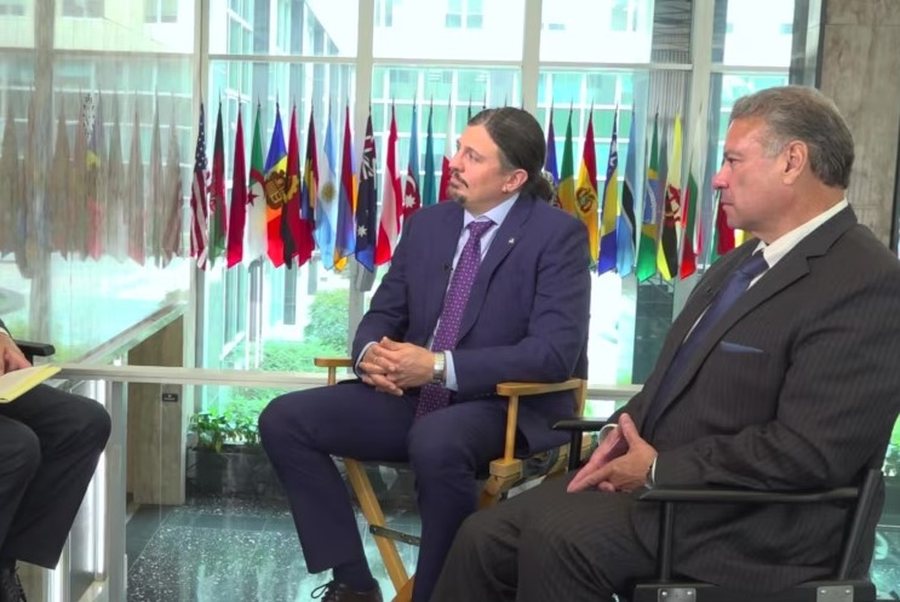
The Coordinator for Anticorruption at the US Department of State, Richard Nephew, has explained the reasons that forced him to blacklist the mayor of the municipality of Struga.
The State Department on Tuesday announced Ramiz Merko as a person 'non grata', with the argument that he is involved in significant corruption, embezzlement of funds and interference in judicial processes, undermining public trust in democratic institutions. In an interview with VOA, the DASH official gave details.
Voice of America: Mr. Nephew, Mr. Escobar, the State Department designated the mayor of Struga, Ramiz Merko, for major corruption, declaring him a person 'non grata'. As we have seen with such determinations in the past, the notice is not very specific. Can you share more information about why this decision was made?
Richard Nephew : The decision was made because the Secretary of State had credible information suggesting that Mr. Merko was involved in major corruption. And so under the laws, when the Secretary reaches that conclusion, one's determination is legally binding, as happened today.
VOA: Can you share with us on what concrete evidence this determination was made?
Richard Nephew: Yes, the information that was released as part of the press release indicates that it is about misappropriation of funds and interference with court proceedings. And you know, given the nature of the determinations and their legal basis, that's the information we can make public on this case.
Voice of America: Are political impacts expected after this determination?
Gabriel Escobar: I hope that this decision will help the government of North Macedonia to continue its efforts to fight corruption.
Voice of America: We have seen that determinations that have been made in the past have raised questions about their effectiveness and whether they serve the stated purpose?
Richard Nephew: One of the main purposes of these designations, the main purpose of the Congress that passed the law, is to show our support for the rule of law in anti-corruption efforts around the world. And by publicly identifying them, designating them under the 7031C Act and denying them the opportunity to come to the United States, we think we help support the principle of the rule of law.
We also believe in strengthening anti-corruption norms in activities and practices around the world. Whenever there is talk of visa restrictions, or sanctions, the question of their effectiveness and impact always arises. In general, we have had very good results helping civil societies and other activists, to show them that they are not alone, that when they encounter corrupt individuals they have the support of the international community.
VOA: In your decisions, does the fact that a designated person is in power or not play a role. In most cases, those who are determined are former officials and rarely people who are in power.
Richard Nephew: Kjo ka të bëjë me pikëpamjen ligjore. Ligji thotë se kur Sekretari i Shtetit ka informacione të besueshme që tregojnë përfshirje në korrupsiuon madhor, Sekretari është i detyruar të vendosë saknksione duke u mohuar këtyre individëve vizat. Pra nga ana ligjore ne veprojmë kur kemi informacione. Kjo është pjesë e hetimeve, që kryhen për të arritur në përcaktimin e dikujt. Nëse dikush është zyrtar, apo ish-zyrtar, kjo nuk ka shumë rëndësi për atë që na kërkon ligji për të bërë.
From a practical point of view, identifying and reacting to a former official involved in corrupt acts has its merits. Part of the reason behind our actions is to support civil society, to support those who seek to hold corrupt individuals accountable. So that even after they have left power, they will not be able to benefit from what they did when they were in power.



Lini një Përgjigje