


 Shkruar nga Pamfleti
Trump refuses to impose a lower price cap on Russian oil, but calls on the EU to adopt 100% tariffs against Beijing and Delhi on imports from Russia.
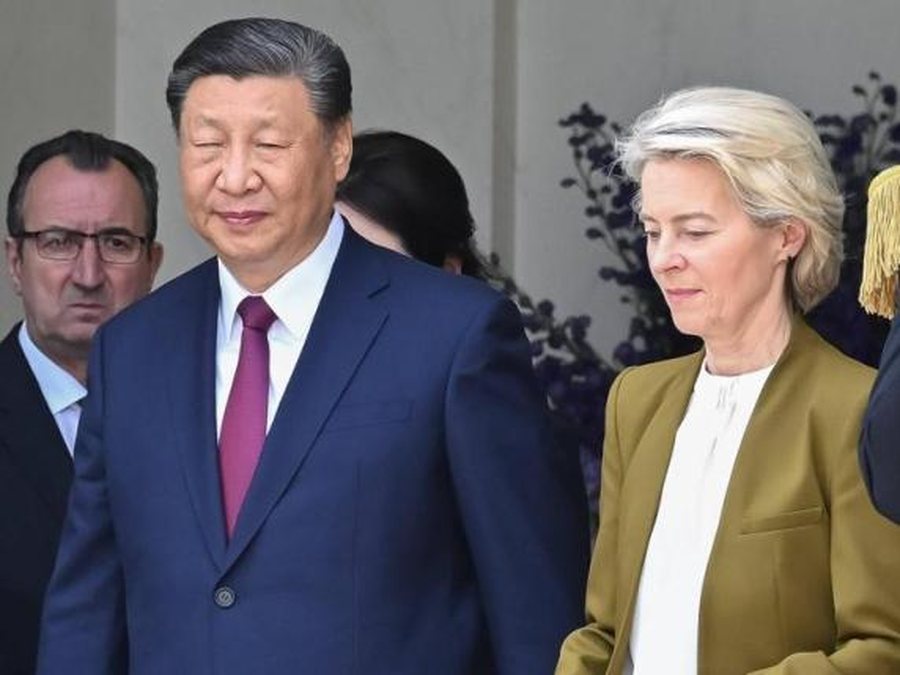
In mid-June, at the G7 summit in Kananaskis, Canada, Donald Trump rejected a proposal from the European Union and the United Kingdom to end the war in Ukraine: reducing the price at which importers could buy Russian oil without being exposed to sanctions from $60 to $45 per barrel.
The US president has refused to discuss the idea, which would lose much of its effectiveness without US support. However, in recent hours he joined a meeting in Washington between European and American negotiators and presented a demand, theoretically with the same objective: limiting Russian oil revenues. According to Trump, the European Union should impose tariffs of up to 100% on imports from China and India if the two Asian superpowers continue to buy crude oil from the Russian Federation.
Russian oil and gas sales
Oil and gas sales are essential to the sustainability of Vladimir Putin’s war. Taxes on the extraction and export of fossil minerals account for nearly 40% of Moscow’s government revenue, a figure almost equivalent to the total expenditure on the Kremlin’s military and repressive apparatus. A 10% or 20% drop in these revenues would put pressure on Moscow’s budget and, ultimately, on the war effort.
Trump rejects the idea of cutting Moscow’s revenues by imposing a lower price cap on Russian oil. Instead, he is calling on Europe to adopt his own method: “secondary tariffs,” which means extremely high and blanket duties against China and India if they import Russian crude. Indeed, companies from the People’s Republic have bought €271 billion of Russian crude, gas, and coal since the start of the war (according to the Helsinki think tank CREA), and €150 billion from India. Both countries continue to do so, with China now accounting for almost half of Russia’s exported barrels.
Trump's strategy is harming the EU and Ukraine
Could Trump's proposed approach work? It could certainly spark a new trade war between the world's two economic superpowers. In 2024, the European Union accounted for $516 billion of China's exports, 14.5% of the total. This year, it will become the main destination market for the People's Republic's products, after exports to the United States fell due to tariffs.
If Brussels were to impose steep tariffs on Beijing over its purchases of Russian oil, Xi Jinping's response could only be similar to the one he unleashed against the United States after Trump launched the trade war last April: China would hit the European Union with similarly steep tariffs and cut off Europe's access to rare earth metals, on which it has a near-monopoly. Exporting countries like Italy, Germany, and much of Central and Eastern Europe would risk falling into a deep recession, trapped between the tariff walls of the world's two largest economies.
At that point, Europe would be even more in crisis and less able to help Ukraine itself in the war. The path proposed by Trump would lead to a complete misdirection of goals: it would harm (also) Kiev, instead of helping it.
Trump's real objective, between Europe and China
Why, then, does the US president insist on asking Europe for “secondary tariffs” against China? Most likely, because his priority at this stage is to enlist European Union governments on his side in his personal and national rivalry with the Asian superpower.
Trump is interested in Europe helping America curb China’s rise, not stopping Putin’s war.
But if Europe refuses to impose “secondary tariffs” on China and India, then Trump could argue that the United States shouldn’t try to help Kiev because Europe refuses to do so in the first place. That would be the perfect excuse to disengage.
The proposal to lower the maximum price of Russian oil seemed more effective and less destabilizing. For Trump, it's as if it didn't exist./ Corriere della Sera





Lini një Përgjigje