


 Shkruar nga Pamfleti
Donald Trump said he was willing to talk to Iran's new leaders after the death of Ayatollah Ali Khamenei, suggesting that the transition in Tehran could open a new window for negotiations. In an interview with The Atlantic, he said he accepted the request for dialogue but stressed that Iran "should have done it sooner" and that a "practical and easy" deal could have been reached before the escalation...
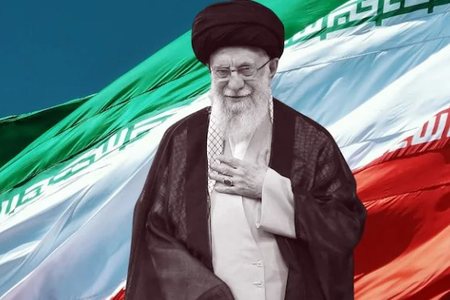
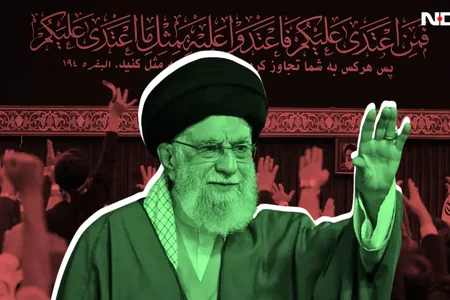
The death of Ayatollah Ali Khamenei has immediately opened the constitutional process for choosing his successor, at a time when Iran is in open conflict with the US and Israel. According to the Constitution of the Islamic Republic, the powers of the supreme leader are temporarily transferred to a Provisional Leadership Council, consisting of the president, the head of the judiciary and a clerical jurist selected by the Guardian Council. This body administers supreme authority until the election of a new leader.
The final decision rests with the Assembly of Experts, a body of 88 clerics elected every eight years, which has a constitutional mandate to appoint and oversee the supreme leader. The assembly is expected to consider candidates who meet religious, political and moral criteria, while the context of war and external pressure make the process more complicated than in 1989, when Khamenei himself was elected after the death of Ruhollah Khomeini.
In this climate of transition, US President Donald Trump declared that he is ready to hold talks with the new Iranian leaders. In an interview with The Atlantic, he said that he has agreed to talk to them. “They want to talk, and I have agreed to talk, so I will talk to them. They should have done it earlier. They should have agreed to what was very practical and easy to do. They have waited too long,” he said. Trump added that a deal could have been reached earlier and that, according to him, some of the key figures in the Iranian leadership “are no more.”
His statement suggests that Washington sees the internal transition in Tehran as an opportunity to reformat relations or increase diplomatic pressure. However, it remains unclear whether the Assembly of Experts will choose a hard-line figure, linked to the Revolutionary Guard, or a more pragmatic profile that could pave the way for negotiations.
The selection process is taking place in parallel with active military operations and high regional tension. Any decision on Khamenei's successor will have a direct impact on Iran's strategic direction, its approach to the current conflict, and the possibility of resuming diplomatic channels with the US and other powers. / Pamphlet


Lini një Përgjigje