


 Shkruar nga Pamfleti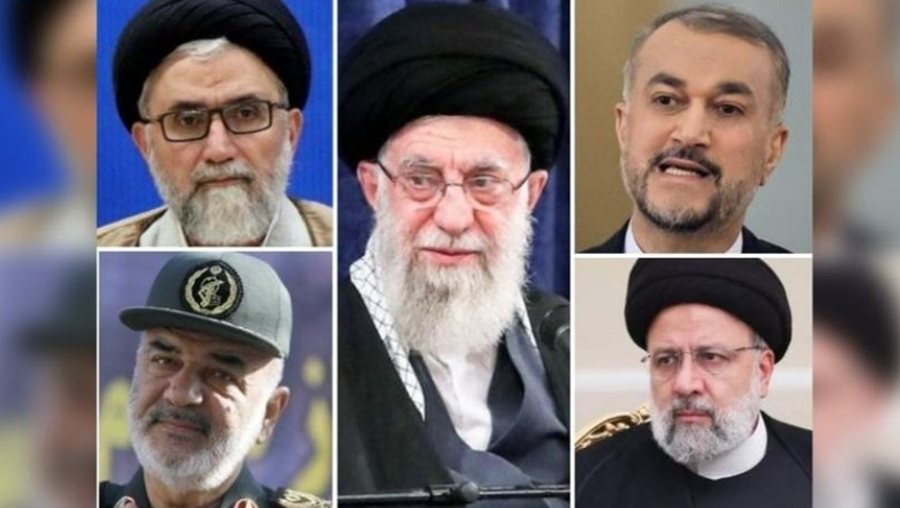
For several days, a survey has been circulating on the "X" social network asking Iranians if they are in favor of war with Israel. The result is a paradox: more than 50% answered with a "yes".
No one, not even the insiders, expected direct action. They almost joked about it: "Bulisti, the regime, talks loudly, but rarely actually acts."
But no. This time it happened.
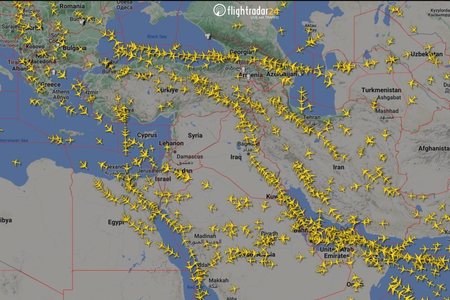
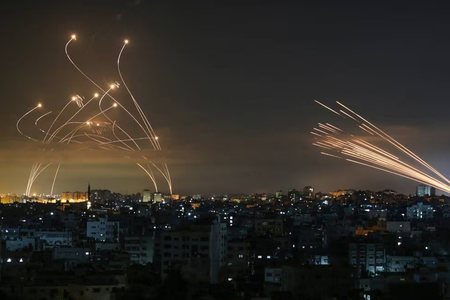
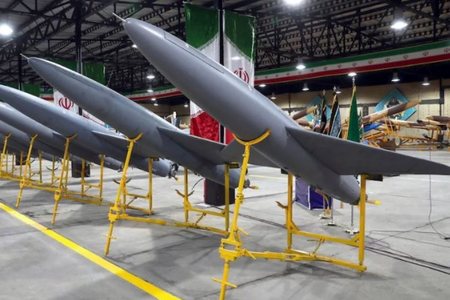
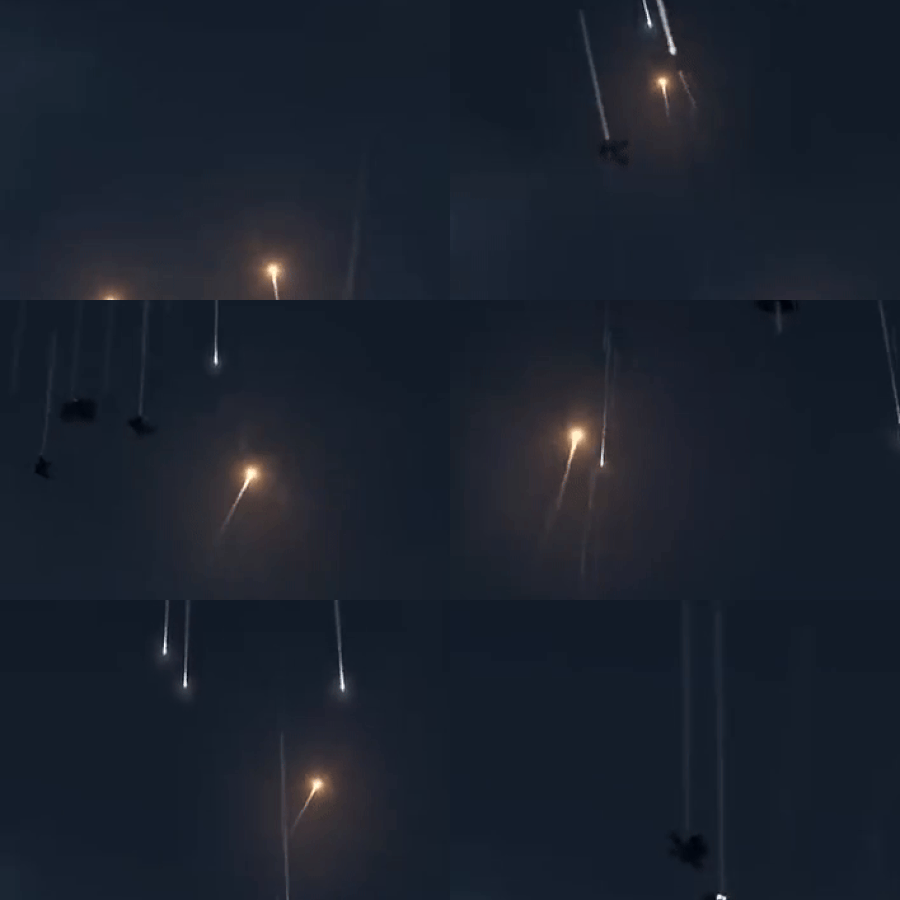
Ayatollah Ali Khamenei has given the green light for a series of drone attacks launched from Iranian soil towards Israel. The regime's retaliation for the Israeli bombing of the Damascus embassy took place.
Khamenei retaliates externally, but also internally by increasing, on the same day, the level of internal repression to neutralize dissent. The supreme leader knows that he does not have the support of his people: in the last elections only 40% of citizens turned out to vote, but for his opponents the figures are much lower.
For several days, a survey has been circulating on the "X" social network asking Iranians if they are in favor of war with Israel. The result is a paradox: more than 50% answered with a "yes".
"Not because we like bombs", explains M., a professor from Tehran, "but because an external attack could bring the end of the dictatorship".
But yesterday the messages from Tehran were of panic: "Khamenei brought us to war", people wrote.
Ali Khamenei, 84, is the fundamental pillar on which all the power and terror of the Islamic Republic rests. A key figure in the 1979 Revolution and advisor to Ayatollah Khomeini, he became Iran's president in 1981 and Supreme Leader in 1989.
Everything goes through him and he always has the last word. Like any dictator, he trusts no one except his second son Mojtaba, who has no official role but is among the people most listened to by the Ayatollah and his potential successor. Another who appears to be running - but without high hopes - for the role of the next leader is President Ebrahim Raisi, known for his ruthless repressive methods and as "Khamenei's puppet".
Under the Ayatollah is the Supreme National Security Council, which decides on matters of military security and foreign policy. The secretary is Ali Akbar Ahmadian, a former pasdaran. The council includes leaders of the Islamic Republic, who develop plans for major issues: from protests to nuclear energy to whether or not to attack Israel.
The last word remains that of Khamenei.
The second pillar of the theocracy is found in the security components entrusted to people with great experience. Hossen Salaimi is at the head of the guards, the body that is identified with the "blood of the revolution", the arm and the shield.
Born in 1960, he interrupted his engineering studies to participate in the conflict with Iraq and then took up positions of responsibility. He is considered a "hawk", known for rhetorical outbursts, determined to challenge internal and external opponents.
At a lower level, Esmail Qaani, the commander of Qods, the "division" that helps allied militias in the Middle East, manages the transfer of weapons and also strikes clandestinely. An effective machine founded by General Qasem Soleimani, killed in Iraq in 2020 by the Americans, replaced by Qaani himself.
A passing of the baton that according to some has had negative consequences even if, in light of what has happened in these four years, you would not think so. The presence of militants has increased everywhere, Tehran plays its cards from Lebanon to Syria and through the Houthis has demonstrated that it can undermine maritime traffic in the Red Sea.
It has lost capable leaders, such as the three officers eliminated by Israel in Damascus, but the chain of command has endured, demonstrating resilience, capacity and volume of fire.
The role of intelligence is important in the Khomeinist chessboard.
Mohammad Kazemi, highly influential and close to Khamenei, has headed the Pasdaran since 2022. Its agents are often in competition with their "colleagues" in the secret service headed by Esmail Katib, a member of the Shiite clergy.
However, the array of cameras has sometimes left loopholes exploited by the Israelis and their opponents. Sabotage at strategic sites, failure to protect scientists and some glaring mistakes have revealed vulnerabilities attributed to various factors.
Seriously, if the Islamic Republic wants to be a protagonist in the entire region. / Corriere della sera



Lini një Përgjigje