


 Shkruar nga Zoran Ivanov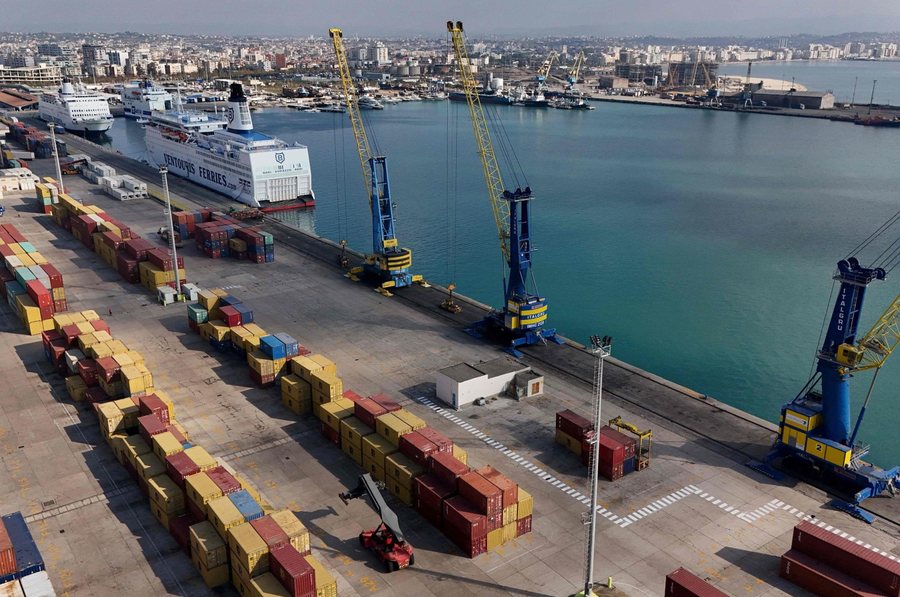
The corridor is a clear expression of NATO's southern flank strategy, which aims to promote stability among allied countries, strengthening economic ties and improving logistical support for defense operations.
Corridor VIII is one of the pan-European projects created during the Pan-European Transport Conferences held in Prague in 1991, Crete (1994) and Helsinki (1997).
Initially envisaged as a comprehensive and multimodal transport system, Corridor VIII aims to connect the coast of the Southern Adriatic with that of the Black Sea.
This corridor includes an extensive network of infrastructure, including sea and river ports, airports, multi-modal transport hubs, roads and railways, with 1,270 kilometers of rail and 960 kilometers of roads. Its route starts in the southern Italian ports of Bari and Brindisi.
It then extends to the Albanian ports of Durres and Vlora, and passes through the capitals of Tirana, Skopje and Sofia, eventually reaching Plovdiv and the Bulgarian ports of Burgas and Varna on the Black Sea coast. Corridor VIII is a crucial infrastructure project connecting the Adriatic Sea with the Black Sea, and very important for the movement and economic growth of NATO and EU countries in the Balkans.
Despite the great support it has from NATO, the EU, the USA and the countries of the region, this project faces major challenges, such as political and infrastructural obstacles that threaten its progress. Corridor VIII is strategically important for NATO, as it provides a transportation route that increases military mobility throughout Southeastern Europe.
It serves as a logistical backbone, connecting the Adriatic coast in Albania with the Black Sea in Bulgaria, thus enabling the rapid deployment of forces and resources from the West to the East, if necessary. As Lord Stuart Peach pointed out, this link is essential to ensure NATO's operational readiness and response in the region. Especially now amid rising tensions on Europe's eastern flank. The efficient movement of military assets between the two coasts strengthens NATO's collective defense strategy, which is very important given the growing security concerns from Russia's actions in Ukraine, but also in the Black Sea region in generally.
Corridor VIII integrates with trans-European networks such as the Middle Corridor, expanding the connection between Europe and Central Asia. Aligning with projects such as the Trans-European Transport Network, TEN-T, it strengthens NATO's logistics capacity, military logistics and supply chain sustainability, and supports the economic integration and strategic autonomy of South-Eastern Europe.
Blockage and weakness
The controversial relations between North Macedonia and Bulgaria complicate the geopolitical dimension of Corridor VIII. Bulgaria has blocked North Macedonia's progress in EU accession negotiations for the time being, demanding constitutional recognition of a small number of Bulgarian citizens within the country.
This insistence is mainly perceived as a political lever to claim influence over Skopje's identity politics. In this way, Bulgaria undermines the cohesion of regional projects that are vital for economic development and regional stability.
And Brussels' failure to end Sofia's obstructionist policies shows the weakening of her leadership in Southeast Europe, fueled by domestic challenges that prevent decisive action. Balancing the interests of member states, while favoring diplomatic consensus over imposition, further complicates his ability to seek influence in the region.
Economically, Corridor VIII promises to be a catalyst for regional economic growth, connecting Albania, North Macedonia and Bulgaria through a multimodal transport network that includes roads, railways, ports and telecommunications networks.
This corridor is expected to overcome economic disparities, promoting a better connection between these nations and facilitating trade flows with Italy, Romania and Turkey.
Economic exchanges between Albania, North Macedonia and Bulgaria remain modest, partly due to infrastructural challenges and limited integration of transport services.
According to the Institute for Cooperation and Development, Sofia and Skopje remain among the few European capitals without a direct rail link between them. However, political instability and a lack of sustainable funding often sabotage investment in transport infrastructure.
The continued political instability of the countries is a major shortcoming, which poses significant risks to the success of Corridor VIII. For example, Albania still needs more infrastructure along its Adriatic coastline to be effectively connected to North Macedonia and Bulgaria.
North Macedonia faces the dual challenge of overcoming political obstacles imposed by Bulgaria and modernizing its transport infrastructure. It seems that the European Bank for Research and Development (EBRD), as the main investor in infrastructure projects in the region, has not been able to utilize its capacities.
A wider regional impact Corridor VIII is a regional infrastructure project that symbolizes Europe's wider ambition for connectivity and integration. It complements the EU's Trans-European Transport Network (TEN-T), as an important axis for economic integration and geopolitical stability in the Balkans.
The corridor is a clear expression of NATO's southern flank strategy, which aims to promote stability among allied countries, strengthening economic ties and improving logistical support for defense operations.
Moreover, the completion of this corridor is likely to strengthen the roles of Albania, North Macedonia and Bulgaria in the wider European security architecture, as these countries are also members of NATO. The participation of EU funds and Western financial institutions, such as the Western Balkans Investment Framework (WBIF), is vital for moving the project forward and ensuring comprehensive infrastructure development. However, securing sustainable and inclusive investment from international donors remains an uphill battle, often dependent on political stability and regional cooperation, which is sometimes lacking in the Western Balkans.
The success of Corridor VIII depends on overcoming political and infrastructural obstacles. From the security point of view, its importance on NATO's logistical capacity in the region underlines the urgency of completing this corridor as soon as possible. Economically, it promises enhanced regional connectivity and opportunities for greater economic growth.
The geopolitical dimension, and especially Bulgaria's veto against the integration of North Macedonia in the EU, is a disturbing reminder of how deeply politics can affect infrastructure projects crucial to regional development./ Adapted "Pamphlet" from "Daily Sabah"
Note: Zoran Ivanov, researcher and advisor at the RINK Institute in Ljubljana, Slovenia, and lecturer at Arizona State University, USA.






Lini një Përgjigje