


 Shkruar nga Marta Serafini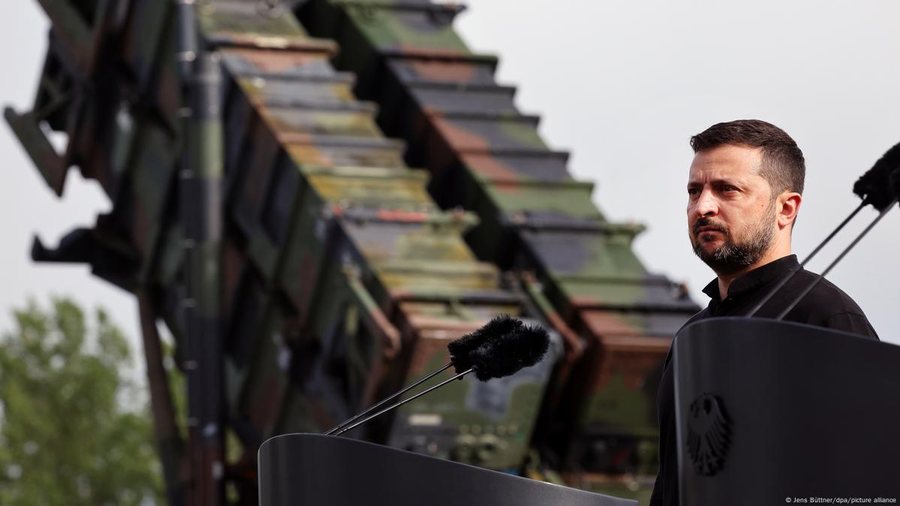
They are essential for intercepting Russian missiles.
Early last year, in Davos, during the World Economic Forum, Zelensky made a comment that seemed sincere. "I just have to say a big thank you to the creators of Patriot. There is no similar system that can counter any Russian missile, from conventional to ballistic." And indeed, according to all military experts, there is no surface-to-air system in the world that is so powerful and precise.
Ukraine currently has eight Patriot systems: only six of them are operational (the other two are under repair), almost all of which are deployed in the capital to protect not only civilians but also buildings housing Ukrainian institutions. To function, a Patriot needs missiles: these are the Pac-3 and Pac-2, the only ones capable of countering the Russian Iskander and Khinzal missiles. Moreover, to operate it, 90 soldiers are needed per battery.
The Patriot system is rare. According to researchers at the International Institute for Strategic Studies in London, there are 186 operational systems worldwide, and only 16 countries have them. The United States has about a third of them and has sent many overseas to protect allies in Europe, Asia and the Middle East. Several dozen are deployed in the Indo-Pacific region to respond to threats from China and North Korea, although the United States recently moved at least one to the Middle East to protect Israel. European allies have about 40, including eight now in Ukraine. The ninth Patriot system, from Israel and under consideration for Ukraine, is an older model and therefore less effective.
Designed in the late 1960s, the system was developed by Raytheon, an American multinational aerospace and defense company headquartered in Arlington, Virginia. Its acronym comes from the radar component: Phased Array Tracking Radar to Intercept On Target. First used during Operation Desert Storm in Iraq in 1990, to protect Israel and Saudi Arabia from Russian-made Scud missiles used by Saddam Hussein's army, it was later improved.
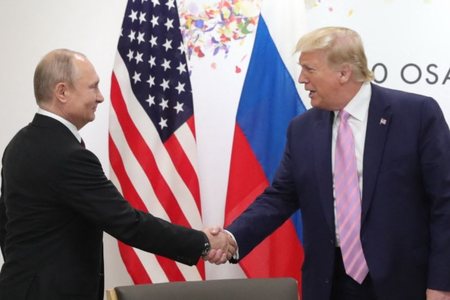
Since taking office, Trump has publicly ignored Zelensky’s requests to buy more Patriot missiles and once called him a president “always looking for missiles.” One sticking point is, of course, the very high cost of this weapon.
The Center for Strategic and International Studies (CSIS) estimates that each battery costs about $1.1 billion: $400 million for the system, $690 million for the missiles; the cost of a single missile is estimated at $4.1 million (3.8 million euros). One of the biggest challenges facing Ukraine is maintaining a sufficient stockpile of interceptors. But while Lockheed Martin and Raytheon are ramping up production of the Pac-3, the amount is still not enough to meet Kiev’s growing needs.
It is difficult to find alternatives to the expensive and rare Patriot system. Over the past decade, France and Italy have jointly developed the Medium-Range Surface-to-Air/Surface System (SAMP/T) capable of intercepting ballistic missiles, drones, fighter jets and other targets. However, many European countries prefer the American rival because it is considered more reliable. The German Iris-T technology could also be an option, but it is a short-range system, while the Patriot's range is wider.
So when Zelensky says "we count on the continued support of the US, because it has certain tools that Europe does not have, such as Patriot missiles," he is not saying anything that Trump does not already know. Namely, that without the Patriots, millions of Ukrainian lives are at risk. And that Putin has an easy game to win the war. / Adapted from "Pamphlet" by "Corriere della Sera"




Lini një Përgjigje