


 Shkruar nga Pamfleti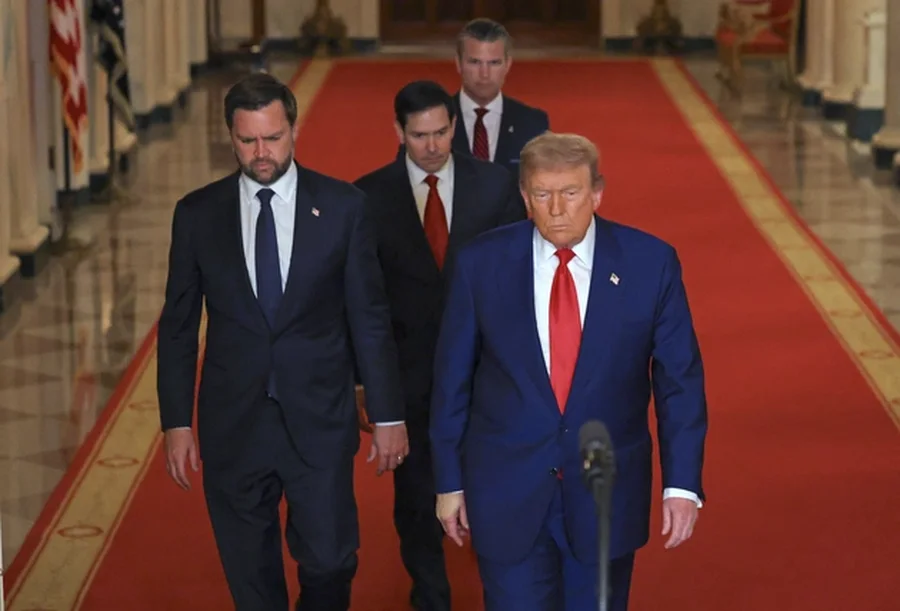
Officials working to ease tensions aren't sure if the president is listening...
Officials from several Persian Gulf countries are expressing anxiety that President Donald Trump could push the United States toward another attack on Iran, despite their continued efforts to advise restraint.
The White House is giving little assurance that it will follow that advice, according to three people familiar with the administration’s discussions with its Gulf allies. And all three believe that Trump’s harsh public rhetoric, not to mention the continued shift of military resources to the Gulf, is closing him in to the point where some kind of attack on Iran may be inevitable.
After the US operation a few weeks ago to overthrow former Venezuelan leader Nicolas Maduro, "there is no doubt about the capabilities of the US military," said one of the people familiar with the matter, a senior Gulf official.
Like others interviewed for this report, the official was granted anonymity to speak candidly about a fluid and highly sensitive geopolitical situation.
What has been harder to assess, the senior Gulf official said, is whether Trump has set a clear target for another attack on Iran, whether to pursue regime change in Tehran or simply to send a message, not to mention tactics. Trump has repeatedly promised protesters in Iran in vague terms that “help is coming.”
“It is still unclear to us what both sides want, even after much dialogue,” said the second person familiar with the matter, a senior Arab diplomat who has been in contact with the administration.
The five countries, Saudi Arabia, Qatar, the United Arab Emirates, Oman and Turkey, have been working together to avoid another flare-up or all-out war that could destabilize the Gulf region. Trump has long prioritized deepening business and diplomatic ties in a modernizing and more peaceful Middle East, a goal that has at times clashed with his approach to Iran, where he continues to threaten military force in pursuit of a deal.
Saudi Crown Prince Mohammed bin Salman went public this week with a promise to Iran's president that Riyadh would not allow its airspace to be used for any attack on Iran. This followed a similar statement from the United Arab Emirates.
Through various channels, officials from these countries have urged Iran's leaders to sit down at the negotiating table. But they privately acknowledge that a deal to further dismantle the country's nuclear program, which was severely degraded in a swift US bombing campaign last year at the end of a 12-day war with Israel, seems unlikely.
Speaking to reporters in the Oval Office on Friday, Trump, who has been warned by Iran's leaders against both restarting its nuclear program and using violence to quell mass protests, again drew attention to the fact that a "large armada" of US warships was heading towards the Gulf in his direction. He noted that this show of force is "even bigger than in Venezuela."
The aircraft carrier USS Abraham Lincoln has just arrived in the region, along with five guided-missile destroyers and two smaller littoral combat ships that could be used to track missiles launched by Iran. While the US and its allies have significant air defenses in the region, some systems that were urgently sent there in the spring, such as a Patriot battery normally stationed in South Korea, have returned home.
While Trump pointed to the military's firepower, he expressed that his preference would be to find a diplomatic solution.
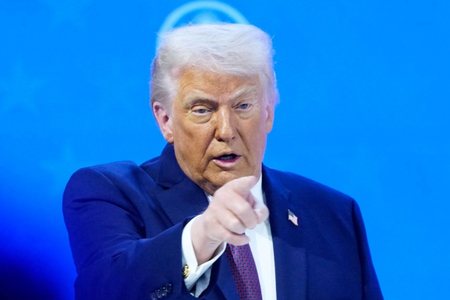
"If we reach a deal, that's good. If we don't reach a deal, we'll see what happens," he said, adding that Iran wants to make a deal. /Adapted from Politico /





Lini një Përgjigje