


 Shkruar nga Elettra Bernacchini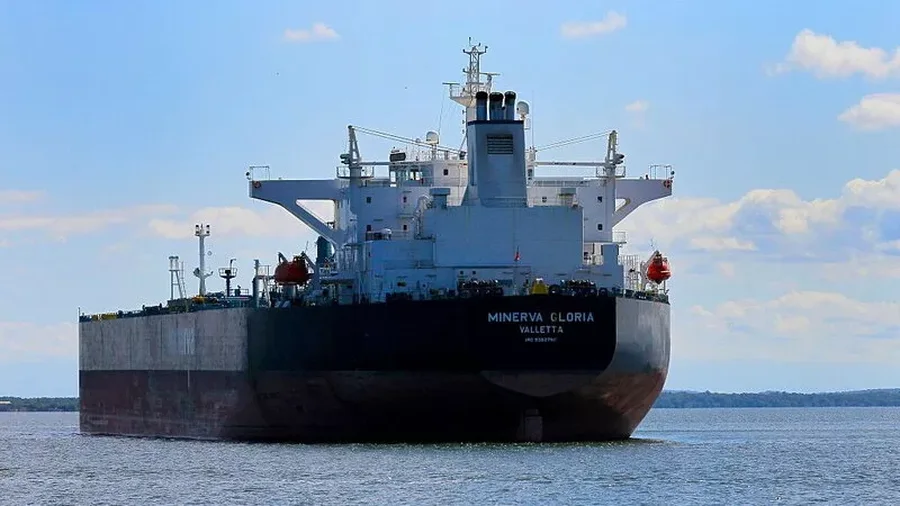
Amidst electronic sabotage and military blockades, the Persian Gulf has become a battlefield where only those who dare to disappear from the radar win. While China and Saudi Arabia are rewriting the rules of the market in the midst of the crisis, the world is watching with bated breath the "Hunger Games" of oil tankers that are defying any danger for the sake of "black gold"...
This really happened. Someone monitoring maritime tracking systems suddenly saw an oil tanker "flying" at 180 kilometers per hour in the middle of the desert of the United Arab Emirates.
It was about the tanker "Asprouda", which transports 50 thousand tons of oil by-products and which seemed to be moving on the sand, many kilometers from the sea. A technical madness. But behind it, a group of 200 ships were noticed lined up in a circle, again in the middle of the desert near Abu Dhabi.
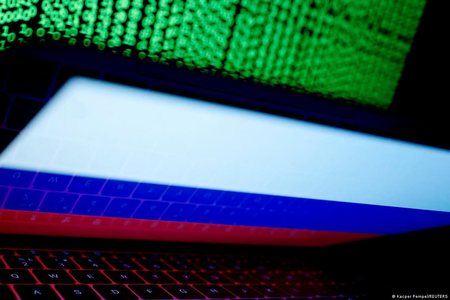
And as if that weren't enough, off the coast of Ruwais, another group of vessels was positioned in the shape of an inverted "Z." If we connect the dots, we realize that it's all the result of jamming, an electronic interference that falsifies the ships' GPS signals.
This "technical magic" is putting over 1,100 vessels out of action, according to the Bloomberg agency, which have unfortunately been found in the Strait of Hormuz area in the Persian Gulf in recent hours.
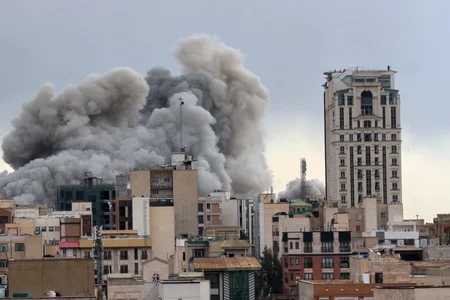
Here, since the United States and Israel opened the war front against Iran on February 28, 2026, a kind of "Hunger Games" for oil tankers has begun. It is a survival race to see who, and how, will manage to get through without punishment.
On one side is the Asian front, where the battle is fought with sudden changes of course. At least 8 fully loaded oil tankers have deviated from their course in a few days. The Brest, carrying 140,000 tons of Indian oil, was sailing north around Africa when it suddenly turned towards Singapore.
The same move was made by the “Aspen Express”, which left the Gulf shortly before closing, but also by the “Navig8 Honor” with jet fuel, which from the route to the Gulf turned towards the East. The reason is simple: in the Orient fuel prices have increased significantly and refineries are working at minimal rates.
China has gone into survival mode. It has ordered producers to block oil and gasoline exports, while lines at gas stations across the country are endless. In this chaos, the profit is too great to not risk.
On the other hand, we have the Saudi front, where the problem is completely the opposite. Saudi Arabia suddenly found itself with its storage tanks full, but with the main transportation route in the Gulf blocked. The state-owned company Aramco did something it had not done in years: it went on the market to sell crude oil to the highest bidder through extraordinary auctions, offering 4.6 million barrels in a few days.
The price? Up to $40 more per barrel than the official price. The terms: take it or leave it. Alternative routes are being used for transportation, such as Yanbu on the Red Sea and Ain Sokhna in Egypt, via a pipeline that crosses the Arabian Peninsula.
There are also those who have planned the move with strategic precision. Thus, a very large oil tanker, loaded with two million barrels of oil, was positioned in advance off the coast of Taiwan, waiting for the right buyer. The last Saudi ship to pass through the Strait of Hormuz was the “New Vision”, moments before the Iranian Revolutionary Guard declared its closure. However, there are still “daring” ships that use the technique of invisibility.
On March 4, the Greek ship “Shenlong”, owned by the company “Dynacom”, turned off its identification system in the middle of the Persian Gulf and disappeared from every radar map. For 5 days it was “dead” to the world, until it miraculously reappeared on March 9 off the coast of India, with its cargo intact, as if it had not passed through the most monitored area on the planet.
According to the company "Lloyd's List", at least 4 other ships have followed the same tactic.
Finally, there is the game of “special permits.” Iran has allowed 12 million barrels of its oil to pass through, despite a self-imposed blockade. For Tehran’s “friends,” however, treatment is special if you have the right nationality.
Ships like the “Iron Maiden” or the “Sino Ocean” passed without concern, after declaring that they were Chinese-owned. So a real game of flags, alliances and tricks is taking place, a kind of medieval tournament, but held at the height of 21st century technology./ Adapted from "Pamphlet", "Huffington Post Italia"





Lini një Përgjigje