


 Shkruar nga Mario Monti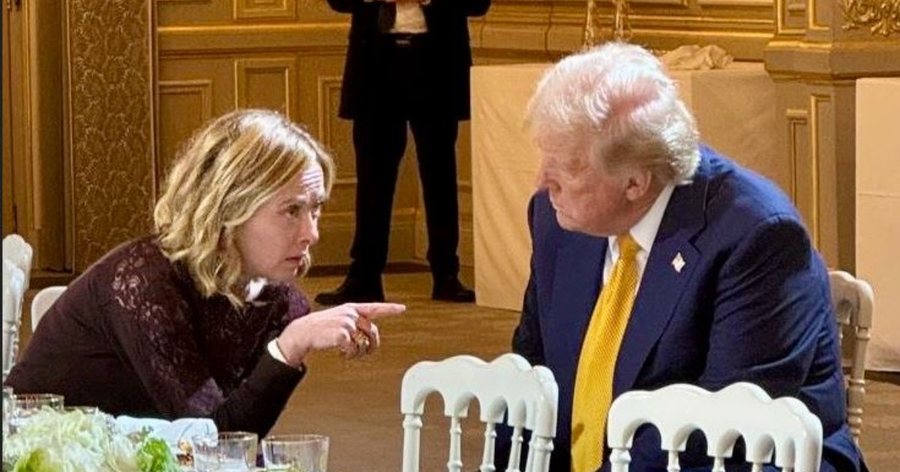
Giorgia Meloni's voice is now authoritative, but sometimes hoarse...
"I want to stand with the West, strengthening the role of Europe and Italy within the West ." Thus concluded Italian Prime Minister Giorgia Meloni's speech in the Senate, shortly before the European Council meeting.
There was nothing original in this statement; any Italian prime minister could have uttered it. Since the beginning of the Republic, Atlanticism and Europeanism have been the cornerstones of Italy's positioning. But since the beginning of Trump's second presidency, it is no longer possible to repeat this statement inertly. New questions must be asked, and they cannot be avoided.
What is the West today?
Until a year ago, by "the West" we meant a broad political and cultural community spread across several continents, but united by certain values that had been shared after World War II, mainly at the instigation of the United States and then European countries. These included the rule of law, the separation of constitutional powers (legislative, executive and judicial), the separation of political and economic power, independent guaranteeing authorities, openness to international trade and multilateral coordination through international organizations.
Until a year ago, the United States embodied a dual role. Historically, it had been the archetype of a country with a consolidated democracy founded on democratic capitalism and had until then been a leading country in this field. Moreover, it was, and still is, a hegemonic power in defense and security, guarantor of a network of alliances starting with the Atlantic Alliance.
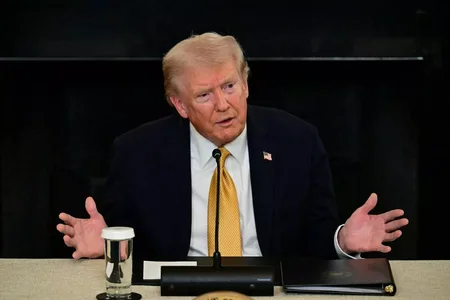
With Donald Trump's return to the White House, a clear divide has emerged, one that does not seem to fit into the logical categories used by Giorgia Meloni, nor into the most detailed analysis to date, presented the other day in the Senate. The United States still finds itself, more than ever, partly due to Europe's irresponsible shortsightedness, in the role of hegemonic defensive power, a role from which Europe begs it not to relinquish. But it has abandoned its role as a leader among liberal democracies, founded on the rule of law, and as a driving force for the multilateral governance of globalization.
We Europeans are protected, and we must hope to continue to be protected, at least for a time, by the armed forces of that country, the United States, which heroically helped us to free ourselves from Nazism and Fascism and protected us from Soviet Communism. To that country we owe eternal gratitude. At the same time, the president and government of that country are increasingly impatient with the limitations that the legal system places on the exercise of power, legitimately won at the ballot box, to prevent it from becoming absolute. Those who protect us in terms of security show disturbing similarities, in principles and actions, to the leaders of authoritarian or autocratic regimes. Of the present or of the past. A past that we in Italy experienced bitterly a century ago.
Under these conditions, what exactly does the Prime Minister's stated priority in the Senate mean: "I work for the West, because I believe the West is strong together"?
Does Trump's United States still represent, in your opinion, the moral and political leadership of the West? Should Western countries still be characterized by respect for the rule of law? Should they still commit to an agenda of international coordination on global public goods?
Or should they conform to the new leadership and simply cultivate power relations?
On the one hand, in order not to offend President Trump, even as a political and ideological ally, President Meloni avoids taking a stand against the US administration's tendency to strip the EU of what little sovereignty it has retained. On the other hand, she condemns the EU to constantly confront the United States and other powers with one arm tied behind its back, making it almost impossible to adopt a unified position.
Meloni, with her merits and historical circumstances, leads a founding member state, one of the EU's most important countries, and perhaps the most stable government. She has gained influence in Europe and enjoys good relations with the US president.
Rather than simply cultivating a closeness that might cast doubt on the depth of her belief in the rule of law, the prime minister could use this legacy, more than she has so far, to persuade President Trump to better understand and respect the EU. A reminder that by acting with Germany, Italy, and other Europeans, his predecessor, Ronald Reagan, and British Prime Minister Margaret Thatcher, both conservatives, laid the groundwork for the collapse of the Soviet Union.
It could also propose taking a leading role in shaping, together with other major countries, the future of the EU. At times, Italian governments of different political persuasions were decisive in advancing the European project, towards a stronger Europe that matched Italy’s European vision. This was particularly true in 1985, when, under the Italian presidency, the first framework for the single market was adopted, overcoming resistance from the United Kingdom; in 1990, when, again under an Italian presidency, overcoming British resistance, it laid the foundations for the single currency; and in 2012, when the Italian government, allied with France, overcame German resistance to banking union and a new governance of the eurozone.
Giorgia Meloni's voice is now authoritative. But sometimes it is hoarse, because it is caught between objective contradictions that are not easy to resolve, such as those between President Trump and the West created by her predecessors; Or because she is playing defense, trying to protect herself from what "others" in Europe might want to do to Italy./ Adapted from "Pamphlet" by "Corriere Della Sera"


Fiks fjala kurva krihet fshati digjet