


 Shkruar nga Pamfleti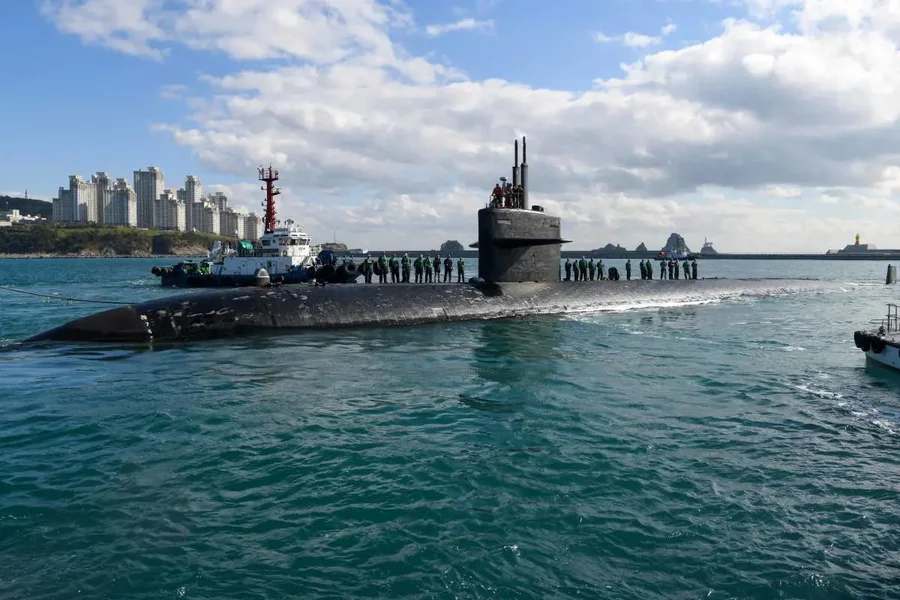
Chinese submarines are becoming increasingly advanced. Their supremacy in this field could spell the end of Taiwan's independence...
Whoever controls the seas will win the next conflict. At least in the Pacific Ocean. This assumption is well understood by Pentagon generals, who are following with growing concern the strengthening of the Chinese navy, and especially its submarines. Beijing, reports the Wall Street Journal in an in-depth analysis on the subject, is on the verge of becoming a world-class submarine power with a bigger and better fleet and new technologies. China is thus gaining ground on the United States and its allies, igniting an arms race in the depths of the Pacific.
The People's Republic now has silent, fast submarines, capable of staying underwater longer and carrying more advanced weapons and sensors. All this comes as the Chinese authorities have expanded the boundaries of their "backyard" in the South China Sea and demonstrated their willingness to surround Taiwan in anticipation of a possible invasion of the "rebel province."
Washington and other Western countries are not sitting idly by. The US maintains military bases in the region and last year deployed its most advanced Virginia-class attack submarines to the Pacific. Experts say all powers aspiring to have a navy in the Indo-Pacific are building or buying submarines. Under the 2021 Aukus defense pact, Australia is expected to buy up to five nuclear-powered submarines from the United States and cooperate with the United Kingdom in building a new unit.
The Aukus pact, however, is being reviewed by the Trump administration, in part because of delays in submarine construction. The US is struggling to keep pace with China's production levels.
Beijing already has the world's largest commercial shipbuilding capacity and the largest naval fleet. The Asian giant has notably upgraded its nuclear-powered submarines, including the "Type 095," which industry experts predict will be very quiet, and its conventionally powered ones. In the latest military parade, the heir to the Celestial Empire unveiled, among other things, an underwater drone that can function as a submarine.
When it comes to submarines, the United States currently still has a technological advantage over China, but that may become secondary given America's limited production capacity. Delivery of the first Columbia-class ballistic missile submarine is scheduled for 2029, having already accumulated a two-year delay.
The US is also working on a new class of ultra-advanced submarines, currently designated SSN(X), whose construction is expected to begin in 2040. Add to this the significant maintenance backlog for the various units, and the resulting picture for America is bleak.
Meanwhile, the race against time in submarine production is involving Washington's allies. China's continued threats against Taiwan are not being ignored by countries such as Japan, South Korea, the Philippines, Australia, Singapore, as well as France and the United Kingdom, which are preparing to pull into a wartime alliance against China.
Vital in such a scenario would be the Western coalition's ability to fight, protect shipping corridors, and block the People's Republic's access to strategic resources.
The achievement of these objectives and Taipei's fate also depend on the speed with which the shipyards of allied countries produce submarines ready to counter China's military power. /Adapted from Il Giornale/





Lini një Përgjigje