


 Shkruar nga Pamfleti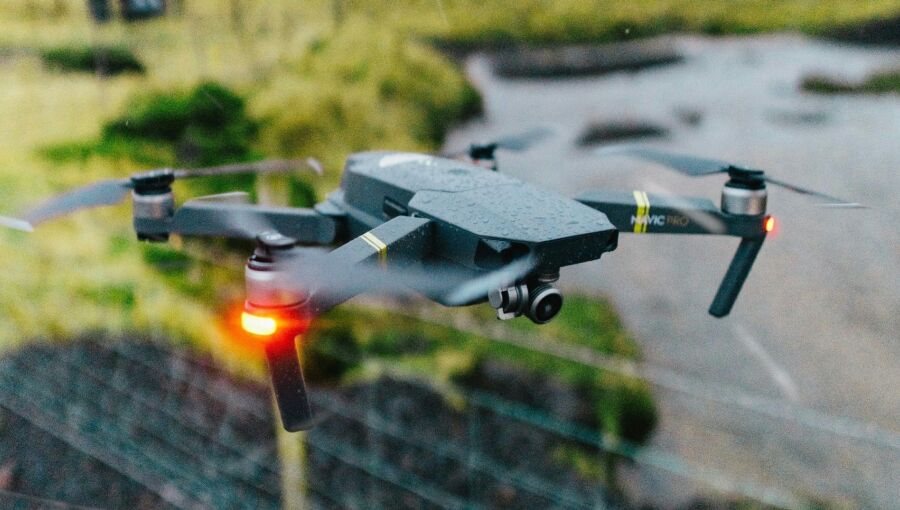
One particularly disturbing case involved an operative codenamed Aguila-7, who successfully integrated into a Ukrainian specialized unit for several months, while maintaining a covert humanitarian history. He joined the International Legion in March 2024 using false Salvadoran documentation and completed extensive training at facilities in Lviv...
Ukrainian counterintelligence has revealed that criminal organizations from Mexico and Colombia have exploited the country's voluntary recruitment program to acquire advanced military drone capabilities for use in narcotics trafficking operations.
The scheme, first reported by French publication Intelligence Online, came to light after intelligence information was exchanged between Mexico City and Kiev, revealing that individuals suspected of cartel ties had deliberately registered with the Ukrainian International Legion under false pretenses to gain access to training on state-of-the-art unmanned aerial vehicles.
Unlike true volunteers motivated by solidarity with Ukraine's defensive war, these operatives reportedly sought specific technical instruction in First Person View drone operations, skills highly valued by criminal networks seeking tactical advantages in territorial disputes and law enforcement activities.
The revelation has prompted Ukrainian authorities to reassess screening procedures for foreign recruits, particularly those from regions with a significant presence of organized crime.
The infiltration attempt shows extraordinary sophistication, with the suspects using false identities, forged documentation, and front companies to facilitate their passage into Ukrainian territory and military structures.
Intelligence analysts have identified a network of private security firms across Latin America that appear to have coordinated these deployments. Companies operating from Mexico, Colombia, and other regional hubs are suspected of providing fraudulent credentials and logistical support to enable suspected individuals to reach training centers in Ukraine.
One particularly disturbing case involved an operative codenamed Aguila-7, who successfully integrated into a Ukrainian specialized unit for several months while maintaining a covert humanitarian history. He joined the International Legion in March 2024 using false Salvadoran documentation and completed extensive training at facilities in Lviv.
His extraordinary technical background, including familiarity with electronic warfare countermeasures and thermal detection evasion, eventually raised suspicions among his instructors. Background investigations later revealed possible ties to Mexico's elite GAFE special forces, some of whose former personnel have historically gone into cartel employment, particularly through the ultra-violent Zetas organization.
Other cases have also come to light involving former FARC guerrillas who infiltrated the system using Panamanian and Venezuelan identity documents, with at least one individual identified through distinctive tattoos and accent patterns captured in internal training videos.
The revelations cement Ukraine’s unintended role as a major training ground for modern asymmetric warfare techniques amid its conflict with Russia. The country’s unique operational environment has fostered rapid innovation in low-cost, high-impact military technologies that could be highly attractive to non-state actors around the world.
Ukrainian structures have developed comprehensive curricula covering drone production, tactical deployment, electronic warfare resistance, and real-time battlefield coordination. These capabilities represent precisely the kind of force multiplication that criminal organizations seek to increase their operational effectiveness.
Speaking anonymously to Intelligence Online, an SBU official said that "we welcomed the volunteers in good faith, but now we have to admit that Ukraine has become a platform for the global spread of FPV tactics. Some come here to learn how to kill with a $400 drone, then sell this knowledge elsewhere to the highest bidder."
Security experts warn that the transfer of knowledge could significantly change the dynamics of criminal conflict across Latin America, where cartels already use increasingly sophisticated military-style tactics and equipment in their operations.
The concerns extend beyond regional borders, as similar infiltration attempts could theoretically originate from other areas with significant organized crime presence or hostile state actors seeking access to battlefield-tested technologies.
Since the start of Russia's full-scale invasion in February 2022, Ukrainian security services have implemented enhanced vetting procedures in coordination with international partners, including expanded background checks and closer monitoring of volunteer activities within sensitive training programs.
The investigation has been set up in specialized counterintelligence units, which are usually reserved for protecting critical state assets and preventing the transfer of technology to unauthorized recipients. Since 2023, these divisions have worked closely with military intelligence structures to filter foreign access to sensitive training modules and prevent the transfer of doctrine to unauthorized actors.
The data of Spanish-speaking volunteers, suspected of ulterior motives, have been compared to Interpol and the US Drug Enforcement Administration databases, with some individuals reported to have possible criminal pasts or ties to narco-paramilitary organizations.
Officials acknowledge the challenge of balancing legitimate international support for Ukraine's defense efforts against the risk of exploitation by criminal elements. But the volunteer program has provided valuable personnel and expertise to Ukrainian forces, making mass restrictions problematic.
The wider implications extend to other conflict zones where similar risks of technology transfer may arise, adding to the pressure on the need for coordinated international approaches to prevent the criminal exploitation of military training opportunities. /Adapted Pamphlet/








Lini një Përgjigje