


 Shkruar nga Janan Ganesh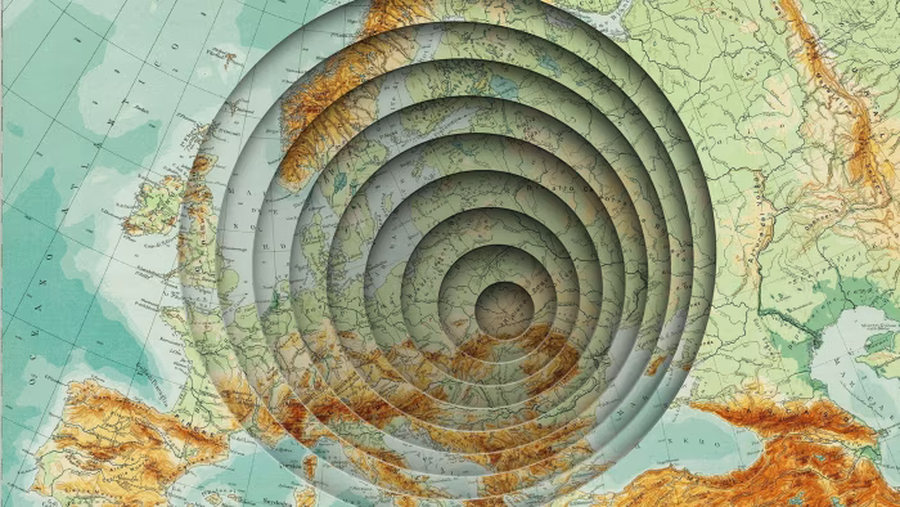
The lack of rare metals is just one way nature is harming the continent...
According to the U.S. Geological Survey, China’s known reserves of rare earth metals are more than double those of the next luckiest country, Brazil. No nation in democratic Europe makes the top 10. (Greenland, a remote and autonomous territory of Denmark, is eighth.) While rare earth metals are used in aircraft engines and all manner of consumer electronics, China can squeeze other countries to the point of limiting the end use of a given shipment.
Even Donald Trump, who had hoped to force China into submission until now, must confront its inevitability in supply chains. Look at his care for resource-rich Japan and Australia, but not for Europe, where rare earth metals are beyond rare.
The situation is not much better in energy matters. At the end of 2020, Europe had 1.7 percent of the world's proven natural gas reserves. China had 4.5 percent, the US a little more, Russia 20 percent, and the Middle East 40. Surprisingly, Europe's high energy costs, especially Britain's, could hamper its ambitions for artificial intelligence, and Russia has been able to withstand Western sanctions since it invaded Ukraine. World events depend on the location of fossilized plankton remains from millions of years ago.
There was a time, in the half-century or so between the OPEC crises and the war in Ukraine, when it was possible to forget geography. One country could be very similar to another, if one had enough knowledge. Singapore and Dubai were models of how to thrive without natural advantages. (The latter is not, and somehow this still needs to be said, a petroeconomy.) Just as modern painting had evolved towards an ever-increasing “flatness,” as the critic and Jackson Pollock admirer Clement Greenberg suggested, so too did the world, in a case of life imitating art.
Of course, even then, the post-geographical enthusiasm ignored some strange facts. Having a coastline and therefore a potential port is a natural advantage. What truly disadvantaged places on Earth, such as landlocked, desert-ridden Chad, were doing well? Few. But it took the war in Ukraine to completely shatter the illusion of a flat world. In a decade that has brought “geo” back into geopolitics, Europe stands out as a natural underdog, not just compared to the superpowers but also to places like Canada. In addition to the continent’s scarce resources, there is its proximity to trouble spots like the Sahel and the Middle East. And don’t forget the European Plain itself. The lack of geographical barriers to invasion has fueled nationalist paranoia from Prussia to Russia.
At this point, it's customary to laugh at those liberals and their naive hopes for a flat planet. However, as I recall, the crowd that thought geography was dead was often conservative, at least in Britain. There has never been a greater declaration of faith in a flat world than to give up your regional bloc to go "global," with the feeling that technology has obliterated distance.
Well, as Brexit continues to satisfy no more than a third of voters, and the Labour government moves ever closer to the EU, something must start to dawn on people. Britain, for better or worse, is European. It is not just that its per capita income is much closer to that of the EU than to that of the US. Or that British expectations of the welfare state are more Germanic than American, as every government that tries to reduce it discovers.
After all, Britain has geographical challenges, and so does much of Europe. Even oil-rich Norway has a Russian land border to contend with. Britain’s headaches are French headaches, not Anglospheric, for reasons that are clear to anyone with a map. When the tenth anniversary of the referendum comes next summer, it will be necessary to explain to people who were children at the time that grown men and women thought we could escape the fundamental Europeanness of our situation by making trade deals with Australia and saying a lot of “pokaners”.
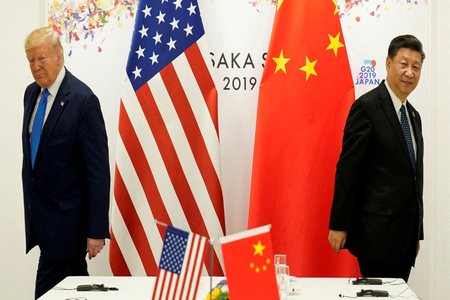
When Trump holds his long-awaited meeting with Xi Jinping this week, Europe will be like a child looking up at two parents fighting over its head. Successive generations of European leaders deserve all the criticism in the world for allowing the continent to become the timid vassal it is today. Military neglect, the preference for a “social market” over growth at all costs: these were life-or-death mistakes, made with complacency.
Only one thing can be said about mitigation. The geographical facts were and are against Europe. The uneven distribution of certain resources in the world would show over time. Better decisions would have mitigated the problem (Britain and Germany should have copied the French embrace of nuclear power, for example), but only to a certain extent. After all, even if the human element had been first-class, the terroir was bleak. / Adapted from “Pamphlet” by “FinancialTimes”




Lini një Përgjigje