


 Shkruar nga Pamfleti
The Chinese president is trying to combine two philosophies...
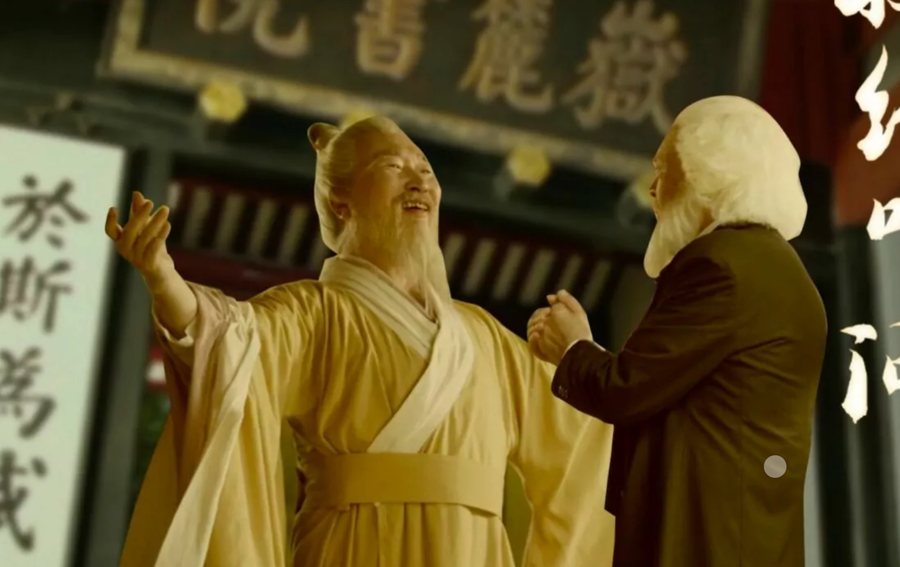
Karl Marx and Confucius may have lived 2,400 years apart, but on Chinese state television they walk together through an ancient Chinese academy. In a sunlit bamboo grove, a group of student painters invite the two philosophers to be their models. While the young people paint, Marx and Confucius talk. They are impressed by China's high-speed trains, among other things. When the portraits are revealed, thinkers are amazed. Marx is depicted in a Tang dynasty robe; Confucius is portrayed in a western suit and tie. But both are satisfied. "I have been in China for more than a hundred years," says Marx (in Mandarin). "Actually, I've been Chinese for a long time." Confucius laughs, caressing her. Long hair looks a little weird with the suit, he says, but it makes sense to keep changing.
The scene is from "When Marx Met Confucius," a TV series created by the propaganda department in Hunan province and released in October. It is not popular. On Douban, a movie website, it has received only 100 comments, most of them negative (eg "slander me"). But this is a good way to understand Xi Jinping's thinking on culture, the latest branch of the Chinese leader's philosophy.
Other parts of Xi's thinking emphasize stronger Communist Party control over things like diplomacy, defense and the economy. Xi Jinping's Thought on Culture, announced in October, tries to combine pride in Chinese tradition with loyalty to the party. His most important principle is the "two combinations", to speak artistically of a decades-long process of making Marxism more Chinese. The first combination refers to early attempts to adapt Marxism to the "specific reality" of China. Such ideological flexibility led Ten Hsiao-pin, China's former leader, to pursue economic reforms in the 1980s. The second combination is Xi's idea: to Chineseize Marxism by fusing it with traditional Chinese culture.
The effort represents the culmination of a radical turnaround for the party, which once considered tradition its enemy. During the Cultural Revolution of 1966-76, Mao Zedong's Red Guards destroyed Confucian temples, burned Confucian texts, and desecrated the sage's tomb. The young denounced the old, contradicting Confucianism's emphasis on devotion to children. But after Mao's death in 1976, the party moved closer to Confucius, or at least to a simplified version of his teachings that emphasized defense against authority. Ten allowed public celebrations of the philosopher's birthday. Jiang Zemin and Hu Jintao, Ten's successors, adopted Confucian ideas. In the early 2000s, Chinese scholars debated whether Confucianism could replace Marxism as China's leading ideology.
Xi is putting an end to this debate.
Marxism is the "soul" and Confucianism the "root" of Chinese culture, he says. No ideology can be abandoned. Instead, they should merge. / With abbreviations from The Economist







Lini një Përgjigje