


 Shkruar nga Pamfleti
The midterm elections are seven months away. Polls show the president's popularity is plummeting: the problem is not the missiles in Tehran, but the prices in American supermarkets.
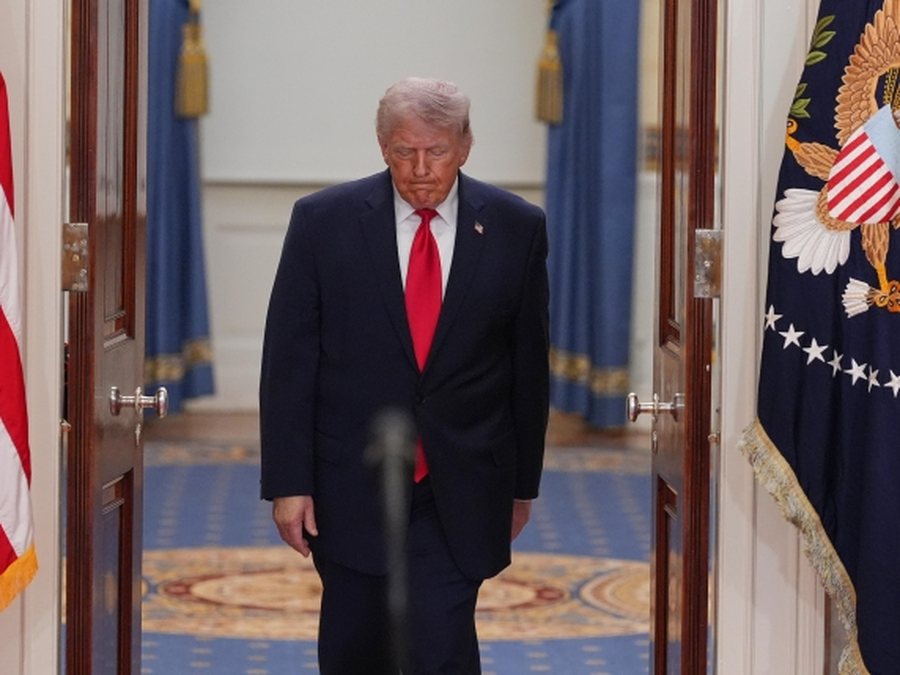
In politics, especially in the America of 2026, seven months is an eternity, and polls, as Hillary Clinton and Kamala Harris, who were told Trump was dead, have painfully learned, should always be taken with a grain of salt. That said, despite the extraordinary success of the rescue operation for the missing American pilot in Iran that may help him, Trump is in a delicate moment if we look at the approval ratings in American polls.
It is true that Trump is less popular now, less than 15 months into his term, than he was at the same point in his first term. It is also true that he is now less popular (according to some polls) than Joe Biden was after the disastrous performance in the election debates that forced him to withdraw from the 2024 presidential election.
It is especially true that, for weeks, polls have shown a significant weakening of support from the Hispanic community, one of the decisive factors of his deep victory in 2024 (7 "balanced states" 0 in his favor, victory also in the popular vote in addition to the electoral college of 50 states). But, seven months is a long time: the problem is that, given that Trump has practically taken control of the Republican Party, the Republican candidates for the November elections for Congress will find themselves in the situation of having to keep their not very popular president at bay, but anyone within the party who attacks Trump does so at a personal risk, as has been seen in recent years.
Recent polls put his overall approval rating at around 35–40%: the average calculated by Nate Silver has recently shown Trump falling below 40%, with a net approval rating of around -17. CNN/SSRS (end of March) recorded minimum ratings on key issues such as the economy (high prices, inflation) and foreign policy (Iran).
Other polls (e.g., RealClearPolitics, various March polls by Quinnipiac, AP-NORC, Reuters/Ipsos) have generally shown an approval rating between 36% and 41%, with a disapproval rating between 50% and 60%. Rasmussen (who is usually more favorable to Trump) has recorded higher numbers, around 46% approval and 52% disapproval in his latest poll.
Developments in Iran could change things in the coming days, but the broader economic difficulties seem to be more important at the moment. Because the impression is that Trump can defeat the ayatollahs and personally install himself in Tehran as the new Supreme Leader (with or without a turban), but if he does not lower gas prices to acceptable levels and perhaps grocery prices in the supermarket, this will do little to support his support. The promise made in October to keep gas below $2 a gallon, when in California it has just passed $6, will be used against him and the party in the summer, in the final stages of the November election campaign when Trump could lose his majority in the House of Representatives and (possibly, but more difficultly) in the Senate.
In a two-party system, however, there is another side to consider: the approval ratings of the Democratic Party (currently leaderless) are low, and have been for some time. They do not significantly outperform Trump in the overall perception of public opinion; both parties are broadly unpopular with the general public.
Latest Democratic Party approval ratings: RealClearPolitics (end of March 2026): 36% positive / 56% negative (net balance -20). CNN poll (end of March): 30% positive / 58% negative. Other polls conducted between 2025 and early 2026 (NBC, YouGov, etc.) show around 30–35% positive, with 55–60% negative — often described as one of the party's weakest ratings in decades.
Even within its own base, enthusiasm and positive opinion of the party have waned after 2024 (for example, AP-NORC found that only about 70% of Democrats view their party positively, a decline compared to the recent past). The Republican Party is also struggling, but often registers slightly better results than the Democrats in terms of approval, although both parties are unpopular among most independents and the electorate as a whole./ Corriere della Sera









Lini një Përgjigje