


 Shkruar nga Pamfleti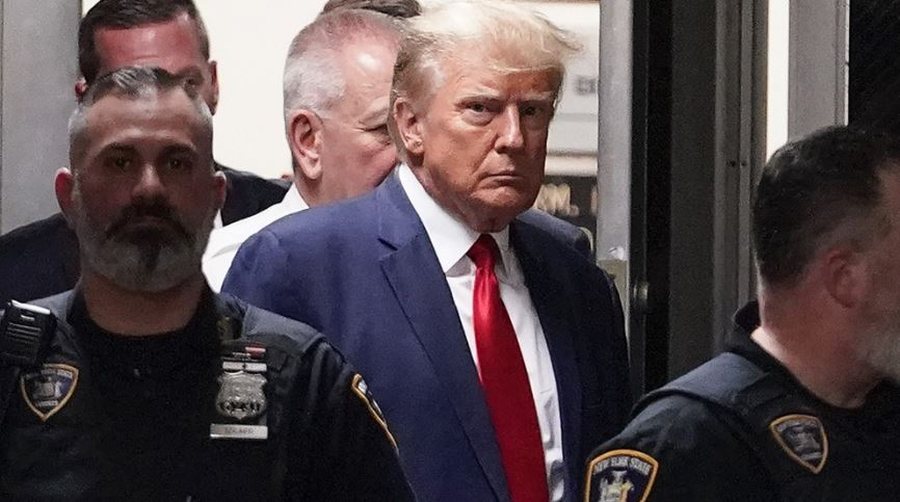
Donald Trump is pushing to have his federal election meddling trial in Washington televised, joining media outlets that say the American public should be able to watch the historic case unfold.
Federal court rules prohibit broadcast proceedings, but the Associated Press and other news organizations say the unprecedented case of a former president on trial on charges that he tried to subvert the will of voters requires an exception.
The Justice Department is opposing the effort, arguing that the judge overseeing the case does not have the authority to ignore the longstanding nationwide policy against cameras in federal courtrooms. The trial is scheduled to begin on March 4.
Trump's lawyers wrote in court documents filed late Friday that all Americans should be able to observe what they characterize as a politically motivated pursuit of the Republican front-runner for his party's 2024 presidential nomination. also suggested that Trump will try to use the trial as a platform to repeat his baseless claims that the 2020 election he lost to Democrat Joe Biden was stolen from him.
" President Trump absolutely agrees and in fact wants these proceedings to be televised in their entirety so that the American public can see first hand that this case, like so many others, is nothing more than a dreamed-up unconstitutional charade that does not should never be allowed. to happen again" , writes Trump's lawyers.
The request for a televised trial comes as the Washington case has emerged as the most powerful and direct legal threat to Trump's political fortunes. Trump is accused of illegal fraud to overturn the election results on the eve of violent riots in the US Capitol on January 6, 2021, by his supporters.
Trump has repeatedly sought to push back the trial date in Washington until after the 2024 election. But US District Judge Tanya Chutkan, who was appointed to the panel by Democratic President Barack Obama, appears determined to keep it as it is. planned.
On Friday in Florida, U.S. District Judge Aileen Cannon, who is handling the prosecution of Trump's separate classified documents, pushed back multiple deadlines in a way that makes it highly unlikely that the case will proceed to trial in May, as was planned. Trump is facing dozens of felony charges under the Espionage Act.
The media wrote in their request to Chutkan last month that the lack of transparency could sow distrust in the legal system. They said this is especially dangerous at a time when "a polarized electorate includes tens of millions of people who, according to opinion polls, still believe the 2020 election was rigged."
The Justice Department wrote in its filing that knowledge that cameras are in the courtroom could influence lawyers and witnesses in "subtle ways" and lead to bragging. Noting the "ever-increasing charge in public discourse," prosecutors said witnesses testifying on camera may also be harassed or threatened.
The federal courts' policymaking body adopted a new policy in September that allows judges to provide live audio access to non-judicial proceedings in civil and bankruptcy cases, but does not apply to criminal cases.
The news media had previously asked federal court policymakers to revise the rules to allow the broadcast, at least in cases where there is an overwhelming public interest. The chairman of the advisory committee last month agreed to create a subcommittee to study the issue, although it is highly unlikely that any rule changes will come before Trump's trial./ AP




Lini një Përgjigje