


 Shkruar nga Pamfleti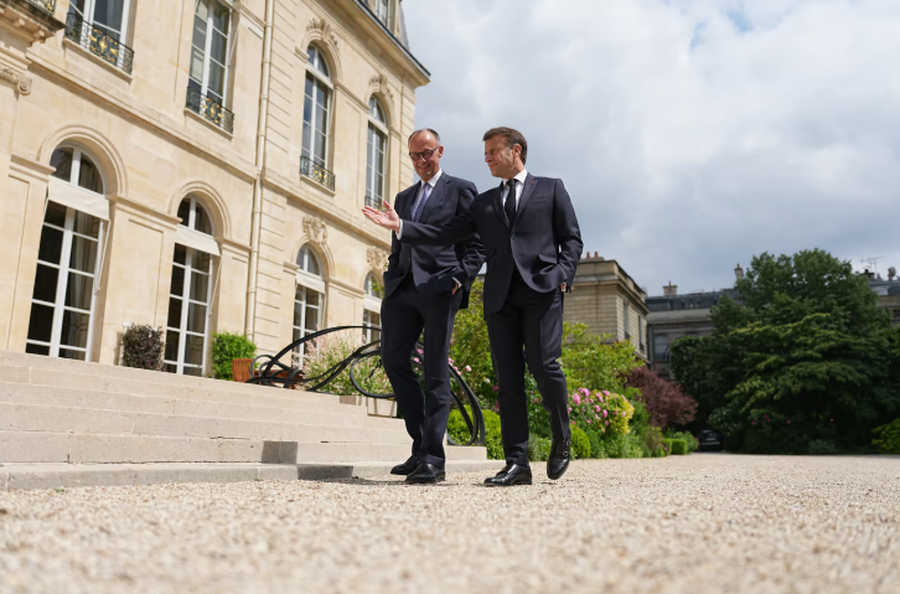
Both leaders say they will not allow national interests to divide them...
French President Emmanuel Macron and newly appointed German Chancellor Friedrich Merz presented a shared vision for a well-armed but also business-friendly Europe during their first official meeting on Wednesday.
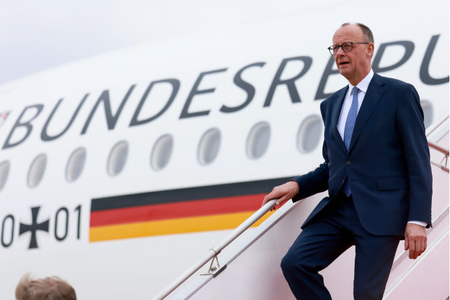
Less than 24 hours after officially becoming Germany's new leader, Merz traveled to Paris to meet with Macron at the Elysee Palace to discuss how the so-called Franco-German engine can help the European Union tackle the myriad problems facing the bloc, including American shrinking and the need for increased defense spending; supporting Ukraine in the fight against Russia; and boosting European competitiveness.
"We want to respond together to the challenges facing Europe," Macron said.
After years of heated disagreements under former Chancellor Olaf Scholz, Macron and Merz were eager to present a refreshed, engaged and well-choreographed partnership, led by two like-minded leaders eager to get down to business.
Macron welcomed "a new page in Franco-German friendship," while Merz said he already shared "a deep personal connection" with the French president.
The two leaders appeared relatively in agreement on how to support Ukraine. Merz said he wanted Germany to offer Kiev security guarantees if talks between Russia and Washington lead to a ceasefire, something both France and the United Kingdom have been actively seeking, and would visit Kiev in the coming weeks.
"President Trump also has our full support when it comes to ending the killings and the war," Merz said. He added that "once a ceasefire is reached, we are ready to participate in its monitoring under US leadership."
In the past, Macron has said that Europeans should work on security guarantees for Ukraine, including the possible deployment of troops in Ukraine after a ceasefire, regardless of decisions made in Washington - a possible sign that Berlin may not be fully in line with Paris on the role that Europeans should play in Ukraine.
The two also appeared similar in their support for the European Commission's rearmament plan and efforts to make European businesses more competitive, many of which were inspired by Mario Draghi's report.
But enthusiasm for a resolute Germany is being tempered by some early signs that Merz is already a fragile chancellor, including an embarrassing initial failure to become chancellor on Tuesday in the Bundestag. Macron himself faces a deadlocked parliament in place and limited room for maneuver due to persistent budget problems.
But differences of opinion have also emerged between the two leaders on EU trade policy.
The German chancellor, who wants to revive his country's flagging, export-oriented economy by striking more free trade deals, is pushing for swift approval of such a pact between the EU and the Mercosur group of South American countries. He said on Wednesday that the agreement should be "approved and put into effect as soon as possible."
While Macron agreed that the EU should seek new export markets amid the turmoil caused by Trump's tariffs, he warned that trade deals must be in the EU's interest and that goods entering the bloc must meet its strict environmental and health standards.
France has long feared that the Mercosur agreement would lead to a glut of cheap agricultural imports from South American countries, which hold their products to lower standards, thus putting French farmers out of work.
"We are in favor of trade agreements if they protect our European producers and ensure equality of treatment," he said. /Adapted from Politico Pamphlet/


Lini një Përgjigje