


 Shkruar nga Patrick Hess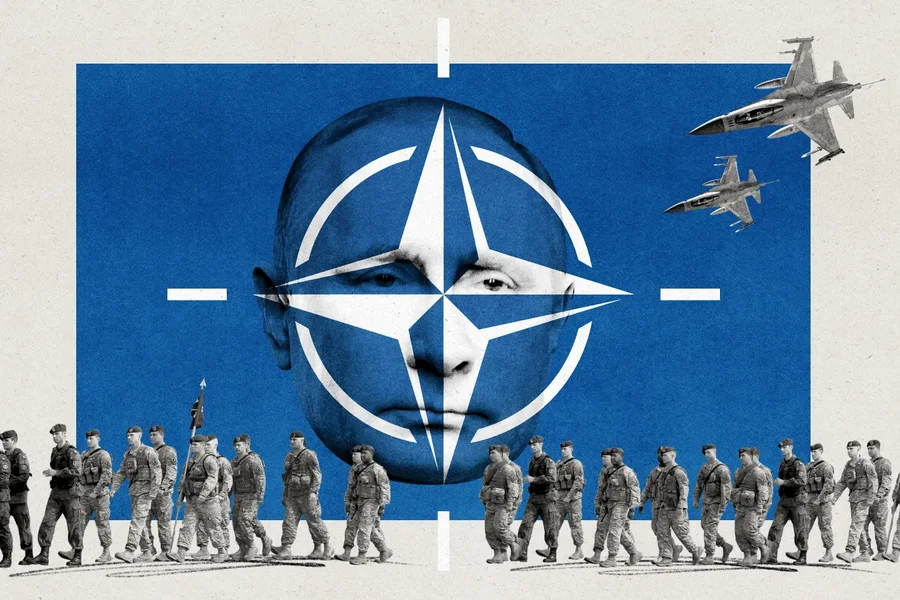
He warns that "Russia is extremely aggressive and reckless in cyberspace," and will be able to "turn off the lights for millions of people."
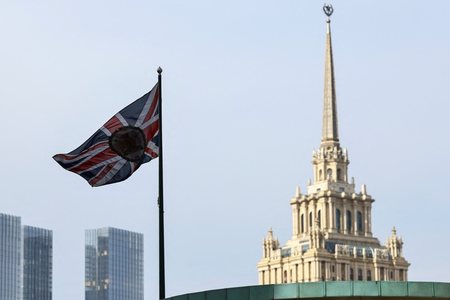
During the final years of the Second World War, as the Allied governments awaited the defeat of Nazi Germany, Lancaster House was the headquarters of the European Advisory Commission, which was charged with the task of drawing up recommendations for the solution of political problems in post-war Europe.
This week, Lancaster House will host the NATO Cyber Defense Conference, where the alliance will discuss a wide variety of issues, in what appears to be a very disturbing panorama of pre-war Europe. One of these problems has to do with the growing possibility of cyber attacks, carried out in recent years by Russia against NATO countries.
On Sunday, The Sunday Telegraph newspaper published parts of a speech to be delivered at the conference by Pat McFadden, chancellor of the Duchy of Lancaster. He warns that "Russia is extremely aggressive and reckless in cyberspace," and will be able to "turn off the lights for millions of people."
" It can shut down our energy network. This is the indirect war that Russia is waging with Ukraine "- he says. In addition to being a testing ground for new weaponry such as drones, with the help of Artificial Intelligence and hypersonic missiles, the war in Ukraine has become an arena for a large-scale cyber war.
Russia's cyber attacks on Ukraine began in 2015, long before the 2022 invasion. The first operation was against the national power grid, leaving hundreds of thousands of Ukrainians in the dark.
Similar attacks have been repeated throughout the war, especially in the first months of the full-scale invasion nearly 3 years ago, in conjunction with kinetic network attacks. However – and somewhat ironically, as a legacy of the Soviet Union, Ukraine's power grid is state-owned, so it possesses significant reserve capacity, making it resilient to such attacks.
Meanwhile, many of Europe's energy grids are controlled by the private market, which maximizes efficiency but leaves them vulnerable. One of the main issues at this week's conference will be how to build similar resilience in the energy networks of European and NATO countries.
However, cyber is only one part of Russia's hybrid warfare model, which is based on the integration of multiple non-military means of conflict and third-party warfare, supported by the threat of military force, to achieve strategic goals. .
The origin of the doctrine was conceived by the Russian general Valery Gerasimov, in an article published in 2013, in which he wrote, among other things, that "the role of non-military means in achieving political and strategic goals has greatly increased, and in many cases they have surpassed the power of force of arms in their effectiveness."
Since the war has received so much media attention, it is easy to miss the growing array of these "non-military means" of destabilization that have been used against European countries since its inception. These include cases of sabotage and arson, GPS jamming, disinformation campaigns, the weaponization of illegal immigrants, and phone hacking, much of it linked to Russia.
This is a hybrid war in action, determined to disrupt, confuse and blur the dividing lines between peace and wartime. Because of this ambiguity, many of these tactics are difficult to counter or prevent effectively.
NATO was originally conceived - and essentially still exists - to deter an invasion or nuclear attack on Europe. Strategically, the alliance is ill-adjusted for this new era of hybrid warfare, whose tactics are low-threshold, non-military, and credibly deniable, and most importantly not contained within the scope of Article 5 of NATO which deals with mutual defense between allies.
And that means that to date, hybrid warfare is asymmetric. However, this asymmetry is not stable. Should Donald Trump reach a settlement in Ukraine across the current lines of control, Washington will begin to shift its attention and resources to more pressing issues in the Indo-Pacific region.
Russia can then be expected to continue its campaign of bullying as a means of putting Europe under pressure to accept the expansion of the Russian sphere of influence. As Europe prepares to take primary responsibility for its own security, this new order must include a coherent strategy for dealing with Moscow's hybrid threats, including how and when to strike back./ Adapted "Pamphlet" from "Unherd" "



Lini një Përgjigje