


 Shkruar nga Pamfleti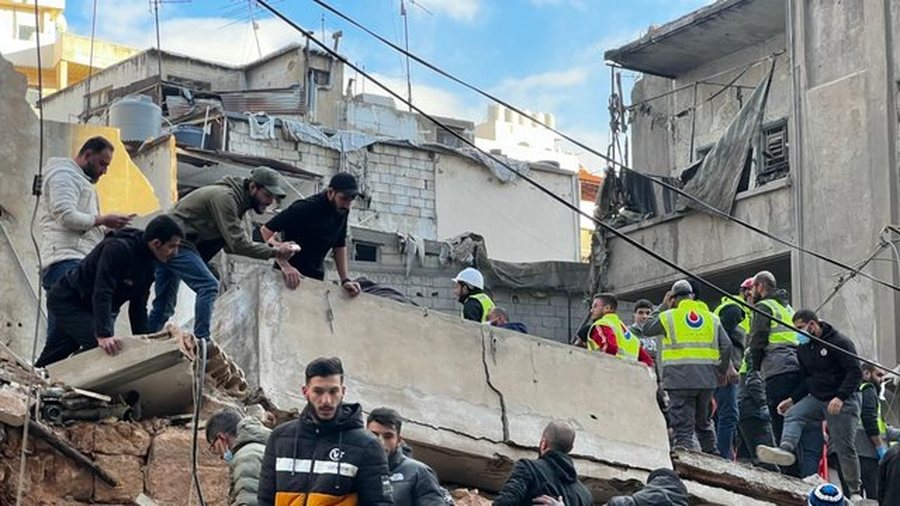
Israeli warplanes struck a residential building in central Beirut on Tuesday, and issued new evacuation orders for 20 buildings in the southern suburbs of the Lebanese capital.
The attack leveled the building in the Basta neighborhood in central Beirut. This was the second attack in recent days in the most populated part of the city.
No casualties have been reported so far.
Israeli military spokesman Avichay Adraee hinted at more attacks, saying orders had been issued for about 20 buildings in the southern suburbs of Beirut, as well as a warning for the southern town of Naqoura, where the headquarters are located. of the UN peacekeeping mission, UNIFIL.
The attack in Beirut came hours before Israel's security cabinet was to meet to vote on a cease-fire deal, which was brokered by the United States, and is meant to end more than a year of war between Israel and the Lebanese militant group. , Hezbollah.
Hezbollah, which controls southern Lebanon, has been designated a terrorist organization by the United States, while the European Union has blacklisted its armed wing but not its political party.
Among the main issues holding up the deal has been Israel's demand to have the right to act if Hezbollah violates its obligations.
Under the proposal, thousands of Lebanese troops and UN peacekeepers would be stationed in the south, and an international panel chaired by the United States would oversee implementation of the agreement by all parties.
Israel's Defense Minister, Israel Katz, said the army would attack Hezbollah if the UN peacekeeping force, known as UNIFIL, did not provide "effective implementation" of the agreement.
"If you don't act, we will act, and with great force," he said, speaking to UN special envoy Jeanine Hennis-Plasschaert.
The European Union's foreign policy chief, Josep Borrell, said there is "no excuse" for Israel to refuse to implement a ceasefire with Hezbollah, the militant group and political party that controls most of southern Lebanon.
Borrell said all of Israel's security concerns have been addressed in the agreement brokered by the United States and France.
The conflict between Israel and Hezbollah erupted a year ago when the Iran-backed group began firing rockets into northern Israel in support of the Palestinian militant group Hamas - designated a terrorist organization by the United States and the European Union - at the start of the Gaza war. .
In recent months, the conflict has escalated, as Israel has been relentlessly bombing southern Lebanon, the southern suburbs of Beirut and the Bekaa Valley, killing many of Hezbollah's top leaders and sending ground troops across the border.
For its part, Hezbollah has fired rockets deeper into Israel.
Israel's expanded operation has displaced more than 1.2 million people, according to the Lebanese government, which says more than 3,760 people have been killed and more than 10,000 wounded during a year of fighting.
Hezbollah rockets have killed at least 50 people in Israel, more than half of them civilians, according to Israeli authorities./ REL




Lini një Përgjigje