


 Shkruar nga Ettore Sequi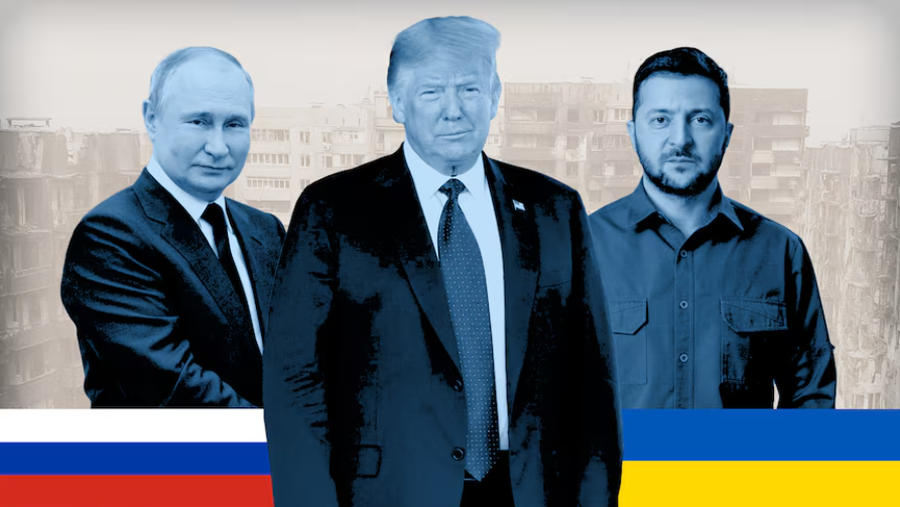
Putin is not offering a ceasefire to stop the war: he is offering a ceasefire to tailor it to his interests.
May 9 of this year will not only be the day on which Moscow will celebrate the 80th anniversary of the victory over Nazism. It will also be the scene of a fundamental change in the Ukrainian war, certainly not on the battlefield, but in the perception of all the actors involved.
The Russian proposal for a 72-hour ceasefire, closely tied to this day of remembrance, does not represent a real step towards peace. It is a calculated gesture, designed to reinforce the domestic narrative and send conciliatory signals to the White House, in an attempt to calm Washington, which has appeared nervous in recent days about the Russian military's continued attacks on civilian areas.
Vladimir Putin aims to satisfy domestic needs (ensuring the normal development of the May 9 parade), and send an ambiguous signal to the United States: a gesture sufficient to appear cooperative, but too weak to bring about real change.
For Trump, the ceasefire only makes sense if it can be presented as a cessation of hostilities. Not just as a symbolic gesture, but as a trophy to display and long enough to allow the American president to proclaim it as his own success.
Under these conditions, a mere 3-day suspension of fighting, without verification mechanisms on the ground, and without a concrete commitment to serious negotiations, cannot be sufficient. For Kiev, a short ceasefire represents more of a risk than an opportunity.
Zelensky knows that a brief suspension of fighting risks only favoring Moscow's propaganda, but also strengthening the US temptation to completely cut off aid to Kiev, a scenario that Washington has already threatened several times in the event that an agreement between the Russians and Ukrainians fails to be reached.
For this reason, from the very beginning, Ukraine has reiterated its demand for a ceasefire of at least 30 days, unconditionally, and with the aim of consolidating internal defense, strengthening Western support, and satisfying the Trump administration.
For Moscow, on the other hand, the ceasefire is a political tool in the service of its overall strategy. Therefore, Putin accompanies any suspension of fighting with demands related to peace agreements: recognition of territorial conquests, gradual lifting of sanctions, permanent limitation of security guarantees for Ukraine.
Lavrov's statements, according to which "the 3-day ceasefire represents the start of direct negotiations with Kiev without preconditions," should be interpreted precisely as follows: For Russia, the term "without preconditions" means that negotiations cannot be based on prior demands from Kiev.
Lavrov's words even carry another message: for Moscow, it is possible to negotiate even without a formal ceasefire. So the conflict can continue, even at a low intensity, while the terms of an agreement are being negotiated.
So according to the Russian vision, war continues to be a permanent instrument of pressure, which does not hinder, but accompanies and supports negotiations. The difference is very big. The US sees the ceasefire as a reduction in violence, and as a prelude to peace negotiations.
Trump desperately needs a lasting and visible ceasefire to declare the end of his mission. Not to save Ukraine, but to free himself from it, and to be able to reposition America's main strategy in the Pacific region.
Russia sees it as an element of the conflict itself, to be used to consolidate and expand its positions, as well as to disrupt the cohesion of the Western Front. So not as a humanitarian gesture, but a lever for strategic consolidation.
Putin is not offering a ceasefire to stop the war: he is offering a ceasefire to tailor it to his interests. Kiev needs a real and lasting ceasefire that will guarantee balance on the ground.
Ukrainian President Zelensky knows that without real guarantees, any short ceasefire is just a prelude to a new wave of destruction. Moscow needs a ceasefire, if only as a useful tactical tool to gain some concessions, to strengthen the pressure on Kiev and to influence the international narrative.
Meanwhile, Washington and Moscow are sending signals to each other. Moscow is strengthening its alliance with Tehran, consolidating ties with Beijing, and increasingly advertising close relations with North Korea.
The very large American offer to sell weapons to Saudi Arabia signals that, if necessary, Washington will not hesitate to use indirect leverage, such as pressure on the energy market, to counter Russian resistance.
Thus, the Ukrainian conflict fits into a broader, fragmented and unstable geometry, where every ceasefire, every pause, every proposal, is immediately read not only for what it asserts, but also for what it leaves out, implies or attempts to freeze.
For all the above reasons, May 9 will not mark the beginning of an irreversible path towards peace. On the contrary, it will mark Russia's attempt to normalize the conflict, to make it less visible, more tolerable, but no less dangerous./ Adapted from "Pamphlet" by "La Stampa"
*Note: Ettore Sequi, former European Union ambassador to Tirana.


Lini një Përgjigje