


 Shkruar nga Pamfleti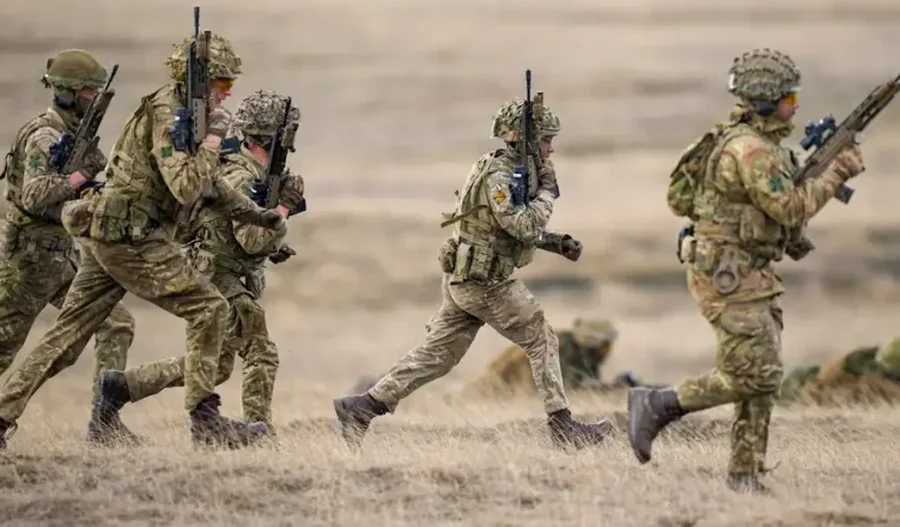
Europe needs to strengthen its defense and military capabilities. But how should this spending be financed? There are various proposals.
The US still pays the lion's share of the costs of funding NATO, a military alliance of 32 countries. European security also depends on American soldiers and their weapons - mainly on special military capabilities that Europeans do not yet have at their disposal. For example, in terms of airlift of tanks or troops, but also in satellite reconnaissance and surveillance.
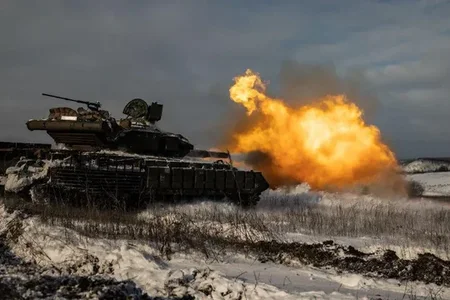
For Europeans to be able to defend themselves against Russia without American support, an additional 250 billion euros would be needed each year (on top of existing defense and armaments spending), according to the Brussels-based Bruegel Institute and the Kiel Institute for the World Economy. Specifically, this includes about 50 brigades with a total of 300,000 soldiers and 3,400 new tanks. By comparison, sending a single new brigade to Lithuania (with about 5,000 soldiers) would push the German Bundeswehr to the limits of its existing capabilities.
A two-speed Europe?
European Commission President Ursula von der Leyen this week proposed a “relaxation” of the strict rules on the maximum amount of national debt, which are set by the Maastricht Treaty, in line with Germany’s stated position that defense should remain the responsibility of national authorities, meaning that spending on armaments should be financed from the budgets of member states. Von der Leyen has also proposed a “Plan for the Rearmament of Europe.” She also proposes a fund that would mobilize up to 800 billion euros for defense purposes.
To speed up security cooperation in Europe, the Brussels-based European Policy Centre (EPC) suggests that the 27 EU countries should not necessarily strive for unanimous decisions, but that those that want to do so should move forward more quickly. This “coalition of the willing,” as it was called, should also include countries that are not currently members of the Union, such as the United Kingdom or Norway. These countries would pay money into a common fund (the European Security Financing Fund), and with the common funds. By joining forces, we can borrow much more than would be possible with the sum of our individual capacities, it further states.
Joint debts: yes or no?
France, Spain and Greece want European armaments to be paid for with joint European loans. According to them, this would help avoid an additional burden on their national budgets already burdened by huge debts. First of all, it is French President Emmanuel Macron who proposes the creation of a European military defense fund, modeled on the EU fund for overcoming the consequences of crisis management during the coronavirus pandemic.
But the very word Eurobonds is enough to make the German finance minister nervous. And it is not just Germany that is wary of the idea. Several other countries that practice strict budgetary discipline have similar reservations. These countries prefer a concept where defense spending will remain the responsibility of national governments in the future. However, it would be completely unclear how countries like Spain or Italy, which allocate less than 1.5 percent of GDP to defense, could ever come close to NATO's stated target of 2 percent of GDP, especially when viewed in the context of their (very) high national debt?
Joint weapons orders?
Until now, joint arms purchases have been the exception within the EU. The consequence of this practice is that five times more different weapons systems are used in Europe than in the US. From an economic point of view, it would be much smarter to announce a tender for the development of new weapons and give the job to the concern that produces military equipment and offers the most attractive conditions. If all armies, for example, were to buy a previously agreed model of tanks, then the production of a larger number of tanks would ultimately be cheaper (per piece).
What seems like a good idea economically often fails due to national selfishness. Defense ministries have so far been happy to buy systems produced by domestic arms factories. The implementation of joint projects would be delayed due to the complicated process of harmonizing positions. According to military experts, joint procurement, despite all this, is something that has the greatest potential for better equipping the army at a manageable cost.
Favorable loans?
Many EU member states are unanimous in their assessment that the European Investment Bank (EIB) should approve favorable loans for the purchase of weapons and ammunition. So far, this has not been in line with the statutes. Weapons production is supported by the credit line only in exceptional cases – in principle, only when the weapons can also be used for civilian purposes, for example for satellites or drones. “Relaxing” these rules could allow medium-sized companies in the arms and defense sector in particular to “supply” themselves with favorable loans./DW




Lini një Përgjigje