


 Shkruar nga Enrico Franceschini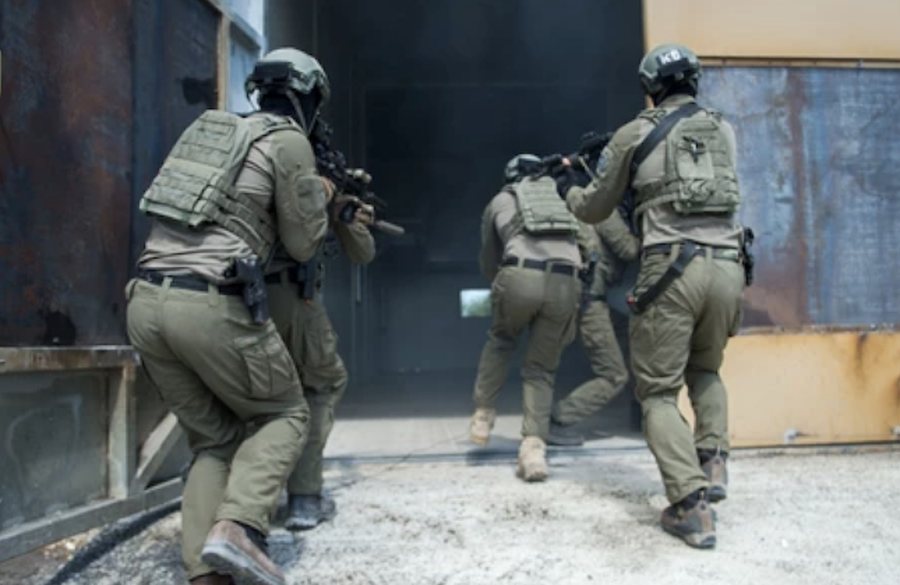
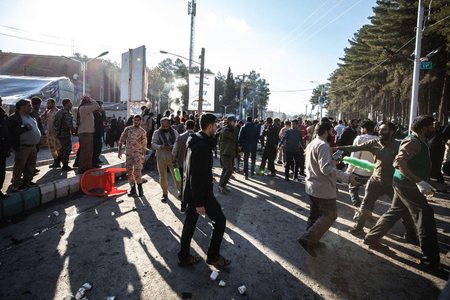
"Those who participated in the October 7 massacre signed their death certificates." The words uttered yesterday by David Barnea, the head of the Mossad, do not refer directly to the killing of Hamas's No. 2, who was struck by a drone in Beirut on Tuesday in an attack not claimed by Israel but believed to be all the elements to have his signature; nor for the bombs that twenty-four hours later caused the death of over 100 people in Tehran, during the commemoration of the assassination of General Soleimani, the head of the Iranian Revolutionary Guard and the coordinator of military aid to the Lebanese Hezbollah and the Palestinian Hamas. An action that does not follow the modalities of targeted executions carried out by Israel, and which would constitute an unprecedented turning point if it came from Jerusalem. But the intervention of the head of the famous secret service of the Jewish state is nevertheless the first official confirmation that Israel has opened the "hunting" season throughout the Middle East, and if necessary elsewhere, for the perpetrators of the most serious massacre of Jews since the Holocaust.
While the Israeli response to the October 7 massacre continues with an open war in Gaza, Israel has launched another of its "secret wars". In the past there were mainly three. The first was the campaign against former Nazis responsible for the Holocaust, the most famous episode of which was the capture in 1960 of Adolf Eichmann in Argentina, and his clandestine transfer to Jerusalem, where he was tried, sentenced to death and hanged : the only death sentence carried out in the 75-year history of the Jewish state.
The second was ordered in 1972 to target the perpetrators and instigators of the massacre of Israeli athletes at the Munich Olympics: a revenge that lasted two decades, with dozens of Palestinians killed from the Mediterranean to Europe, as shown in the film "Munich". directed by Steven Spielberg.
A third has targeted Hamas and its Iranian backers since the Palestinian Islamic fundamentalist movement, considered a terrorist organization by the United States, the European Union and the United Kingdom, began an intense campaign of attacks in the mid-1990s.
Among the chosen targets since then have been Sheikh Ahmed Yassin, the spiritual leader of Hamas, killed in Gaza by a rocket in 2004, and Khaled Meshal, then the head of Hamas's political wing, who survived a poisoning attempt in in 1997 in Amman. To give another example, none of the Hamas members involved in the 2005 kidnapping of Israeli soldier Gilad Shalit, exchanged for 1,027 Palestinian prisoners after five years of captivity in Gaza, are alive today. The same fate may await the militants who killed 1,200 Israelis on October 7 and took 240 hostages.
Israel's secret wars are not a simple biblical "eye for an eye": they have a preventive function. "The whole value of my work," said the "Nazi hunter" Simon Wiesenthal, "lies in the warning to tomorrow's killers: you will never have peace," something that echoes today's words of the head of the Mossad.
It is debatable whether it is more beneficial to Israeli security to "make peace with enemies," as Israeli Prime Minister Yitzhak Rabin said when he shook hands with Yasser Arafat at the White House in 1993, a peace Israel began to make with its neighbors. Arabs: Hamas' aggression on October 7 was aimed precisely at thwarting it, and efforts to extend peace to the Saudis and the more moderate Palestinians, led by Abu Mazen in the West Bank. But in the Middle East, as Ehud Barak, another Israeli prime minister committed to making peace, says, Israel represents "a cottage in the jungle," that is, an island of democracy in the midst of authoritarian, illiberal, or terrorist regimes and movements: a concept that they don't always understand, those in the West, who are lucky enough to live in a villa surrounded by other villas. Therefore, if on the one hand it is open to dialogue, on the other hand Israel warns: those who massacre Jews sign their own death certificate. / La repubblica- Bota.al





Lini një Përgjigje