


 Shkruar nga Nicholas Mirenzi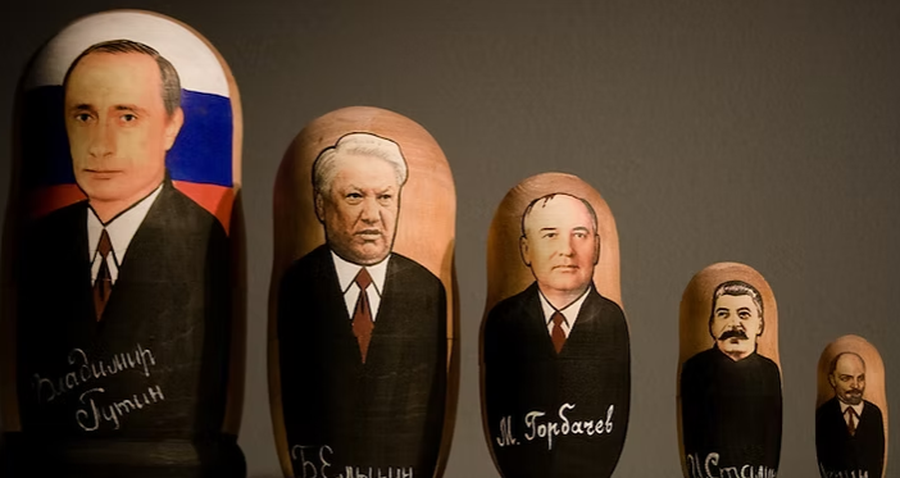
Lenin is still a visible and symbolic presence in Russia today, despite the collapse of the Soviet Union.
A discussion of the (non-existent) fate of a people, from the Tsar to Bolshevism, and to the present day. Renowned Italian journalist Ezio Mauro, a long-time expert on Russia, explains why dictatorship remains the norm in Russia, and why Trump makes no secret of his fascination with this model.
When he was preparing to go to Moscow as a correspondent for La Repubblica in 1987, Ezio Mauro thought that the greatest mystery he would like to uncover about Russia was Lenin's illness and death. "Even today," he says in an interview with HuffPost, "it is still forbidden to publish his medical records."
A little over 100 years after the death of the Bolshevik leader, at the end of a semi-obsessive investigation that he began as soon as he set foot in Moscow, Mauro reveals, although not everything, many things about what happened to the body of the man who was condemned to be immortal, embalmed to keep the flame of revolution burning.
“Lenin is still a visible and symbolic presence in Russia today, despite the collapse of the Soviet Union. People continue to talk about Lenin's disease. But this disease does not have a specific name. There is no clinical term that defines it precisely ,” the well-known journalist emphasizes.
Ezio Mauro reconstructs history, and gives names to the things that happened, as a terrible struggle for power was unfolding around the ailing body of Vladimir Ilyich. The book reconstructs that battle step by step, shows Stalin's deft rise to power, the mistakes and misfortunes that pushed Trotsky to the periphery of government and then history, while from the depths of history the structure of which Russian power was made emerges.
"Lenin theorized unlimited power, in the name of the revolutionary task. An absolute concept of power. Its echoes reach today's Putin. You only have to look at the way the president of the Russian Federation is suspicious of anyone who disagrees with him, and the cruelty with which he handled the Navalny case, for example ," he points out. However, Putin openly criticized Lenin...
Yes. Before invading Ukraine, he accused her of having “invented” Ukraine, separating it from the body of Mother Russia. Putin has in his mind an idea of Russia that is much closer to Stalin’s than Lenin’s.
The latter recognized the independence of Belarus, Ukraine, and the Transcaucasian Republic within the Soviet Union, while Stalin believed that they should be part of Greater Russia, as autonomous regions. This issue was a source of intense conflict between the two.
So, what remains of Lenin in today's Russia?
The cult of power and vertical command still remains. This is a constant in Russia. A place where the Tsarist anthem prayed to God to save the Tsar, strong and majestic, a ruler who would dominate his terrified enemies.
If Trotsky had won instead of Stalin, would the history of the Soviet Union have been different?
From the point of view of dictatorship, no. Totalitarian government was inscribed in the fate of the USSR from its very beginning. Lenin believed that socialism could not be served on a silver platter. For him, violence was inevitable. Stalin distorted this system until the height of the Terror of the 1930s. The real contradiction to Lenin came from the labor movement, which gained recognition and rights through reforms, while renouncing violence and revolution.
Why is it still not possible to read Lenin's medical diaries today?
Because there is a lot of bureaucratic inertia. The term of secrecy ended, was restored, and expired again, but the diaries remained closed. But there is something else. The difficulty of confessing the fragility of power, the cult of separation, an idea that feeds the hypothesis that in the face of power you are not a citizen, but a subject, that you can only address it with prayer, but not with law. Russians went from being subjects of the Tsar to the Bolsheviks, without ever being able to be citizens. Even today, after the collapse of the USSR, it is like this again.
Is this the fate of Russia?
I do not believe in the fate of peoples and nations.
And what do you think Russians are needed for today?
I believe that Russia is a constant point of reference for Europe and the West. Russia is part of Europe, yet it continues to withdraw from it. In the 19th century, it was called an “inherited enemy.” In the end, Putin has done nothing more than provide a theoretical and political framework for this historical confrontation.
Russia is the new antagonist of democracies. As he stated in an interview with the Financial Times, democracy is not necessarily liberal. So meaning what his model is, illiberal democracy.
Who is also Donald Trump's favorite model?
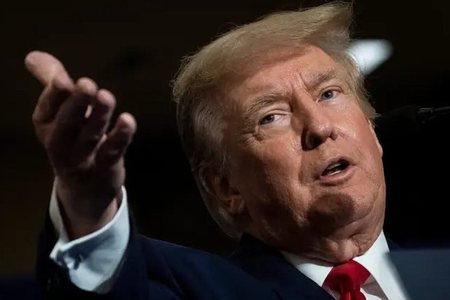
Trump thinks the world is divided into three blocs, American, Russian and Chinese. What is the problem? This is how the Western canon ends, that is, the moral and political box for judging the world, the criterion of value for assessing rights and freedom.
Is Trump also illiberal?
Trump fails to understand why, in a moment of crisis like this, he cannot use, like Putin and Xi, the vertical of power, that is, the instrument of unlimited command. He wonders why his power as president should be subject to checks and balances. He thinks that everything would be much easier if he could throw aside all these obstacles and continue directly on his path. / Adapted from "Pamphlet" by "Huffington Post Italia"


Lini një Përgjigje