


 Shkruar nga Pamfleti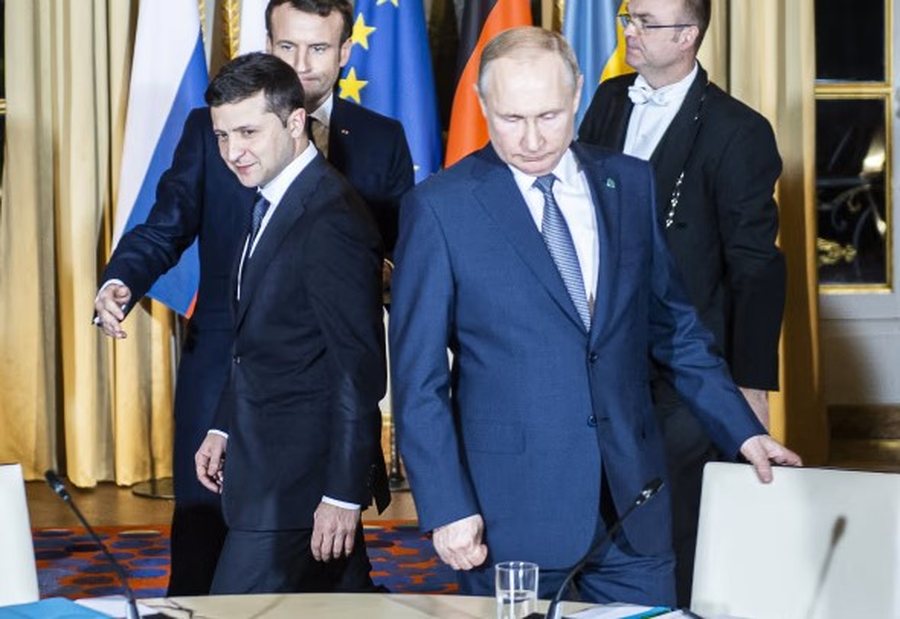
“Rabotajte, bratja.” Work, brothers, he says. The response to Volodymyr Zelensky’s open letter is summed up in these two words. While talking about the economy – “we had a decline, now we are at the level of European Union countries” – he responded in a calm tone, often with a smile. But his face turned serious as he wanted to send a clear message to the Ukrainian president.
"Addressing our warriors on the front lines, I want to say: fellow soldiers and sailors, officers, admirals and generals, the whole country has its eyes on you, the whole country is proud of you and has pinned its hopes on you. Work, brothers."
It's not even about peace.
"As for military operations, we start from the fact that one day they will end and, without any doubt, they will end when we have achieved the objectives we have set for ourselves."
Does this mean that the meeting with Zelensky will not take place? – asks the Indian moderator of the plenary session of the St. Petersburg Economic Forum.
"I see no reason for it," is the blunt answer.
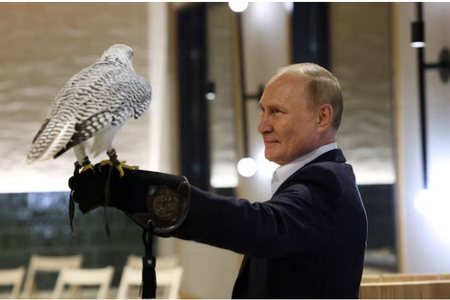
Vladimir Putin seems almost motionless. Around him, in Russia, there is a lively and even lukewarm debate about the prospects of this war, not to mention the difficulties of the daily life of his compatriots, but none of this is reflected in his words.
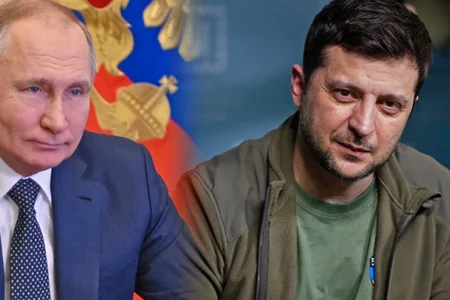
He devotes words filled with harsh irony to Zelensky's letter, addressed to him but clearly intended to influence Russian public opinion.
"I read it, so, casually. First of all, the author mentioned my age. Well, what can be said? This is not the main thing. The ability to act and work is more important. However, the Ukrainian side did not see fit to give public resonance to this aspect of our relations, which, in my opinion, is rude and inappropriate. The only interest in the development of this summit is from the Ukrainian side. They want to stop the advancement of our armed forces, that's all. This letter contains elements of real rudeness and is a way to make any personal meeting impossible."
However, the review of the letter appears to have been anything but quick, as Putin continued to attack its contents.
"The author emphasizes that it is not necessary to respect the agreements reached in Anchorage. And that Europe should be involved. I am not very clear why the role of guarantor is being denied to the US administration and President Trump. They want to receive weapons from the US, but for some reason they do not want to see the US administration and President Trump as guarantors. This raises many questions."
As evidence of a bond that has never been completely severed, Putin received Donald Trump's "cordial greetings," personally delivered by Rodney Mims Cook Jr., the head of the American delegation to the forum and the man tasked with building the White House ballroom, so much desired by Trump.
As if to emphasize that he would only speak to his American counterpart, he then met with Gerhard Schröder, a figure so discredited that the idea of his role as a mediator is impossible. This meeting also seemed like an indirect response to the Ukrainian demand for Europe to be included in a possible negotiating table.
Other alternatives do not appear on the horizon.
Also because, according to him, "European elites are fomenting chaos where they are trying to attract more and more countries."
He then accused the West of undermining the global economy and finances through sanctions.
The Russian president denied any difficulties for his army at the front.
"The same letter says that we will never be able to liberate Donbass. But we are moving forward calmly, but resolutely. And there is no doubt that we will achieve this. Also, in the field of negotiations, we will continue to insist on the denazification of Ukraine."
Without seeming at all irritated, he returned to the letter again, turning the issue into an etiquette problem.
"We've all seen how Donald, in front of the whole world, was engaged in educating the author who often behaves like Rambo, teaching him what the dress code is ," he said, referring to the harsh treatment Zelensky received during his first visit to the White House.
"Thank you, Donald, but there is still a lot of work to do, we must continue."
Just as the war must continue, who knows for how long.
Speaking about Putin's determination to continue the conflict, Russian journalist and commentator Mikhail Rostovsky wrote a few days ago that:
"Great leaders make decisions based on their own understanding of reality."
Perhaps, this is precisely the problem./ Corriere della Serra


Lini një Përgjigje