


 Shkruar nga Pamfleti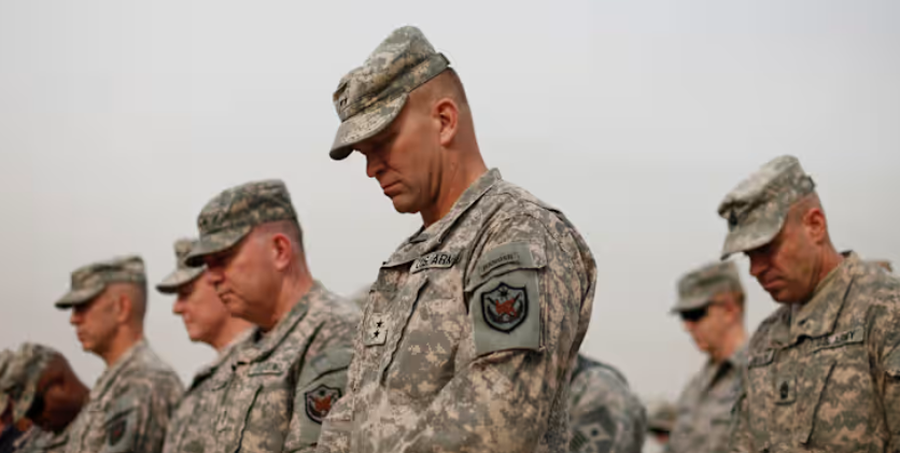
December 15, 2011 - US declares end of Iraq War
Through a ceremony held in Baghdad, senior American officials announce the end of their occupation that began in March 2003. The withdrawal of American troops had been a priority of then-President Barack Obama.
However, when he left office, the United States would once again conduct military operations in Iraq. Five days after the attacks of September 11, 2001, President George W. Bush declared the launch of the “War on Terror,” an umbrella term for a series of preemptive military strikes aimed at reducing the threat posed by terrorism to America.
The first such attack was the invasion of Afghanistan in October 2001, a war that continued for two decades. Throughout 2002, the Bush administration claimed that Iraqi President Saddam Hussein was allied with terrorists and developing “weapons of mass destruction.”
In fact, by all accounts, Hussein was responsible for many atrocities, but there was little evidence that he was developing nuclear or chemical weapons. Behind closed doors, intelligence officials warned that the coming war was based on guesswork.
And in fact, a British investigation later revealed that the Iraqi chemical weapons thesis was inspired by the action film “The Rock” directed by Michael Bay. However, the US and UK governments were firm in their public assertions that Hussein posed a threat to their homeland, and they launched the invasion.
At first, the invasion was an immediate success, as the coalition had overthrown Hussein's government and occupied most of Iraq by mid-April. But what followed were eight years of insurgency and sectarian violence.
American expectations that Iraqis would “greet them as liberators” and quickly form a stable, pluralistic democracy proved wildly unrealistic. Although the coalition installed a new government, which took office in 2006, it failed to calm the situation.
Guerrilla attacks, suicide bombings, and improvised explosive devices continued to claim the lives of soldiers and civilians, and militias on both sides of the Sunni-Shiite divide carried out ethnic cleansing. The American public remained skeptical of the war, and many were horrified by reports of military and CIA abuses, most notably at Abu Ghraib prison and in 2007.
Even by the lowest estimates, the Iraq War caused the deaths of over 100,000 people. Other estimates suggest the number is several times higher, with over 205,000 civilian deaths alone. Later, many of the militias formed during the Iraq War joined or partnered with extremist groups in neighboring Syria, which itself was experiencing a bloody civil war.
By 2014, the Islamic State of Iraq and the Levant had absorbed many of these groups and controlled much of Syria and Iraq. ISIS's staggering rise prompted Obama to launch new military actions in the region, beginning in June 2014.
Although ISIS has now been driven out of Iraq and appears to have been greatly reduced, a small number of US troops are still stationed in Iraq.
Other important events:
December 15, 1914 - The Serbian Army recaptures Belgrade after a fierce battle with the Austro-Hungarian Army during World War I.
December 15, 1917 - Russia and the Central Powers, Germany and Austria-Hungary, sign an armistice agreement between them.
December 15, 1933 - In the USA, the Eighteenth Amendment, which prohibited the sale, manufacture, and transportation of alcoholic beverages, is repealed.
December 15, 1945 - American General Douglas MacArthur orders that Shinto is no longer the state religion of Japan.
December 15, 1960 – In the US, police arrest Richard Pavlik, accused of planning the assassination of newly elected president John F. Kennedy.
December 15, 1961 - The architect of the Nazi Holocaust, Adolf Eichmann, the senior Nazi official who organized the "final solution of the Jewish question," i.e. the extermination of the Jewish population of Europe, is sentenced to death.
Eichmann was assigned to coordinate the identification, roundup, and transportation of millions of Jews from occupied Europe to Nazi death camps, where they were suffocated in gas chambers or forced to work themselves to death.
At the end of the war, he was captured by American forces, but managed to escape from prison in 1946, just before he was to face the International War Crimes Tribunal in Nuremberg. He lived for some time under a false identity between Europe and the Middle East, before moving to Argentina in 1950, a safe haven for many Nazi war criminals.
Agents of the Israeli secret service, Mossad, kidnapped him on May 11, 1960, a few meters from his home, and took him to Tel Aviv, where he was tried for war crimes. Eichmann was sentenced to hang on May 31, 1962, near Tel Aviv. His body was cremated, and his ashes were thrown into the sea.
December 15, 1978 - The United States declares that it will recognize communist China. President Jimmy Carter stated that as of January 1, 1979, the United States would officially recognize the People's Republic of China, and would sever relations with Taiwan.
December 15, 1999 - Floods and landslides caused by heavy rains kill 20,000-25,000 people in Venezuela. Over 350,000 others, mostly poor, were left homeless by the terrible storm. / Prepared by Pamphlet


Lini një Përgjigje