


 Shkruar nga Pamfleti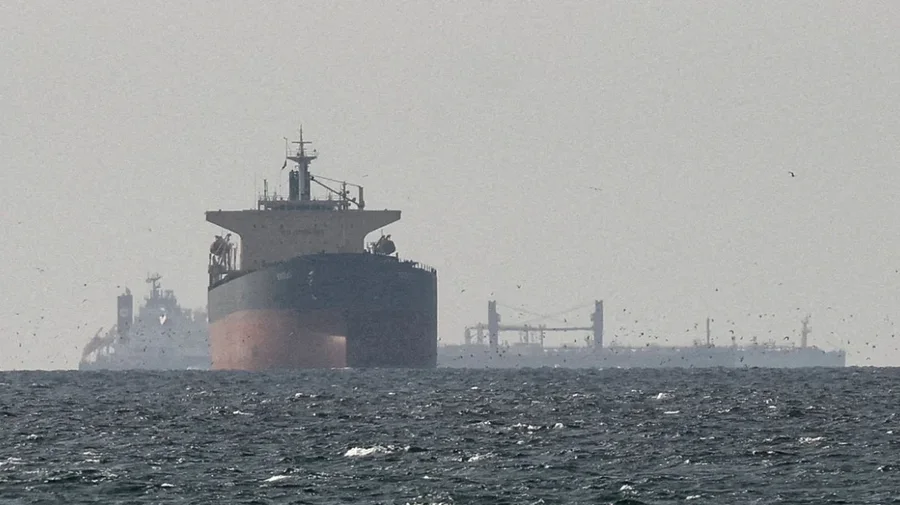
In recent weeks, sailing a ship through the Strait of Hormuz has been an extremely dangerous affair, due to the risk of Iranian attacks, whether with missiles or mines. Now that the United States and Iran have called a pause in hostilities, the journey may be less dangerous. But it is no less difficult on a political and diplomatic level, mainly because it is clear that Tehran is investing without delay in forging new relations through the crisis.
Two days after the start of a fragile ceasefire, the Straits have become Tehran’s strongest card in its high-stakes geopolitical showdown with President Donald Trump. Instead of fully opening the seaway to oil tankers and container ships, as the Trump administration had promised, shipping analysts say Iran continues to maintain a tight grip on the Straits. Tehran gives priority to only a limited number of ships from countries that either have direct trade relations with it or are not considered hostile by the Iranian government.
This has placed dozens of countries that use the Straits in an almost "diabolical" position, forcing them to move between Iran and the United States like modern versions of Scylla and Charybdis, the monsters of Greek mythology that menaced sailors in the dangerous Strait of Messina.
Iran exploits the Straits for its own interests
That could change if the United States puts enough pressure on Iran to ease its border restrictions. For now, the Iranians continue to use their ability to disrupt global trade and energy flows to their advantage.
Shipping analysts consider it no coincidence that the first Western European-owned ship to pass through the Straits after the Iranian restrictions were imposed belonged to the French company CMA CGM. Equally unlikely is the fact that its safe passage last week came just a day after President Emmanuel Macron criticized Donald Trump for his handling of the war and his frequent criticism of NATO.
Other countries that have provided passage for their ships, such as Turkey, Pakistan and India, either have trade relations with Iran or have maintained a neutral stance in the war. Pakistan mediated the negotiations that led to the ceasefire and will host Vice President JD Vance and an Iranian delegation in Islamabad to seek a permanent solution.
Meanwhile, Iran continues to maintain a tight blockade of the Straits. Only five cargo ships passed through on Wednesday, and none of them were carrying oil or natural gas. Iranian media reported that Tehran stopped the tankers in response to Israeli strikes against Hezbollah in Lebanon. Iran, Israel and the United States disagree on whether the ceasefire agreement includes Lebanon.
Mines and tolls
On Thursday, Iranian Deputy Foreign Minister Saeed Khatibzadeh told ITV News that the Straits were open to all, but added that there were still mines in the waters and that ships had to coordinate with the Iranian military to pass through. While shipping companies have questioned this claim, the statement has raised concerns.
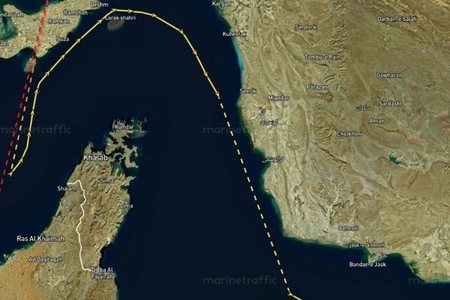
At the same time, pressure is mounting on companies to only use the route near Iranian territory, known as the Larakh bypass. This route allows the Islamic Revolutionary Guard Corps to control ships and potentially collect transit fees.
In negotiations with the Trump administration, Tehran is seeking to make the practice permanent. Iranian officials have said they plan to impose a $2 million fee for each crossing and use the proceeds to rebuild infrastructure damaged by US and Israeli airstrikes, after sharing a section with Oman.
Trump's criticism of Europe
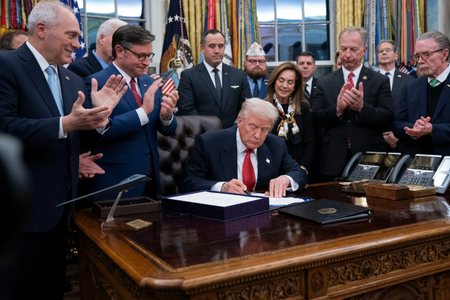
Donald Trump suggested that the United States could jointly control the Straits with Iran and share the revenue. The idea of tariffs was immediately rejected by allies such as Britain, with Foreign Secretary Yvette Cooper declaring that freedom of navigation means that navigation should be free.
Such statements could irritate Trump, who has criticized Britain for limited support in the campaign. In fact, European countries face a more complex political problem in using the Straits. The US president has criticized NATO allies for a lack of commitment to opening the sea route and has declared that Iranian control is primarily a European problem.
European countries, more dependent on Persian Gulf oil and gas than the United States, are forming a 35-nation coalition for the security of the Straits, but only for the period after the conflict is resolved.
Saudi Arabia, Kuwait and Qatar are also expected to oppose any idea of transit tariffs, due to their dependence on energy exports. However, analysts say it could give Iran more negotiating power on other issues such as its nuclear and ballistic missile programs.
While a clear end to the conflict is expected, countries are likely to continue to seek special agreements with Tehran.
Turkey's actions
Turkish diplomats, whose country had 15 ships and more than 150 sailors stranded because of the war, negotiated with Iranian officials for safe passage. They used trade and diplomatic relations with Tehran and President Recep Tayyip Erdogan's efforts to prevent war before the US and Israel intervened.
Turkey managed to pass three ships before the ceasefire was declared, flying the flags of Panama, Belize and Saint Kitts and Nevis. One of them, the Ocean Thunder, is carrying about a million barrels of oil from Iraq, cargo that Iran had declared exempt from the restrictions.
Iran is also rewarding countries that continue to trade with it. India, which had granted passage to eight ships before the ceasefire, confirmed its first purchase of Iranian oil in seven years. The US temporarily lifted sanctions to ease market shortages.
Indian officials denied that Iran receives payments for the passage of Indian ships, stating that oil supplies have been secured without any obstacles to payment.
Recent developments in the Middle East show that Iran is strengthening its position through a long-term strategy, using all available tools in this crisis.




Lini një Përgjigje