


 Shkruar nga Pamfleti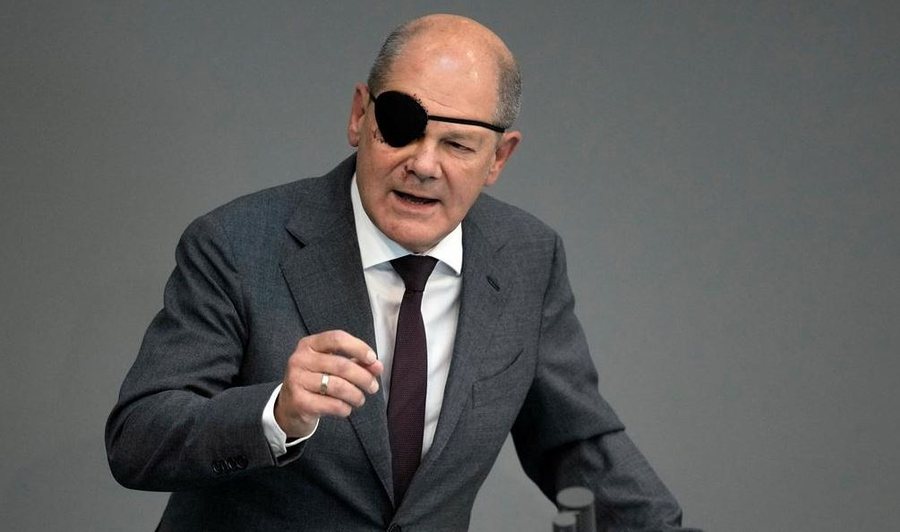
Developments in Germany are not so optimistic. The country is losing economic power. The industry suffers from high energy prices and a lot of red tape.
The infrastructure has problems, digitization is moving at a snail's pace. Inflation is high, citizens keep their hands tight. The "Economist" newspaper even asked in a recent article whether Germany is "the sick of Europe" again.
This cannot stay like this. Chancellor Scholz's appearance in the debate on the budget in the Bundestag was different from the statements of August, where Scholz said that they are talking about difficulties that have nothing to do with Germany's economic power. With his face hurt from running on Wednesday, he spoke in the Bundestag about the citizens, who are tired of the state of stagnation. The chancellor called for an "increased national effort" to get the country moving. He announced the Pact for Germany. Together we must "shake off bureaucracy, fear of risk and timidity," because it "paralyzes our economy and brings frustration to people at home, who just want Germany to work."
Let's not fight anymore - a signal for the government
"Cooperation instead of conflict, this is the need of the hour", said Scholz in the Bundestag. You can understand this as a request directed within the internal ranks. In the German government, contradictions of party politics collide between Te Gjebërve and the FDP, quarrels that were frequent in the past months and created the image of a divided coalition, and the chancellor was brought out weak and incapable of leadership.
More and more citizens are dissatisfied with the government. In the current ARD trend survey, only 19% of citizens rated the government's work positively. The coalition would no longer have a majority if there were elections now.
Criticism from the opposition
CDU and CSU, which make up the largest opposition parliamentary group in the Bundestag, draw the conclusion that the chancellor is not implementing his projects with the power of the coalition and with the pact for Germany he is looking for new majorities. "If your coalition in large part collapses, of course we are available", the Christian Social politician, CSU, Alexander Dobrindt joked in the Bundestag.
The prime minister of North Rhine-Westphalia, Hendrik Wüst, reacted angrily to Scholz's proposal. "The Pact for Germany is just an advertisement" that aims to attract attention, said the CDU prime minister.
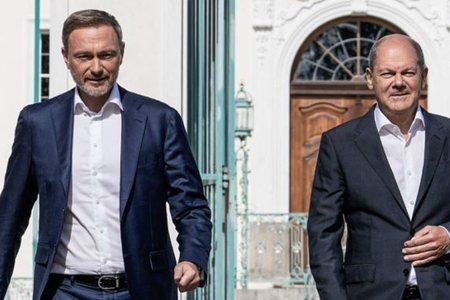
Debate on the budget in the Bundestag - Economy Minister Habeck (centre), Chancellor Scholz on the right and Economy Minister Lindner on the left
The economy is waiting for the government to move. "With the announcement of the pact for Germany, the German government is finally waking up", said Rainer Dulger, president of the Federal Association of German Employers, BDA in an interview. For a long time, the government has been sleepy in terms of digitalization and has been fixated on bureaucracy hindering the economy and society. This must change quickly - Scholz has received broad support from the premiers of the states governed by the Social Democrats. "We are very complicated in Germany, we are very slow, and ultimately very expensive. We need to simplify and become faster."/ DW





Lini një Përgjigje