


 Shkruar nga Pamfleti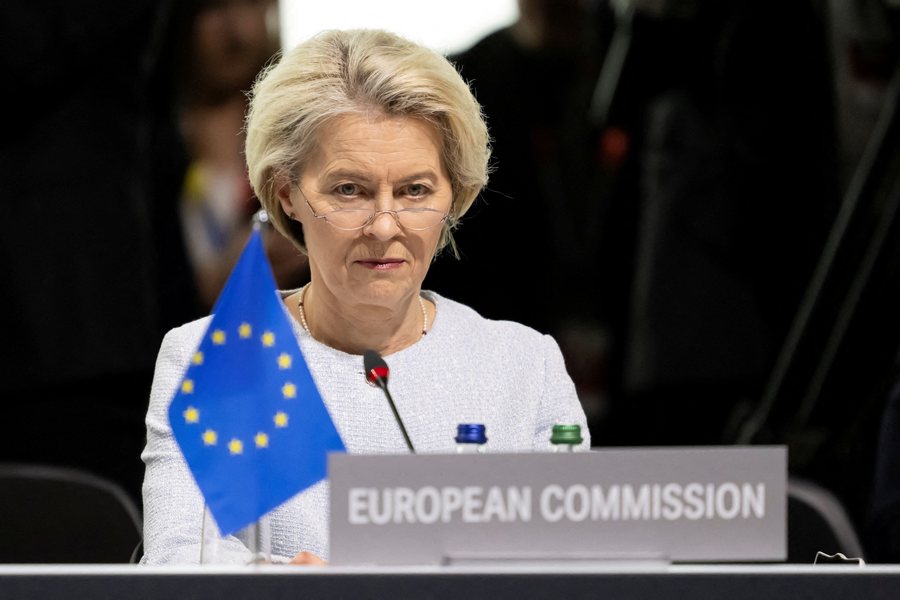
European Commission President Von der Leyen told a press conference that leaders had discussed setting up deportation centers outside the EU's borders.
European Commission President Ursula von der Leyen will propose tougher laws and more plans to deport rejected asylum seekers, doubling down on the European Union's push for tougher migration policies as anti-immigration parties gain popularity in the whole continent.
More than half of EU member states, including France and Germany, called on the EU to toughen its deportation policy ahead of a meeting of 27 EU leaders on Thursday - and now the head of the EU's powerful chief executive The EU is putting its stamp on deportations.
European Commission President Von der Leyen told a press conference that leaders had discussed setting up deportation centers outside the EU's borders (such as those in Albania), referring to them as "return centers."

The ideas to increase the methods of deportations from the EU come as the actual number of migrants crossing into the EU is decreasing. In 2023 fewer than 300,000 people reached the continent; This year, the EU's border agency, Frontex, estimates that around 160,000 migrants have reached Europe.
By contrast, in 2015 at the height of Europe's so-called migration crisis, more than a million people crossed the EU's borders.
"Today, we see that of all those who do not have the right to stay in the European Union, only 20 percent of those who have a return decision have actually returned to their countries of origin. The idea... is not trivial, but it has been discussed ," she said, referring to "return centers." It received enthusiastic support from the centre-right Greek Prime Minister Kyriakos Mitsotakis.
To expand its deportations, the EU could also review what it considers a legally safe country. Austrian Chancellor Karl Nehammer said Syria - still ruled by dictator Bashar Assad - and Afghanistan, ruled by the Taliban, should be considered safe countries.
Italy is leading a push to return refugees to Syria, which has had no formal diplomatic ties with the EU since its bloody civil war began in 2011.
At the same meeting, von der Leyen put the EU's stamp on other proposals to keep migrants out. Polish Prime Minister Donald Tusk also won support for his proposed asylum ban on those from Russia and Belarus after he claimed Moscow was sending migrants to Europe's border to destabilize Poland. The leaders wholeheartedly endorsed the proposed ban.
" Russia and Belarus, or any other country, cannot be allowed to abuse our values. Extraordinary situations require appropriate measures ," he said
It is a stark departure from the vociferous support of immigration that Tusk gave the world after Donald Trump, who campaigned on an anti-immigration platform in the US election, won in 2016.
The then President of the European Council said: " It is good to remember the power of the Western community. The Italians, the Irish, the Poles, the Germans, the Spanish – every nation in the EU has helped build America .”
A rare dissenting voice came from Spain's Socialist Prime Minister Pedro Sánchez, who has seen migration as a boon to his economy.
Asked about the so-called return centers at a press conference, he said: " We are not in favor of these types of formulations, because they do not solve any problems, but create others ."
Along with Germany, Sanchez wanted more emphasis to be placed on the bloc's historic deal on migration and asylum - which was reached last December. / Adapted "Pamphlet" from "Politico"




Lini një Përgjigje