


 Shkruar nga Pamfleti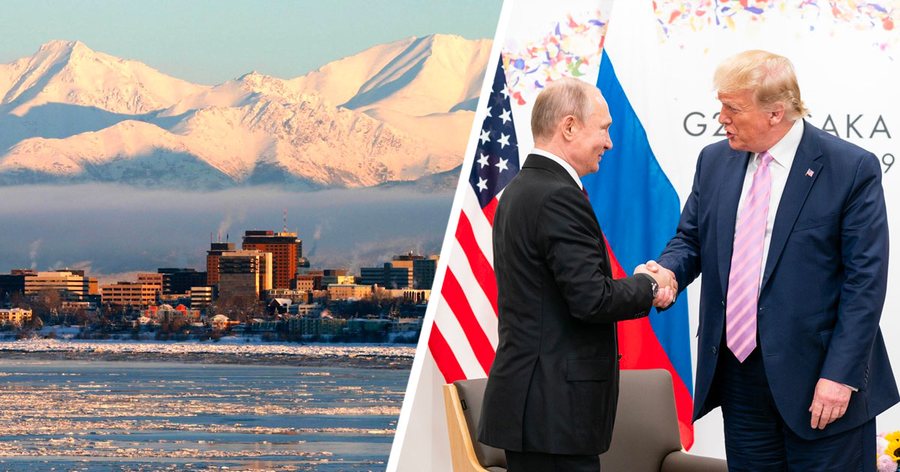
The choice of Anchorage as the location for the August summit indicates that the US and Russian presidents will discuss many issues, with peace in Ukraine being one of them...
Surprisingly, he chose Alaska. A completely different location than Rome, the Eternal City that could have provided the backdrop for a face-to-face meeting between Donald Trump and Vladimir Putin. Moscow's refusal, however, ruined the Italian option. In this situation, the White House chose the military base.
Elmendorf-Richardson in Anchorage, Alaska's largest city. A suggestive and surprising choice. First of all, because Alaska was Russian until 1867, Putin will be received in a territory that belonged to the Tsar's empire, but which has been part of the United States for 158 years.
The Kremlin Tsar will find himself playing far from home, at a military base that was essential to the US during the Cold War, chosen in 1971 to host the meeting between Richard Nixon and Japanese Emperor Hirohito. However, it must be said that he will not have to travel far: at the closest point of the Bering Strait, in fact, the American border is only three kilometers from the Russian one. In other words: there are worse trips for someone wanted by the International Criminal Court.
The summit that excludes the EU and Kiev
History aside, the choice of Anchorage surprised European observers for other reasons. First, because the Alaskan capital is ten hours behind Brussels, Paris, Rome and Berlin, while it has an 11-hour time difference with Kiev.
So Trump and Putin will discuss a possible end to the war in Ukraine while Europe is in the middle of the night. EU leaders will be forced to stay up late, given that the White House resident has promised to brief them at the end of his face-to-face meeting.
He will do the same with Volodymyr Zelensky, who was excluded from the August summit, despite the fact that the meeting was officially to discuss the invasion of his country. In other words, to resolve the Ukrainian crisis, a bilateral meeting between Trump and Putin, in a place far from Europe, but practically near the Russian border, is enough. Another piece of information that suggests that the Alaska summit will not be just about Kiev.
"In addition to Ukraine, the Arctic will also be discussed, a crucial point in bilateral relations. There is intense conflict in the region, a potential theater of armed conflict. Military activity from both Russia and the US is increasing," explained Dmitry Suslov, the Kremlin's foreign policy adviser.
"The Arctic has long been at the center of global geopolitical interests, it is clear that it will be among the main points of the August summit," said analyst Emanuela Somalvico, director of the Arctic Intelligence Observatory at Socint, the Italian Intelligence Society.
"The choice of Alaska," she added, "in my opinion clearly shows that the United States wants to communicate to Putin and the rest of the world its desire to regain a presence in the region."
Alaska Purchase
In this sense, then, the Ukrainian crisis could only be the motive to justify the face-to-face meeting between the US and the United States, eager to normalize their relations after three years of high tension. "Could the Arctic be the key to ending the war in Ukraine?", asked James Tidmarsh in The Spectator . In 1867, it was to pay off debts incurred in the Crimean War that Tsar Alexander II decided to cede Alaska to the United States: he received 7.2 million dollars, which at today's exchange rate would be at least 130. At first, the Alaska Purchase caused negative reactions on both sides of the Bering Strait: the Russians felt robbed, the Americans accused the government of wasting money. In reality, for the US it was a good deal, considering that the gold rush had already begun in Alaska by the end of the century.
The yellow precious metal deposits more than paid for themselves. However, nearly 160 years later, the gold the US extracts from Alaska's subsoil is black.
Prudhoe Bay, in the Beaufort Sea, is home to the largest oil field in North America: 10% of the crude oil extracted annually in the entire United States comes from here. Only a small percentage of what is hidden in the deep north of the globe: according to estimates by the United States Geological Survey, the bottom of the Arctic Ocean hides the richest undiscovered deposits of crude oil and natural gas in the world. This amounts to approximately 90 billion barrels of oil: sources of supply that were previously untapped due to the difficulty of access. A situation that is changing rapidly.
New northern road
In fact, global warming is causing the ice sheet to retreat, making once-remote areas easier to reach.
"All of this could provide further opportunities for maritime transport and port infrastructure in the future.
Future infrastructure development in the polar region is destined to open up the possibility of significant investments from domestic and international actors.
"Navigable routes could also provide unexpected access to fishing resources, just as access to mineral resources would become more feasible," Somalvico writes in his book "Arctic Perspectives - New Challenges for Intelligence", published by the Margherita Hack Foundation.
Shkrirja e akullnajave në thelb po e bën më të lehtë lundrimin në Oqeanin Arktik: deri më tani, ai mund të kalohej vetëm me akullthyeset e famshme me energji bërthamore të Rusisë , të cilat zotërojnë flotën më të madhe në botë, që përfshin më shumë se 50 anije. Ndryshimi i klimës ka krijuar një rrugë të re detare që e afron Azinë me Evropën, duke ndjekur një rrugë më të shkurtër se ajo që kalon nëpër Kanalin e Suezit dhe Ngushticën e Gjibraltarit.
Kjo është Rruga Detare Veriore, rruga pranë bregdetit rus që lidh Evropën me Azinë është afërsisht 8,000 milje lundrimi, krahasuar me 13,000 miljet e rrugës së Kanalit të Suezit. Gjithashtu, për shkak të pritave të vazhdueshme të rebelëve Huthi ndaj anijeve që kalojnë nëpër Detin e Kuq, Rruga Veriore po bëhet gjithnjë e më shumë një alternativë e qëndrueshme për flotat tregtare, veçanërisht për ato kineze dhe ruse.
Të dhënat nga Qendra për Logjistikën e Lartë Veriore, një fondacion norvegjez që studion zgjidhjet logjistike në rajonin e Arktikut, tregojnë se në vitin 2024, 97 dërgesa kaluan tranzit nëpër rrugën detare, duke arritur në total 3.1 milion ton mallra. Ky është një rekord i ri, pas nivelit historik të ulët të arritur në vitin 2022, për shkak të shpërthimit të luftës në Ukrainë. Pushtimi, në fakt, padyshim pati pasoja edhe në frontin polar: prishja e marrëdhënieve midis vendeve perëndimore dhe ndalimi i naftës ruse e sollën Moskën edhe më afër Pekinit. Dhe në fakt, 60% e udhëtimeve në Rrugën Detare Veriore u përdorën për transport. Nafta bruto nga portet ruse në ato kineze. Kjo rritje e trafikut e ka shtyrë prej kohësh shtypin ndërkombëtar të flasë për Rrugën Polare të Mëndafshit . "Një nga çështjet kryesore në samitin Trump-Putin do të jetë menaxhimi i rrugës Veriore . Sidomos në dritën e aktivizmit të Kinës, e cila tani për tani ka të pesë anijet e saj akullthyese në det ", shpjegon Somalvico.
Rruga Polare e Mëndafshit
Por bashkëpunimi sino-rus nuk ka të bëjë vetëm me çështjet ekonomike dhe tregtare. Lufta në Ukrainë e ka pezulluar punën e Këshillit Arktik, forumit të bashkëpunimit që ka analizuar dhe është përpjekur të zgjidhë problemet e rajonit që nga viti 1991.
Anëtarët e tij përfshijnë vendet që kufizohen me oqeanin e akullt: Rusia , Kanadaja, Danimarka, Finlanda, Islanda, Norvegjia, Shtetet e Bashkuara (nëpërmjet Alaskës) dhe Suedia.
"Puna nuk është ndalur kurrë plotësisht; le të themi se është ngadalësuar. Sigurisht, Rusia në mënyrë të pashmangshme ka një ndikim të rëndësishëm, duke zotëruar 50% të territorit. Megjithatë, duhet thënë se Këshilli nuk ka kompetenca qeverisëse mbi rajonin, por ai trajton çështjet klimatike dhe sociale", shpjegon drejtori i Observatorit të Inteligjencës.
The Council also includes permanent observer members, that is, countries chosen because they have some interest in the Arctic, even if they do not have direct access to the region. Among them is Italy, which, through the National Research Council, manages the Dirigibile Italia Arctic base in Ny-Ålesund, in the Svalbard Islands.
Since 2004, a scientific research station in the archipelago has also been owned by China: it is called the Yellow River Station and gives Beijing permanent observer status in the Arctic Council.
"And in 2023, Russia signed a cooperation agreement with China on territorial security," Somalvico explains, adding, "from the United States' point of view, the question remains, how to curb China's role in the Arctic while renewing relations with Moscow."
It seems that to curb Beijing's silent polar escalation, Trump decided to organize the August summit with Putin. And that is precisely why he chose Alaska. Moreover, the American president has often demonstrated a passion for the High North: just think of the threatening messages constantly sent towards Greenland, the object of the White House's desire.
The threats of annexation have so far not been followed by action. But on the other hand, the race to the Arctic has just begun. / Adapted from Ilfattoquotidiano.it /







Lini një Përgjigje